
Blog 3ARM®
Stay informed with the latest updates and key industry insights.

Buyer FAQ: how to size an industrial articulating arm for engine tightening
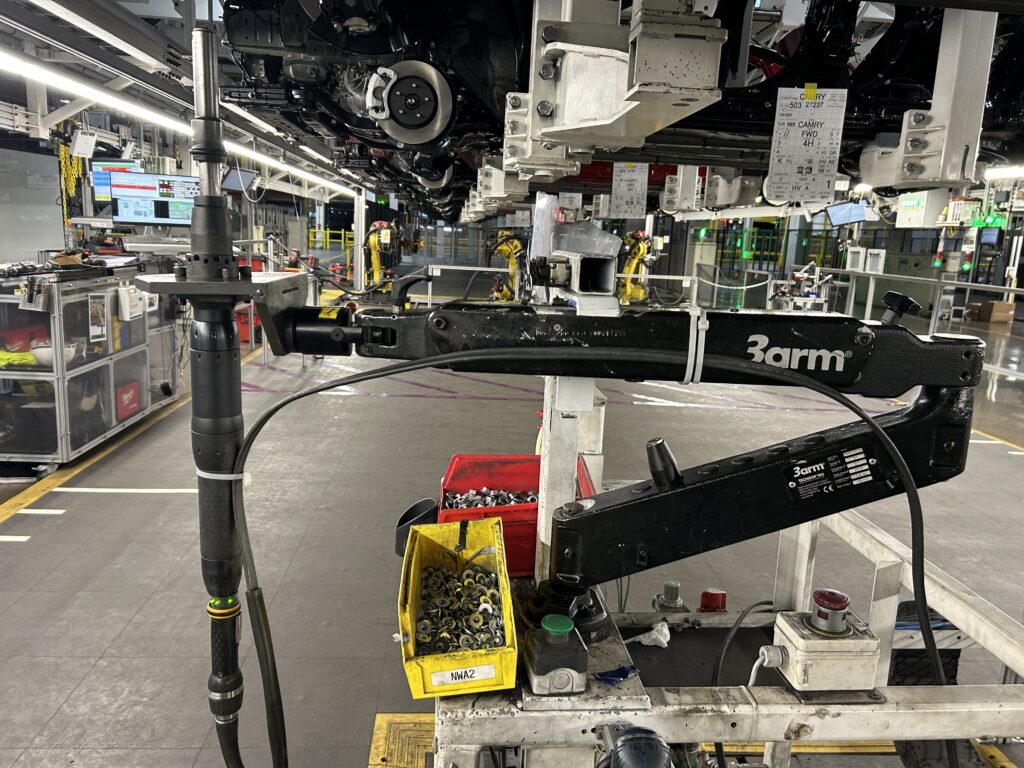
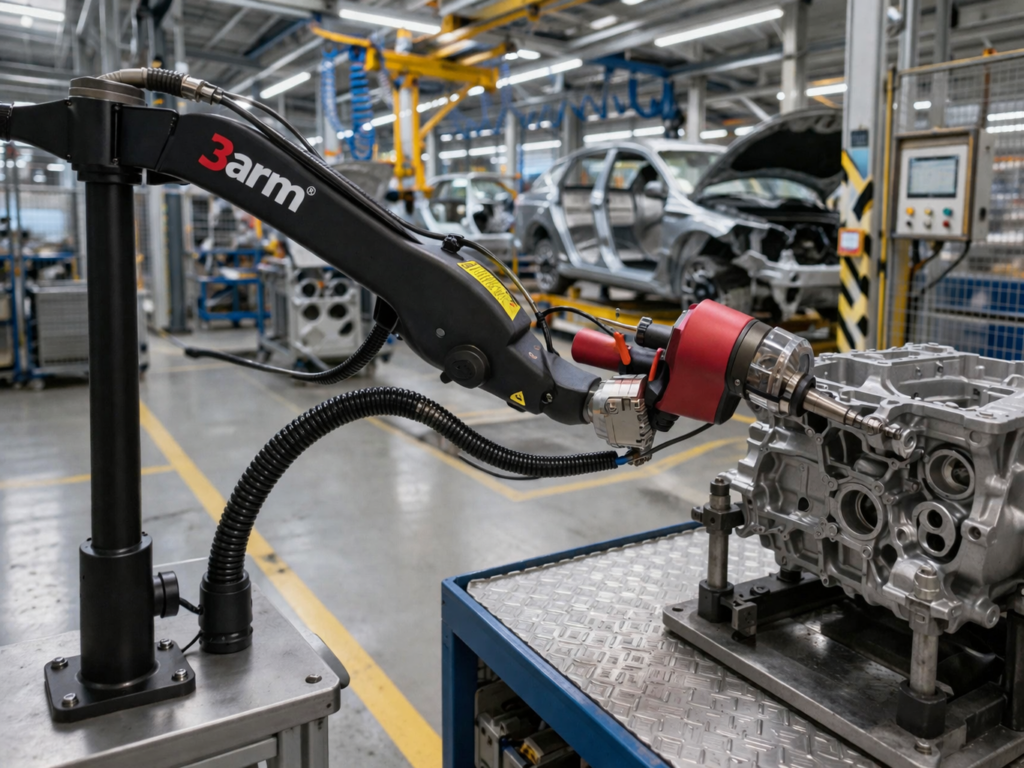
The selection of an industrial articulating arm does not usually begin in a catalog, but at the workstation itself. This is where the key questions arise: what torque must the system withstand? how does the actual weight of the tool affect performance? what happens with reactive torque? what working radius is really needed? how does everything integrate with the screwdriver?
These questions are not theoretical. They respond to real production challenges where tool handling directly affects both tightening quality and operator efficiency. Incorrect sizing not only limits performance, but also introduces operational and ergonomic risks that are difficult to correct later.
What torque must the articulating arm withstand?
The first critical point in any selection process is the maximum application torque. In engine tightening, this value is usually clearly defined by process engineering, but the common mistake is to size the system exactly at that limit.
In practice, any articulating arm must operate with a safety margin that absorbs dynamic variations, load peaks and real working conditions. Therefore, it is recommended to apply safety factors between 1.5 and 2 times the nominal torque, a widely used criterion in industrial tightening control solutions such as torque arms.
Imagen sugerida por el cliente: 3arm-Manipulator-M5.psd
How is weight compensation correctly calculated?
One of the most underestimated aspects when selecting a tool support system is the actual weight of the assembly. It is not just about the screwdriver; the calculation must include all associated elements: sockets, extensions, batteries, cables or hoses. This total load defines the system’s behavior during movement and directly affects positioning accuracy.
In advanced industrial applications, this type of analysis aligns with criteria used in sizing robotic systems, where the relationship between load and reach is critical for overall performance. Ignoring this interaction often results in imprecise movements, accumulated fatigue or loss of control at the tightening point. In these cases, solutions such as a tool balancer can help manage the load more efficiently.
How to manage reactive torque without compromising precision?
Reactive torque is one of the most critical factors in high-torque tightening applications. If not properly managed, it is directly transferred to the operator, causing deviations, misalignment and, in the worst cases, threading errors. This is where the design of the industrial articulating arm makes the difference.
Systems must be able to absorb this torque without introducing excessive rigidity or limiting mobility. In this sense, the most advanced solutions integrate mechanisms that dissipate the load while maintaining tool alignment, a key factor to ensure tightening quality and avoid defects such as cross-threading.
What working radius is really necessary?
Operational reach is another factor often underestimated in early stages. In engine assembly, tightening points are rarely located on a single plane. This requires working at different heights, depths and angles, demanding a system capable of covering the entire working volume without creating constraints.
A properly sized articulating arm must allow smooth movement in three dimensions, always maintaining stability and control. The key is not only reaching the point, but doing so repeatedly, without additional effort and without compromising alignment. This is where system geometry and its ability to adapt to the workspace become critical, especially in solutions like an industrial manipulator.
How does the arm integrate with the screwdriver?
The integration between the industrial articulating arm and the fastening system is a critical aspect that goes beyond mechanical compatibility. It is necessary to ensure that the assembly works as a coherent unit, where the tool can be positioned precisely, without interference and with predictable response in every cycle.
This involves considering aspects such as axis orientation, cable management, accessibility to tightening points and interaction with other workstation elements. A proper design allows tool handling to feel natural, reducing cycle times and improving the operator experience, especially when supported by ergonomic lifting devices.
Ergonomics in manufacturing: a technical factor, not optional
Ergonomics in manufacturing should not be understood as an add-on, but as a technical variable that directly influences system performance. Reducing effort, improving posture and eliminating unnecessary loads not only prevent injuries, but also allow consistent precision levels throughout the shift.
Specialized occupational health organizations have shown that proper workstation adaptation significantly reduces fatigue and improves productivity in industrial environments. In this context, the tool support system becomes a key element in process optimization.
The value proposition of 3ARM
In high-torque and high-demand applications, conventional systems often fall short. 3ARM solutions are designed to address these limitations through an approach that integrates weight compensation, torque absorption and freedom of movement into a single system.
This allows working with heavy tools or under complex conditions while maintaining control, precision and ergonomics. The result is more efficient tool handling, elimination of physical strain on the operator and a direct improvement in process quality.
Proper sizing means better production
Selecting the right industrial articulating arm is not a minor decision. It is a process that requires a deep understanding of real working conditions and the application of engineering criteria that ensure long-term performance.
Do you need help sizing your system?
At 3ARM, we help industrial companies optimize their assembly processes through advanced articulating arm and tool support solutions. If you are working on an engine tightening application and need to ensure precision, ergonomics and reliability, our team can support you throughout the sizing process.
Contact 3ARM and discover how to improve the efficiency of your assembly line from the very first tightening point.

What tool support does your assembly line need?
In an optimized assembly line, performance does not depend exclusively on the fastening tool or torque control systems. There is a structural element that directly determines productivity, process quality and operator health: the tool support.
Far from being an accessory, the tool support defines the movements and positioning in which the tool interacts with both the operator and the part, influencing fastening reliability and precision, cycle repeatability and accumulated fatigue throughout the shift.
In applications where tool handling is continuous, any inefficiency in the support translates into micro-interruptions, axis deviations or overexertion that, over time, impact both product quality and operational costs. Therefore, selecting the right system must be approached with clear technical criteria, not solely based on tool weight.
Selection criteria: task, weight and reach as critical variables
The choice of tool support must be understood as the result of three interdependent variables: the nature of the task, the weight of the tool and the required operational reach (movements).
In light, highly repetitive fastening tasks where speed is key, a tool balancer system allows the tool to remain suspended and always available, reducing downtime and unnecessary movements.
However, as precision requirements or torque levels increase, the need to control mechanical reactions becomes critical. This makes it essential to incorporate torque arms capable of absorbing torque without transferring it to the operator.
Weight introduces a second layer of complexity. Beyond certain thresholds, fatigue ceases to be a subjective factor and becomes an operational risk that directly affects process consistency. In these scenarios, simply compensating for weight is no longer enough; it is also necessary to manage movement dynamics and ensure that the tool can be positioned precisely without additional effort.
Finally, reach defines the degree of freedom required. Fixed-point operations demand maximum stability, while large work areas require solutions that combine control and mobility without compromising alignment, such as an articulating arm.
Limitations of conventional systems
One of the most common mistakes in process engineering is addressing tool support from an oversimplified perspective focused solely on weight relief. This approach ignores fundamental aspects such as lateral force absorption, misalignment compensation or movement continuity in complex paths. As a result, solutions are implemented that, although functional under ideal conditions, generate operational friction in real production environments.
Conventional systems tend to segment functions: on one hand they balance, on the other they absorb torque, but they rarely integrate both capabilities efficiently. This forces compromises that affect ergonomics or precision, especially in environments where tolerances are increasingly demanding and work cycles more intensive.
The evolution towards dynamic support systems
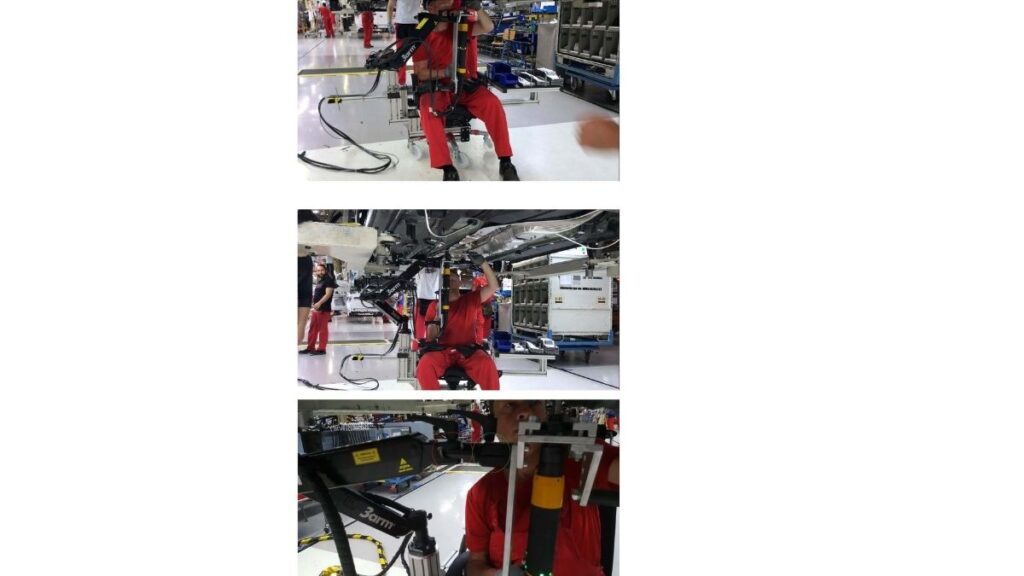
In this context, advanced tool support systems represent a necessary evolution. The integration of mechanisms that combine weight compensation, torque absorption and freedom of movement allows tool handling to be approached from a perspective closer to the operator’s natural behavior. The result is a smoother interaction, where the tool is perceived as an extension of movement itself, without inertia or resistance interfering in the process.
The solutions developed by 3ARM respond precisely to this logic. Their approach is based on eliminating the limitations of traditional systems through designs that enable work with heavy or high-torque tools without sacrificing precision or ergonomics. This translates into a significant reduction in physical load, improved alignment during fastening and greater consistency in results, even in complex or highly demanding applications.
A decision that directly impacts competitiveness
Selecting the right tool support is not a secondary matter in assembly line design. It is a decision that determines overall system efficiency and directly influences key indicators such as productivity, quality and operational sustainability. In an industrial environment where every second and every repetition count, optimizing tool handling becomes a tangible competitive advantage.
Optimize your line with specialized solutions
At 3ARM, we understand that each application presents specific challenges. That is why we develop tool support solutions designed to adapt to real production conditions, combining ergonomics, precision and reliability. If you are looking to improve your assembly line performance and reduce the physical impact on your operators, our team can help you define the most suitable solution for your process.
Contact 3ARM and discover how to transform tool handling into a key factor for industrial efficiency.

Keys to Industrial Safety and Risk Prevention in Grinding
Grinding operations with an angle grinder concentrate some of the highest risks within the industrial environment. High rotational speed, particle projection, constant vibrations and forced postures make this task a recurring source of musculoskeletal injuries and workplace accidents. For this reason, addressing industrial safety and risk prevention in grinding processes cannot be limited to the use of personal protective equipment. It is essential to intervene in the work method itself.
In this context, the incorporation of grinder support systems, grinder support configurations and ergonomic articulating arm solutions has become one of the most effective technical measures to reduce injuries, improve process control and raise safety standards on the production floor.
Industrial safety and risk prevention: understanding the common risks in manual grinder use
Before defining solutions, it is important to understand why manual grinding generates so many incidents even among experienced operators.
Physical overload and accumulated fatigue
The weight of the tool, combined with the force required to keep it stable during contact with the workpiece, creates continuous static load on shoulders, wrists and back. In the medium term, this situation leads to tendinitis, hand-arm syndrome and shoulder injuries that directly affect operational continuity and absenteeism.
Loss of control and increased accident risk
Fatigue reduces the operator’s reaction capacity. In grinding operations, this results in lower precision, a higher probability of tool kickback and direct exposure to sparks or abrasive fragments. From the perspective of industrial safety and risk prevention, this combination is particularly critical.
The most effective solution is not to demand greater effort from the operator, but to eliminate unnecessary physical load from the work system.
Grinder support as a technical control measure
A grinder support allows the weight of the tool to no longer rest on the worker. The grinder remains suspended, balanced and always in the working position, drastically reducing muscular strain. This technical measure is far superior to corrective actions based only on training or postural habits.
In addition, the use of a grinder support stabilizes the tool during contact with the surface, improving control and reducing vibrations. The result is a safer, more precise and more repeatable process.
Angle grinder support and movement control
In demanding industrial applications, an angle grinder support integrated into an articulated arm allows the system to follow the operator’s natural movement without generating inertia or resistance. The system adapts to the working radius, keeps the tool balanced and prevents forced gestures that are often the origin of cumulative micro-injuries.
From a preventive perspective, this solution acts directly on the cause of risk rather than its consequences.
Safe grinding procedures with support systems
Integrating ergonomic technology also requires adapting operational procedures.
Workstation preparation
A safe grinding workstation begins with proper configuration of the support system. The balancing must be adjusted to the real weight of the tool, including disc and protections. When the system is correctly regulated, the operator can position the grinder precisely without additional effort, improving industrial safety and risk prevention from the first contact.
Performing the task with ergonomic assistance
During the process, the support acts as a continuous stabilizing element. The operator focuses on the quality of the finish and the tool trajectory, not on supporting its weight. This separation between process control and physical effort reduces errors, accidents and fatigue, especially during long shifts.
Direct impact on injury prevention and performance
Plant experience shows that introducing support systems and tool support arm solutions produces immediate results.
Fewer musculoskeletal injuries
By eliminating static loads and unnecessary vibrations, the incidence of musculoskeletal disorders is reduced, one of the main negative indicators in industrial safety and risk prevention audits. This translates into fewer sick leaves, less turnover and greater stability in work teams.
Higher productivity with greater safety
Contrary to the belief that safety slows production, grinder support systems increase performance. Fewer pauses, greater precision and more consistency throughout the working day generate a clear and measurable return.
The contribution of 3ARM to grinding safety
At 3ARM, support solutions and industrial articulated arm systems are specifically designed for industrial applications where safety and ergonomics are non-negotiable. Each system is adapted to the client’s real process, the weight of the tool and the working environment, guaranteeing effective integration into the production line.
3ARM’s international experience in sectors such as automotive, machining, railway and general industry makes it possible to approach grinding not only as a technical operation, but as a critical point of industrial safety and risk prevention with direct impact on profitability.
Industrial safety as a competitive advantage
Investing in grinder support systems and ergonomic arms is not only about regulatory compliance. It is about protecting talent, ensuring operational continuity and raising the plant’s production standards. When the process is designed for the worker, safety stops being a cost and becomes a real competitive advantage. Contact us and request a technical assessment of your grinding workstation. Our team will help you implement support and articulating arm solutions that reduce injuries, improve safety and optimize performance from day one.

Essential Guide to Tool Balancer: When, Which and Why
Pressure on industrial productivity has increased steadily over the last decade. Higher operational demands, faster work pace and growing attention to occupational safety have turned ergonomics into a strategic factor, not just a preventive one. In this context, the tool balancer is consolidating as a key solution for companies seeking to reduce injuries, improve efficiency and obtain a clear and measurable return on investment.
Far from being a simple accessory, the tool balancer acts as a true support for the tool, eliminating perceived weight and allowing the operator to work with precision, stability and less fatigue, even during prolonged cycles.
Ergonomic signs that indicate the need for a tool balancer
One of the main barriers to implementing ergonomic solutions is identifying the right moment. There are clear signals that indicate when a workstation requires a tool balancer.
Recurrent fatigue and musculoskeletal discomfort
When operators report pain in shoulders, wrists, back or neck—especially during repetitive tasks—we are facing an unmistakable symptom. The sustained weight of manual tools generates constant micro-loads that, over time, lead to sick leave, staff turnover and loss of operational experience. Integrating a tool balancer immediately reduces these tensions and improves workplace ergonomics for manufacturing.
Loss of precision and process quality
Fatigue does not only affect health; it also directly impacts quality. Imprecise screwdriving, deviations, positioning errors or rework are often associated with tools that are difficult to handle during long shifts. A well-configured support system, such as a tool support arm or articulating arm, enables smooth, repeatable and controlled movements, increasing process consistency.
Operational signals that justify investing in a tool balancer
Beyond ergonomics, there are productivity indicators that reinforce the need to incorporate a tool balancer.
Long cycle times and frequent pauses
When operators need to interrupt work to rest, reposition tools or change posture, overall performance declines. The tool balancer keeps the tool always available, suspended and balanced, reducing downtime and improving workstation flow.
Increase in incidents caused by dropped or damaged tools
Heavy tools, when not assisted, tend to be placed on unsuitable surfaces or fall accidentally. This generates repair costs, unplanned downtime and safety risks. A tool balancer also acts as a protection system for productive assets.
How to choose the right tool balancer
Not all industrial environments require the same solution. The correct selection determines the success of the system and its economic return.
Real weight and operating range
The first criterion is the total weight of the tool, including cables, hoses and accessories. A tool balancer must operate within its optimal range to guarantee stability and durability. Oversizing or undersizing the system compromises both ergonomics and equipment lifespan.
Type of application and freedom of movement
Screwdriving, machining, assembly or handling operations require different degrees of mobility. A good support solution—often integrated with an articulating arm—must naturally accompany the operator without generating resistance or unwanted inertia. This is where ergonomic articulated arms offer a decisive advantage over conventional solutions.
Industrial environment and safety
Environments with high production demands, long shifts or sectors such as automotive, aerospace or railway require robust, reliable and certified solutions. Ergonomics at work is not only about comfort; it is about regulatory compliance and risk prevention.
The ROI of the tool balancer: a measurable investment
One of the biggest myths is considering the tool balancer a cost. In reality, it is an investment with direct and quantifiable return.
Reduction of sick leave and indirect costs
Musculoskeletal injuries represent one of the largest hidden costs in industry. Fewer sick leaves, fewer replacements and lower turnover translate into immediate savings. A single optimized workstation can amortize the system in just a few months.
Increased productivity and process stability
By reducing fatigue, operators maintain consistent performance throughout the entire workday. This impacts cycle times, final quality and installed production capacity. Today, achieving balance between the person and the tool is a competitive factor.
Why 3ARM is the strategic partner when looking for a tool balancer
At 3ARM, the tool balancer is not conceived as a standard product but as an ergonomic solution adapted to each process. Their articulated arms and balancing systems are designed to integrate into demanding industrial lines, providing precision, robustness and real ergonomics.
3ARM’s international experience in sectors such as automotive, aerospace, machining and general industry allows each project to be approached with a technical vision focused on performance and ROI. Every tool support system is configured according to weight, application and operational environment, ensuring measurable results from day one.
Investing in a tool balancer means investing in people, productivity and industrial sustainability. If your plant shows signs of fatigue, loss of precision or operational inefficiencies, it is time to act.
Contact 3ARM and request a personalized ergonomic analysis. Our technical team will help you identify the optimal solution for your process and transform ergonomics into a real competitive advantage.

Vibration control with a support for small angle grinders
Vibration control has become a decisive factor in ensuring precision, safety, and surface finish quality in industrial processes.
Even though these are compact tools, their operation at high rotational speeds generates vibrations that, if not properly managed, affect both process performance and operator health. In this context, a support for small angle grinders is no longer an accessory element and becomes a key technical solution within any modern industrial ergonomics strategy, closely linked to manufacturing ergonomics.
The importance of vibration control
Continuous use of an angle grinder without an adequate support system often results in deviations during cutting, irregular surface finishes, and increased wear of discs and consumables.
From the operator’s perspective, vibrations increase fatigue, reduce manual control, and raise the risk of discomfort and injuries to hands, wrists, and forearms. In tasks such as fine deburring, part fitting, or maintenance work, where precision is critical, this lack of stability becomes a recurring problem.
What is a support for small angle grinders
A support for small angle grinders acts directly on this critical point. By fixing and guiding the tool, the system absorbs part of the vibrations and stabilizes movement, allowing the grinder’s energy to be transmitted in a controlled manner. Unlike fully manual use, the operator does not need to constantly compensate for oscillations, resulting in more precise, smoother, and safer work. In the solutions developed by 3ARM, the support design follows the natural movement of the operator, maintaining full control of the process without adding unnecessary physical effort. In this sense, it functions as an effective tool assist solution.
Solutions for small discs and precision
Precision becomes even more important when working with small-diameter discs. These types of discs are commonly used in operations that require tight tolerances, uniform finishes, and a high level of control, such as fine cutting, burr removal, or adjustments on sensitive components.
For this reason, 3ARM has developed specific solutions adapted to small discs, where the support for small angle grinders ensures correct tool alignment and minimizes vibrations even at high rotational speeds. The result is a clear improvement in surface finish quality and a significant reduction in rework.
Ergonomics and workplace safety
From an ergonomic perspective, vibration control is an essential factor in occupational risk prevention in industrial companies. Prolonged exposure to vibrations is directly related to musculoskeletal disorders and circulatory problems in the upper limbs.
The use of a support for small angle grinders significantly reduces vibration transmission to the operator’s body, allows more natural working postures, and decreases accumulated fatigue throughout the workday. For companies, this represents a tangible improvement in working conditions and compliance with safety regulations. Solutions such as a tool support arm or an articulating arm contribute directly to safer and more ergonomic workstations.
Productivity and process control
The positive impact of a support for small angle grinders is not limited to safety. From a productivity standpoint, tool stabilization helps reduce operation times, minimize errors, and improve process repeatability. In tasks where surface finish is critical or where short production runs with high quality requirements are involved, this stability translates into greater process control and optimization of costs related to consumables and maintenance.

The 3ARM value proposition
At 3ARM, we understand that each industrial environment presents specific needs. For this reason, our support solutions for small angle grinders are custom-designed, integrating naturally into the workstation and adapting both to the type of tool and the specific application. System robustness, reliability in demanding environments, and a clearly ergonomic approach make these solutions a strategic investment for any industrial company.
A support for small angle grinders is not simply an accessory, but a key tool for improving vibration control, increasing precision, and protecting operator health. Choosing this type of solution means moving toward safer, more efficient, and more sustainable processes.
Contact 3ARM and discover how our support solutions for small angle grinders can help you control vibrations, work with greater precision, and increase the performance of your industrial processes.
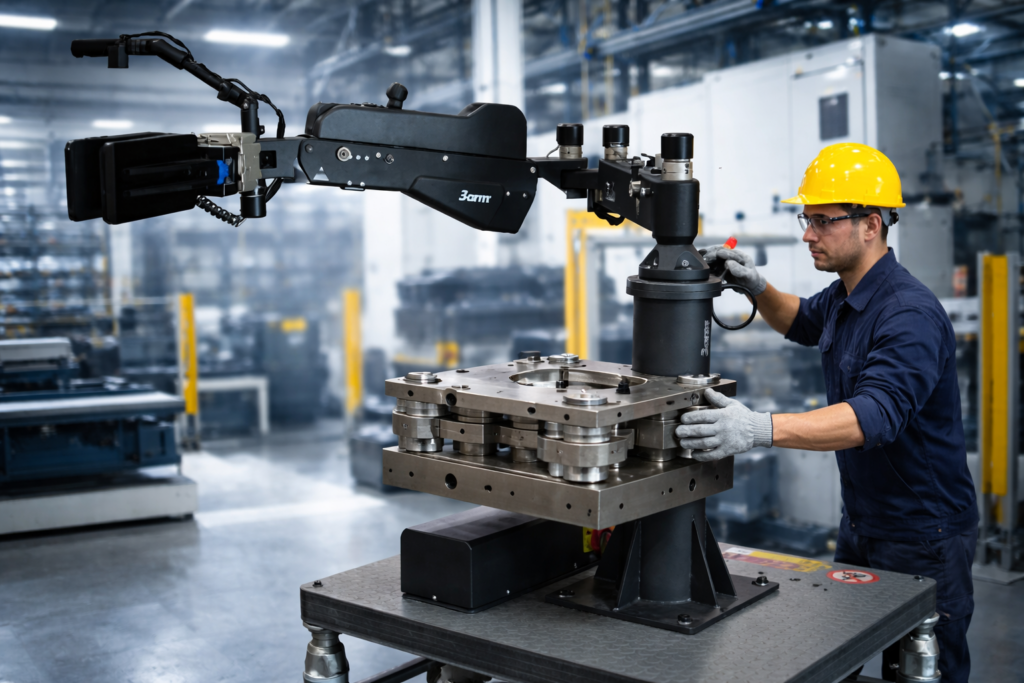
Press tooling manipulator: guide to assisted handling systems
In industrial environments where presses, press brakes, and forming lines are used, the management of heavy tooling has become a critical factor for both productivity and safety. Dies, punches, and press tools can easily weigh hundreds of kilos and require frequent, precise, and repeatable changeovers.
In this context, assisted handling systems are no longer an accessory and become a strategic element within any modern plant.
At 3ARM, we have spent years developing industrial manipulator solutions specifically designed to meet this challenge: enabling the safe transfer of press tooling, reducing human effort, and improving operational efficiency without compromising precision. Our approach is closely linked to manufacturing ergonomics and the use of advanced lift assist devices.
The real challenge of press tooling handling
Tooling changeovers remain, in many factories, one of the most critical and delicate operations. Not only because of the weight of the tools, but also due to the need to align them correctly, avoid impacts, protect machined surfaces, and ensure the die is perfectly positioned before starting production.
Traditionally, these tasks have been carried out using overhead cranes, forklifts, or even manually with improvised aids. The result is usually the same: long changeover times, dependency on multiple operators, increased risk of musculoskeletal injuries, and a higher likelihood of damage to the tooling itself. This is where the manipulator, understood as an ergonomic motion assistance system, makes a substantial difference.
What are assisted handling systems and how they are applied to presses
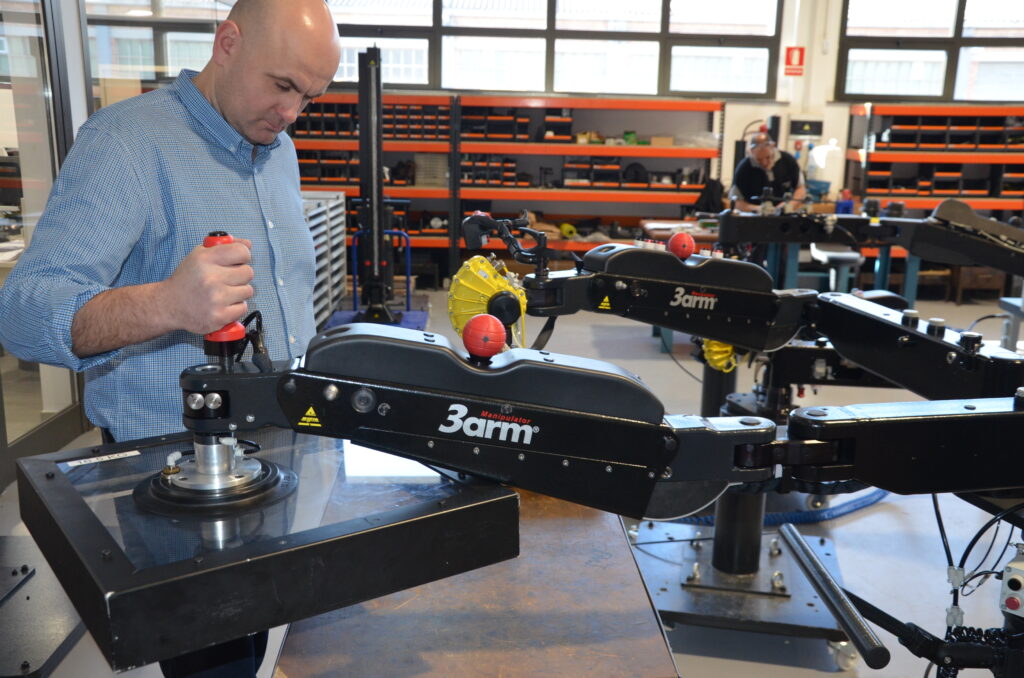
Assisted handling systems are devices designed to accompany the operator’s natural movement, compensating for the load weight and enabling smooth, precise, and controlled maneuvers. Unlike rigid automation, the operator retains full control of the process, without assuming the physical effort or associated risks.
Applied to press tooling, these systems allow:
• Lifting heavy dies and punches with complete stability.
• Moving tooling from storage areas to the press without effort.
• Positioning the tool with millimetric precision.
• Performing quick changeovers even in confined spaces.
In the case of 3ARM, our articulating arms are designed to integrate directly into the press environment, adapting to the tooling geometry and the real workflow of each customer. Solutions such as an industrial manipulator arm ensure precision while maintaining operator control.
Safe die transfer with assistance and locking
One of the key points in tooling handling is the safe transfer of dies, especially during loading and unloading phases at the press. It is not enough to move the tool; it is essential to ensure that, at all times, the tooling is controlled, stabilized, and protected against involuntary movements.
3ARM systems incorporate assistance and locking solutions that provide an additional level of safety and precision. Controlled locking allows the die to be held in a fixed position during critical operations, preventing unwanted rotations or accidental displacement.
This functionality is particularly relevant for large or complex-geometry dies, where even a small movement can cause costly damage or pose risks to the operator.
Thanks to this combination of dynamic assistance and secure locking, the operator can work with confidence, perform fine adjustments, and complete tooling changeovers quickly and repeatably.
Ergonomics and occupational risk prevention in industrial companies
Ergonomics is no longer just a matter of well-being, but a fundamental pillar of occupational risk prevention in industrial companies. Overexertion injuries, especially to the back, shoulders, and arms, remain one of the main causes of sick leave in production environments.
A well-designed industrial manipulator virtually eliminates the need to lift, push, or hold heavy loads. Physical effort is reduced to a minimum, and movement becomes natural and intuitive. This not only protects the worker, but also allows personnel with different physical capabilities to perform the task with the same level of safety and efficiency. In this sense, ergonomic lifting devices play a key role.
From a business perspective, the impact is clear: fewer absences, greater operational continuity, improved workplace climate, and effective compliance with safety regulations.
Direct impact on productivity and quality
Beyond safety, assisted handling systems have a direct effect on productivity. Reducing tooling changeover time means increasing actual press availability and facilitating short production runs or frequent reference changes.
The precision provided by a manipulator also translates into better process quality. By avoiding impacts, misalignments, or forced adjustments, tooling lifespan is extended and rework associated with assembly errors is reduced. In demanding sectors such as automotive, aerospace, or high-precision machining, this factor is decisive.

The 3ARM value proposition in tooling handling
At 3ARM, we design custom assisted handling solutions, always starting from a real analysis of the customer’s process. The goal is not to adapt the operation to the equipment, but to design the assisted handling system that best fits the tooling, the press, and the available space.
Our manipulators stand out for:
• High load capacity with full control of movement.
• Gripping and locking systems adapted to press dies.
• Ergonomic design focused on the operator.
• Simple integration into existing lines.
• Reliability and durability in demanding industrial environments.
With international presence and projects in highly regulated sectors, 3ARM has established itself as a trusted technology partner for companies seeking to improve safety, efficiency, and competitiveness.
Strategic investment, not just equipment
Investing in assisted handling systems for press tooling is not only a technical decision, but a strategic commitment to safety, productivity, and business sustainability. The combination of motion assistance, safe die transfer, and locking systems turns the manipulator into a key tool within the modern factory.
If your company works with presses and regularly handles heavy tooling, now is the time to move forward.
Contact 3ARM and discover how our industrial manipulators can transform your tooling changeover process, improve occupational risk prevention in your company, and take your productivity to a new level.
