Grinding operations with an angle grinder concentrate some of the highest risks within the industrial environment. High rotational speed, particle projection, constant vibrations and forced postures make this task a recurring source of musculoskeletal injuries and workplace accidents. For this reason, addressing industrial safety and risk prevention in grinding processes cannot be limited to the use of personal protective equipment. It is essential to intervene in the work method itself.
In this context, the incorporation of grinder support systems, grinder support configurations and ergonomic articulating arm solutions has become one of the most effective technical measures to reduce injuries, improve process control and raise safety standards on the production floor.
Industrial safety and risk prevention: understanding the common risks in manual grinder use
Before defining solutions, it is important to understand why manual grinding generates so many incidents even among experienced operators.
Physical overload and accumulated fatigue
The weight of the tool, combined with the force required to keep it stable during contact with the workpiece, creates continuous static load on shoulders, wrists and back. In the medium term, this situation leads to tendinitis, hand-arm syndrome and shoulder injuries that directly affect operational continuity and absenteeism.
Loss of control and increased accident risk
Fatigue reduces the operator’s reaction capacity. In grinding operations, this results in lower precision, a higher probability of tool kickback and direct exposure to sparks or abrasive fragments. From the perspective of industrial safety and risk prevention, this combination is particularly critical.
The most effective solution is not to demand greater effort from the operator, but to eliminate unnecessary physical load from the work system.
Grinder support as a technical control measure
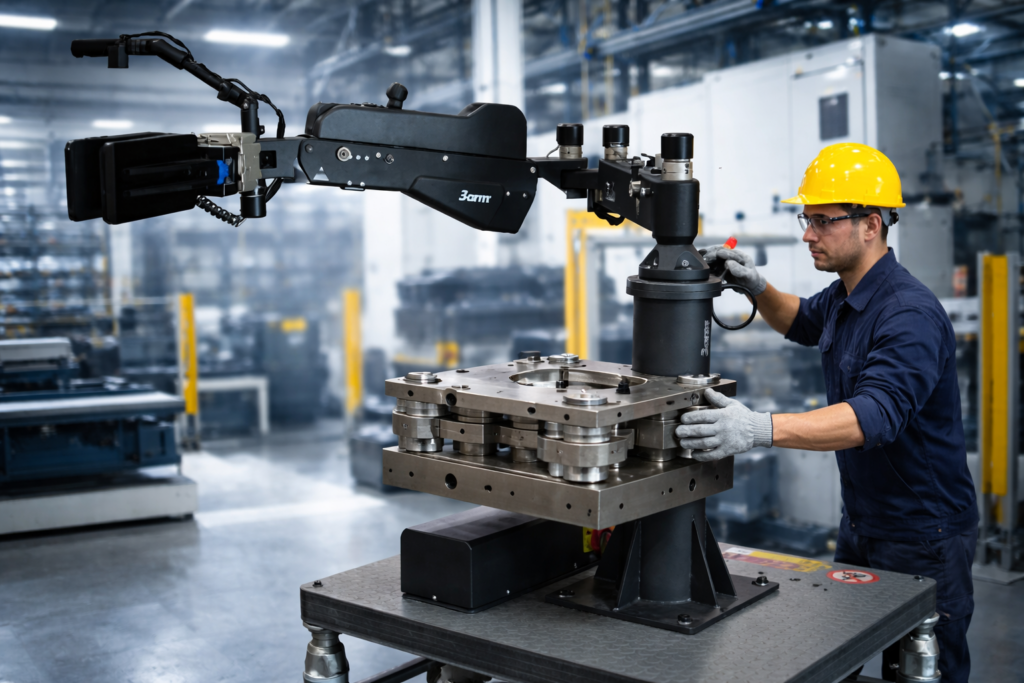
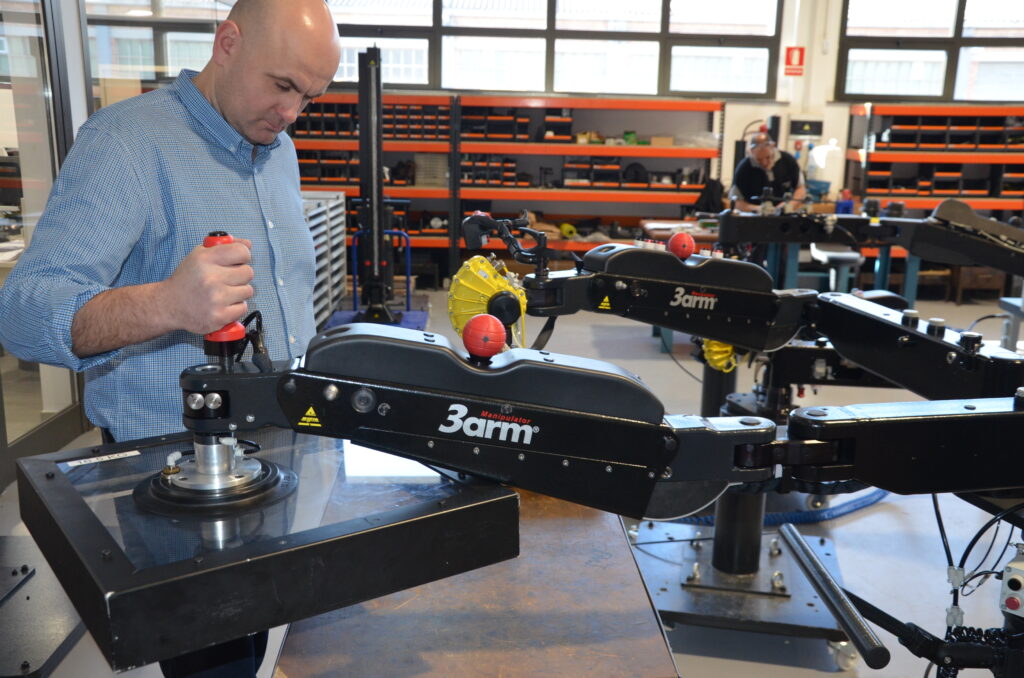
A grinder support allows the weight of the tool to no longer rest on the worker. The grinder remains suspended, balanced and always in the working position, drastically reducing muscular strain. This technical measure is far superior to corrective actions based only on training or postural habits.
In addition, the use of a grinder support stabilizes the tool during contact with the surface, improving control and reducing vibrations. The result is a safer, more precise and more repeatable process.
Angle grinder support and movement control
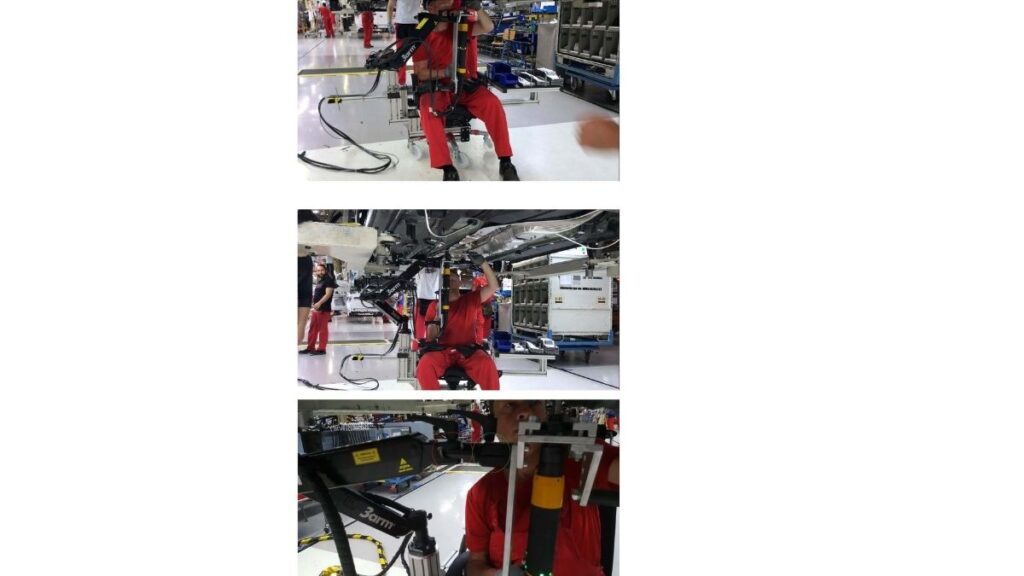
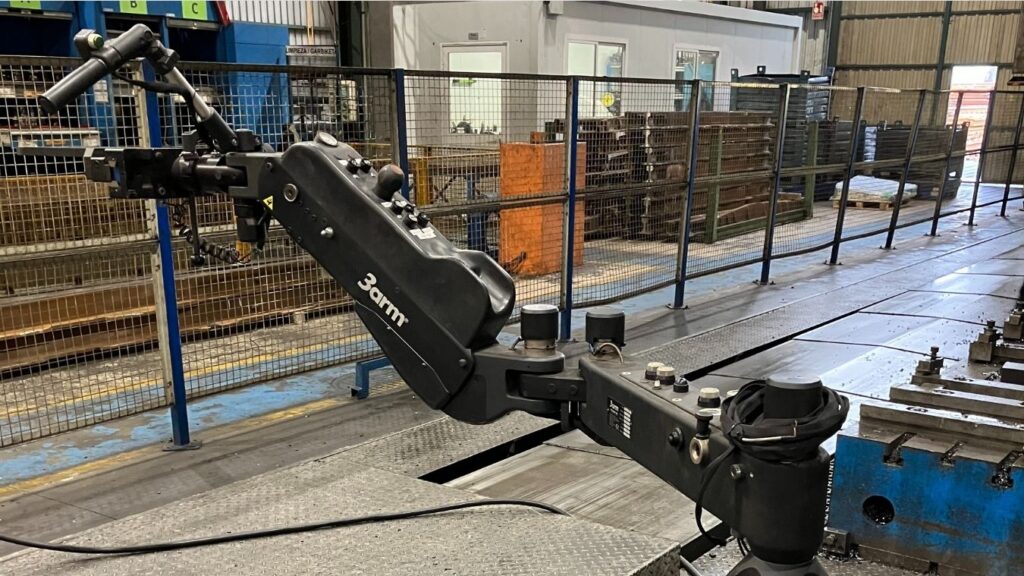
In demanding industrial applications, an angle grinder support integrated into an articulated arm allows the system to follow the operator’s natural movement without generating inertia or resistance. The system adapts to the working radius, keeps the tool balanced and prevents forced gestures that are often the origin of cumulative micro-injuries.
From a preventive perspective, this solution acts directly on the cause of risk rather than its consequences.
Safe grinding procedures with support systems
Integrating ergonomic technology also requires adapting operational procedures.
Workstation preparation
A safe grinding workstation begins with proper configuration of the support system. The balancing must be adjusted to the real weight of the tool, including disc and protections. When the system is correctly regulated, the operator can position the grinder precisely without additional effort, improving industrial safety and risk prevention from the first contact.
Performing the task with ergonomic assistance
During the process, the support acts as a continuous stabilizing element. The operator focuses on the quality of the finish and the tool trajectory, not on supporting its weight. This separation between process control and physical effort reduces errors, accidents and fatigue, especially during long shifts.
Direct impact on injury prevention and performance
Plant experience shows that introducing support systems and tool support arm solutions produces immediate results.
Fewer musculoskeletal injuries
By eliminating static loads and unnecessary vibrations, the incidence of musculoskeletal disorders is reduced, one of the main negative indicators in industrial safety and risk prevention audits. This translates into fewer sick leaves, less turnover and greater stability in work teams.
Higher productivity with greater safety
Contrary to the belief that safety slows production, grinder support systems increase performance. Fewer pauses, greater precision and more consistency throughout the working day generate a clear and measurable return.
The contribution of 3ARM to grinding safety
At 3ARM, support solutions and industrial articulated arm systems are specifically designed for industrial applications where safety and ergonomics are non-negotiable. Each system is adapted to the client’s real process, the weight of the tool and the working environment, guaranteeing effective integration into the production line.
3ARM’s international experience in sectors such as automotive, machining, railway and general industry makes it possible to approach grinding not only as a technical operation, but as a critical point of industrial safety and risk prevention with direct impact on profitability.
Industrial safety as a competitive advantage
Investing in grinder support systems and ergonomic arms is not only about regulatory compliance. It is about protecting talent, ensuring operational continuity and raising the plant’s production standards. When the process is designed for the worker, safety stops being a cost and becomes a real competitive advantage. Contact us and request a technical assessment of your grinding workstation. Our team will help you implement support and articulating arm solutions that reduce injuries, improve safety and optimize performance from day one.