In the aerospace industry, precision and efficiency are critical factors. Every component requires exact assembly, where even a minimal error can cause significant delays or compromise safety.
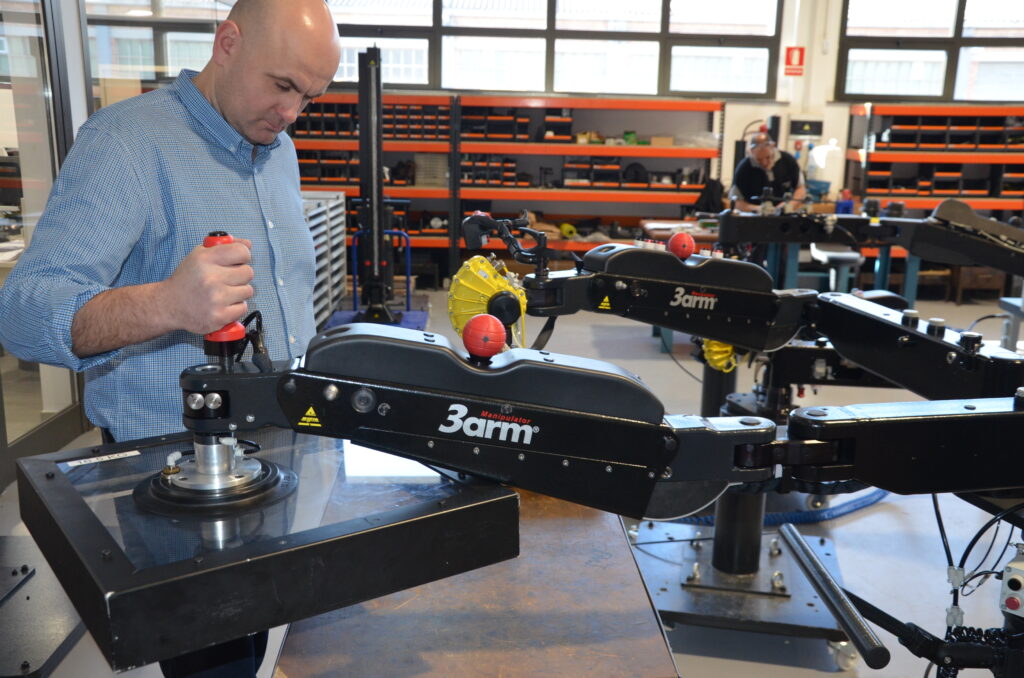
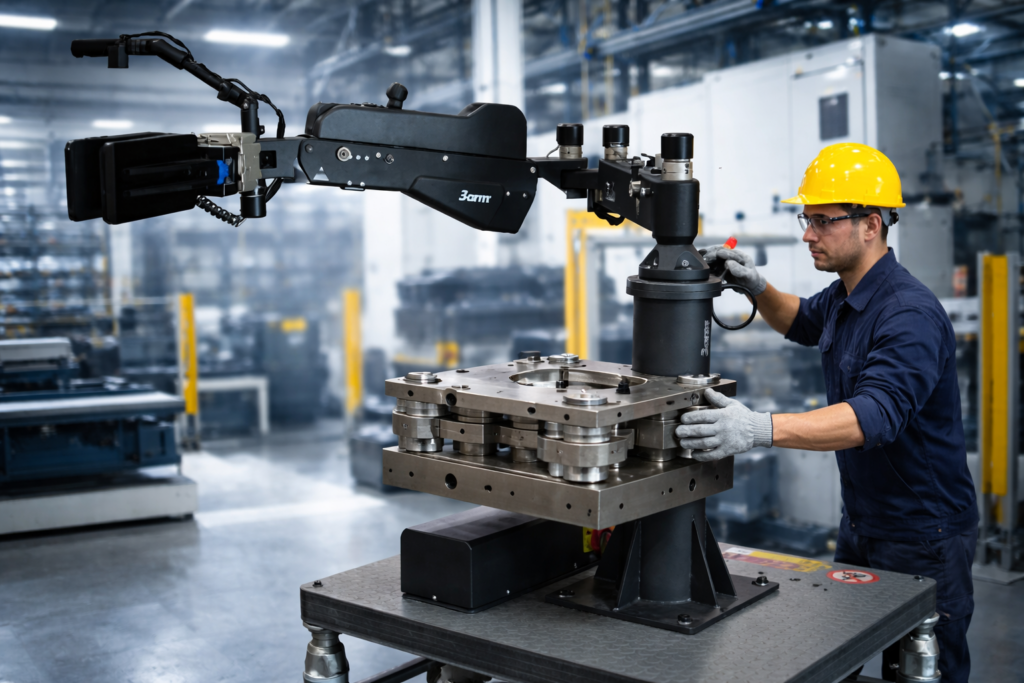
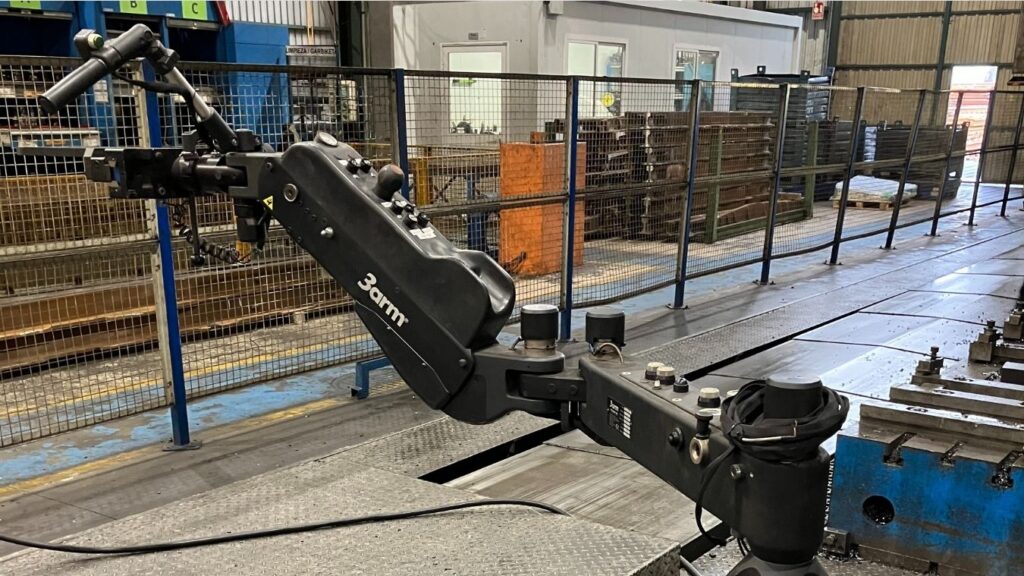
A manipulator becomes an indispensable strategic tool, combining precision, repeatability, and ergonomics to optimize manufacturing and maintenance processes. In this context, solutions such as an industrial manipulator arm or an articulating arm play a key role in improving operational reliability.
At 3ARM, we understand the complexity of the aerospace sector and design advanced ergonomic solutions capable of adapting to different industrial applications and reducing operator effort without compromising quality. Our approach aligns with the principles of manufacturing ergonomics, ensuring both productivity and worker well-being.
Below, we explore the 10 most prominent uses of a manipulator in aerospace, showing how its implementation transforms productivity and safety on the shop floor through the use of modern lift assist devices.
Assembly of fuselages and structures
Fuselages require precise positioning of panels and subcomponents, often heavy or bulky. An industrial manipulator allows parts to be held and placed accurately, eliminating the need for manual lifting. This reduces operator fatigue and ensures repeatability in every operation.
Installation of propulsion systems
Installing engines and turbines demands controlled movements and safe positioning. Thanks to tool handling using articulating arms, each component can be placed precisely, minimizing the risk of errors and rework. Workplace ergonomics improve by reducing the physical effort required for these critical tasks.
Integration of electrical systems and wiring
Cable routing and the installation of electrical systems in aircraft require repetitive and delicate movements. A manipulator provides support for tools and components, maintaining precision and preventing errors that could lead to system defects or subsequent rework.
Inspection and maintenance of critical components
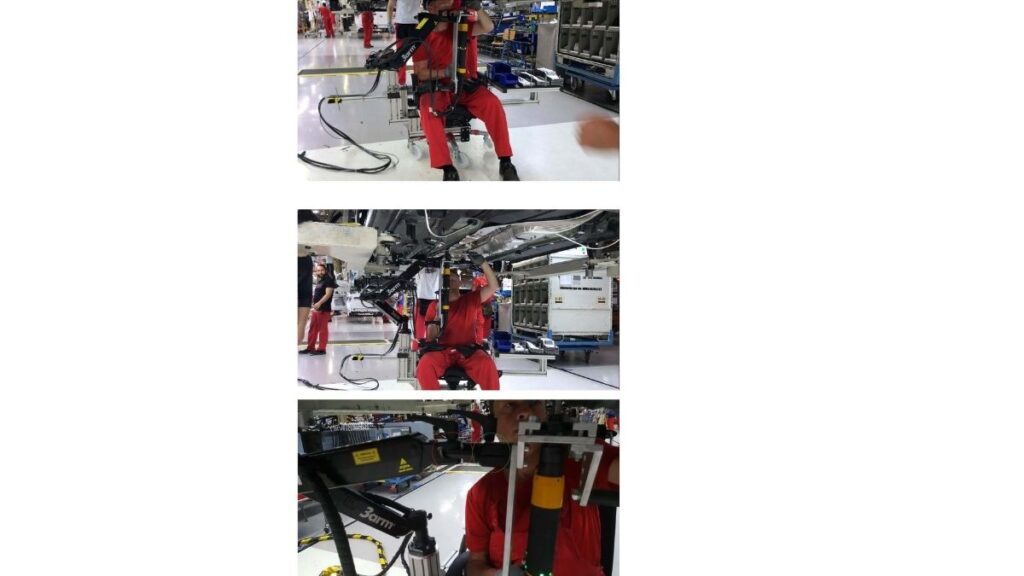
Inspecting delicate or hard-to-reach parts is facilitated by an industrial manipulator, which positions cameras, probes, or measurement tools in a stable manner. This ensures reliable results and reduces operator exposure to awkward postures, strengthening workplace safety and manufacturing ergonomics.
Welding of metal structures
In applications where welding is critical, the repeatability of the manipulator ensures that every weld seam meets exact specifications. By keeping welding tools in the optimal position, errors, rework, and material waste are minimized, while operators are protected from prolonged exposure to heat and radiation.
Assembly of composite components
Composite materials used in aircraft require delicate handling to avoid deformation or damage. With a manipulator, operators can position parts smoothly and precisely, ensuring material integrity and avoiding costly rework.
Positioning of seats and cabins
Installing seats and internal systems in aircraft involves moving heavy components within confined spaces. An industrial manipulator reduces physical effort, improves workplace ergonomics, and ensures that each part is perfectly aligned, guaranteeing passenger safety and production efficiency.
Application of adhesives and sealants
Manipulators allow tools to be kept at the correct height and angle during the application of adhesives or sealants, ensuring repeatability and uniformity in the operation. This is essential for maintaining the structural quality of aerospace components and reducing the need for rework.
Handling of control panels and cabin electronics
Handling sensitive panels is simplified with articulating arms that hold tools and parts in a stable manner. This reduces the likelihood of damage and errors, while operators work under optimal ergonomic conditions, increasing efficiency and safety.
Integration of hydraulic and pneumatic systems
Installing fluid systems requires precision and controlled force. With a manipulator, technicians can position pipes, valves, and pumps accurately, avoiding unnecessary effort and ensuring proper connection of all elements without compromising safety or quality.
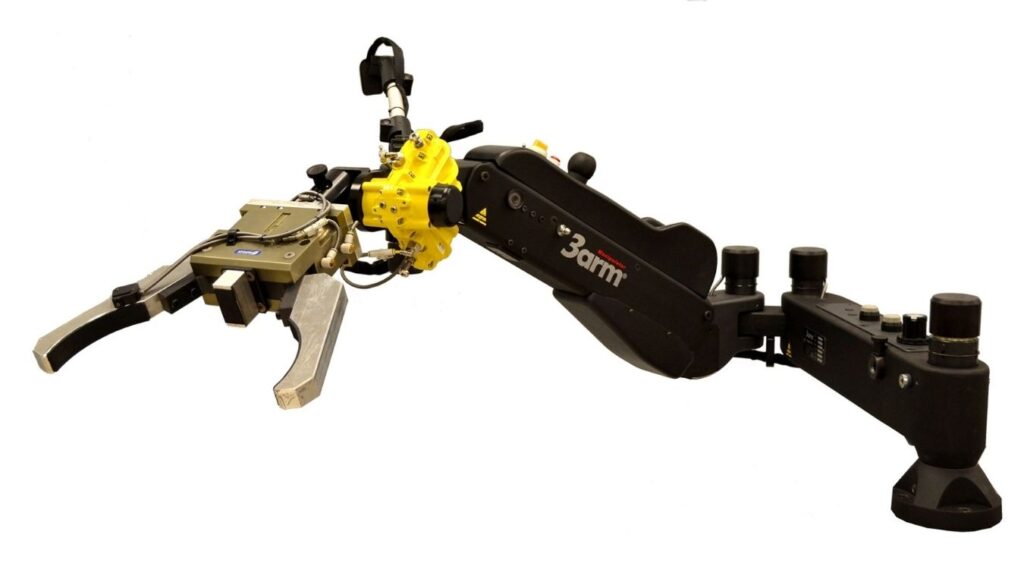
High-value applications
In all these cases, the implementation of a manipulator provides key benefits:
• Precision: Exact placement of critical components.
• Repeatability: Uniform operations that ensure consistent quality.
• Injury reduction: Less physical effort and exposure to awkward positions.
• Reduced rework: Minimizes errors and improves overall production line efficiency.
At 3ARM, we design modular ergonomic solutions that adapt to every need in the aerospace sector, enabling operators to work more safely and productively while maintaining excellence at every stage of manufacturing.
Our articulating arms and industrial manipulators are modular, easy to integrate, and designed to meet the challenges of the modern aerospace industry.
Request a demonstration today and discover how a 3ARM manipulator can transform your production line.