
Blog 3ARM®
Stay informed with the latest updates and key industry insights.
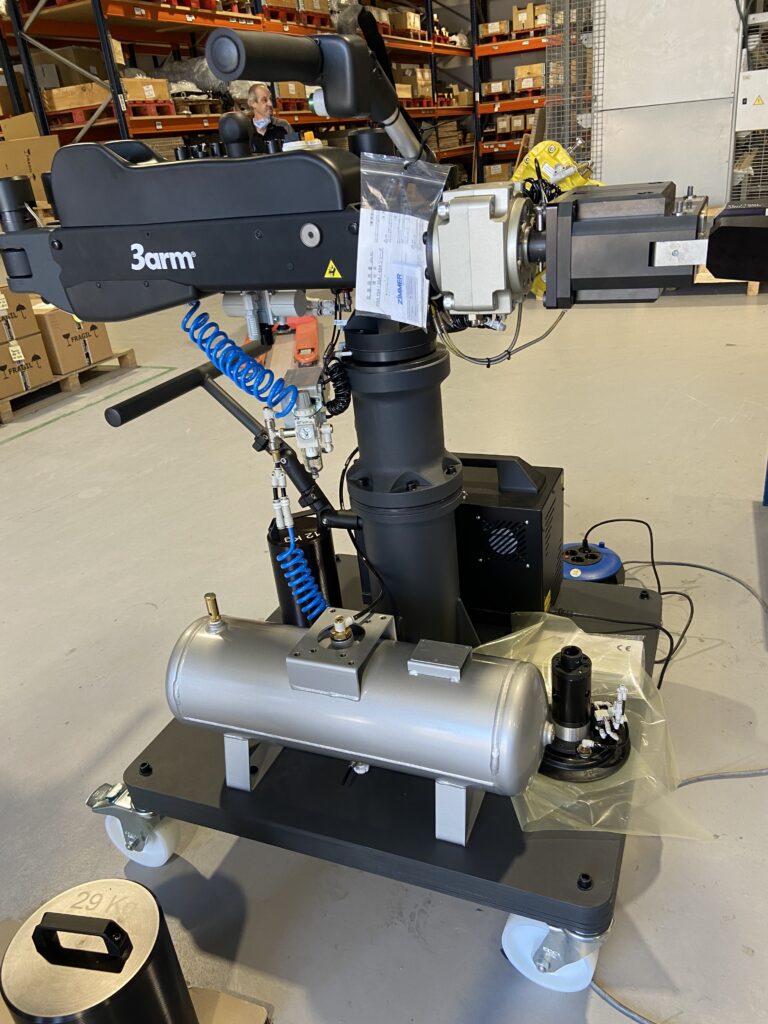
What should an industrial articulated arm have for high-repetition work
In sectors such as automotive, machinery manufacturing, the railway industry, or aeronautics, the ability to maintain a constant production pace without compromising quality or operator safety has become a decisive factor. Many of these operations continue to be manual or semi-automated, meaning that workstation performance is closely related to ergonomics and the operator’s ability to repeat the same movement thousands of times with precision.
The industrial articulated arm plays a much more relevant role than that of a simple tool support. It is a system designed to optimize the interaction between the operator and the tool, compensating for efforts, improving movement control, and reducing accumulated fatigue during intensive work cycles.
However, not all articulated arms offer the same behavior when they must work continuously. Their mechanical design, movement stability, and adaptation to each production process determine whether they will truly contribute to improving industrial production or become a limitation for line efficiency.
Movement stability is the foundation of an efficient repetitive process
In high-repetition applications, small deviations can translate into significant losses of productivity by the end of a shift. An imprecise movement forces the operator to make constant corrections to position the tool, increasing cycle time and favoring the appearance of assembly or machining errors.
For this reason, one of the most important criteria when selecting an industrial articulated arm is its ability to maintain a stable movement throughout the entire working travel. Structural rigidity, the quality of the joints, and the balance of the assembly allow the tool to respond predictably, even when the operator works at a high pace.
In the solutions developed by 3ARM, the design of the arm adapts to the specific application to guarantee smooth and uniform displacement, reducing the need for continuous adjustments and improving the repeatability of each operation.
Tool balance directly influences productivity
When a tool remains suspended throughout the day, the effort required to position it acquires critical importance. If the system does not maintain a constant balance, the operator must continually compensate for small load variations, which increases muscle fatigue and decreases precision as the shift progresses.
The objective of an industrial articulated arm consists not only of supporting the weight of the tool, but also of ensuring that it can move naturally and remain stable at any point along the travel.
Constant balance improves work quality
In tightening, machining, grinding, or assembly operations, keeping the tool perfectly controlled facilitates a more precise and uniform execution. The operator can focus on the quality of the process without dedicating additional effort to stabilizing the equipment.
This reduction in physical effort also decreases variability between cycles, favoring greater homogeneity in production and reducing the risk of defects derived from tiredness.
Load capacity must be analyzed along with real working conditions
One of the most frequent errors consists of selecting an arm solely based on the maximum load indicated by the manufacturer. However, in industrial applications, the nominal weight represents only a part of the analysis.
The tool usually incorporates accessories, extensions, pneumatic hoses, or cables that modify the dynamic behavior of the assembly. Furthermore, accelerations, changes in direction, and the frequency of use generate additional stresses that must be taken into account during the design phase.
For this reason, industrial assistance solutions are usually dimensioned with a sufficient operating margin to guarantee stable operation even during intensive work cycles. This criterion improves both the durability of the system and the user experience for the operator.
Workplace ergonomics for manufacturing must be integrated from the workstation design
The improvement of industrial ergonomics does not depend exclusively on incorporating an articulated arm. Its effectiveness is conditioned by the way it integrates within the workstation.
The installation height, useful reach, tool position, required travel, and space distribution directly influence the operator’s posture and the efficiency of the process. A correctly configured system allows for maintaining natural working positions, reducing unnecessary movements, and minimizing the load on shoulders, neck, and back.
This approach is especially important on lines where the same movement is repeated thousands of times each week. Small ergonomic improvements can translate into significant reductions in accumulated fatigue and a sustained increase in productivity.
The engineering philosophy of 3ARM starts precisely from this principle: adapting each solution to the customer’s specific process to achieve the maximum balance between comfort, precision, and operational performance.
Flexibility to adapt to different industrial production processes
Manufacturing lines constantly evolve to respond to new products, changes in demand, or modifications in assembly processes. Therefore, an industrial articulated arm must offer sufficient versatility to integrate into different workstations without compromising its behavior.
Configurable solutions allow the reach, load capacity, support system, and accessories to be adapted to the type of tool used. This flexibility facilitates future modifications of the line without the need to completely replace the assistance system.
In an environment where industrial production demands an ever-greater capacity for adaptation, having equipment prepared to evolve along with the process represents a competitive advantage from both a technical and economic standpoint.
A well-designed industrial articulated arm improves productivity sustainably
Productivity improvement should not be understood solely as a reduction in cycle time. It also implies decreasing operator fatigue, maintaining a constant level of quality, and reducing incidents derived from repetitive strains.
When the system provides stability, balance, and freedom of movement, the operator can carry out their work with greater precision for a longer time, reducing errors and improving process repeatability.
Therefore, the selection of an industrial articulated arm must be based on a complete analysis of the application and not solely on general catalogue specifications. Evaluating stability, load capacity, ergonomics, and the real needs of the process together allows for implementing a solution prepared to deliver sustainable long-term results.
Optimize your high-repetition processes with 3ARM solutions
Each industrial process presents specific requirements that cannot be solved using standard solutions. In applications where repetition, precision, and ergonomics are determining factors, having an assistance system designed for real working conditions makes a tangible difference in productivity and safety.
At 3ARM, we develop customized industrial articulated arm systems for assembly, machining, maintenance, and tool handling applications. Our engineering team analyzes each workstation to design a solution adapted to the load, travel, type of tool, and frequency of use, guaranteeing an optimum balance between performance, reliability, and operator comfort.
If you wish to improve the efficiency of your repetitive processes and optimize the ergonomics of your workstations, contact the specialists at 3ARM. We will help you develop a solution adapted to the specific needs of your industrial production.
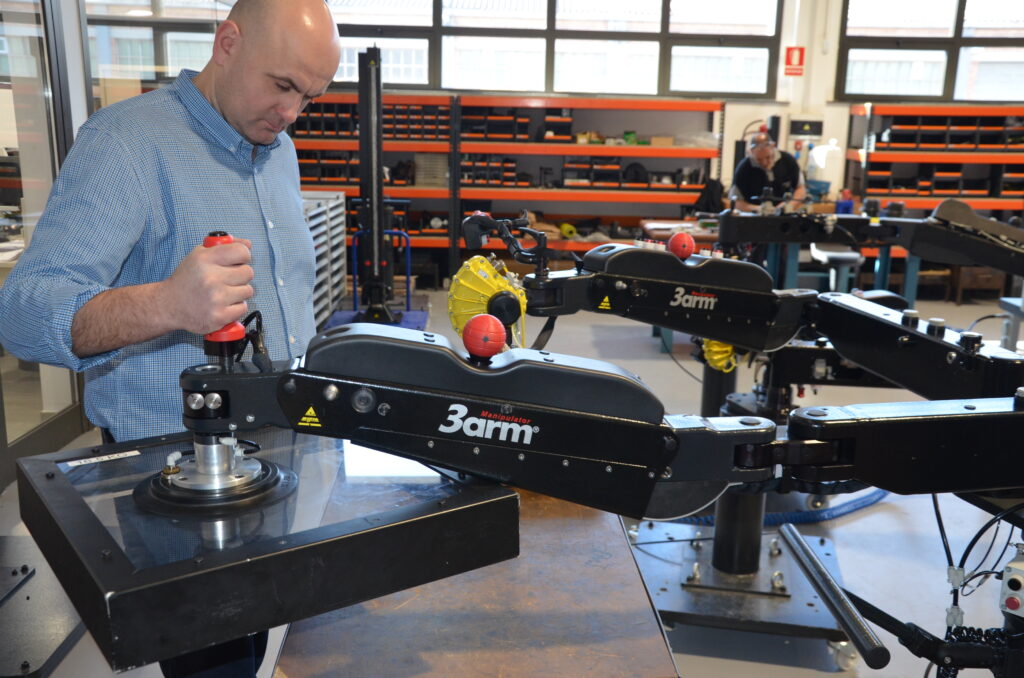
Industrial tool balancer: how to select the correct system according to weight and frequency of use
The competitiveness of a production plant does not depend solely on the speed of the machines or the degree of automation of the line. In machining, assembly, or maintenance operations, performance is also conditioned by the interaction between the operator and the tools used during each work cycle. When these tools are heavy, generate high reaction torques, or are used continuously, accumulated fatigue ends up affecting precision, process quality, and workstation safety.
The heavy duty tool balancer has become an essential element to optimize the ergonomics of workstations. Its function goes far beyond holding a suspended tool: it must guarantee smooth movement, reduce the physical load supported by the operator, and maintain the stability necessary to perform repetitive operations with the maximum level of precision.
However, one of the most common errors consists of selecting the system solely by the load capacity indicated by the manufacturer. To obtain a truly efficient result, it is necessary to analyze the total suspended weight, the frequency of use, the required travel, the type of tool, and the conditions of the industrial environment. Only then is it possible to implement a solution that simultaneously improves productivity, manufacturing ergonomics, and the useful life of the equipment.
The weight of the tool is only a part of the calculation
The first decision when choosing an industrial tool balancer consists of determining the actual load that the system must support. Although it may seem an obvious aspect, in numerous projects only the nominal weight of the tool is considered, leaving out other elements that directly influence the operation of the balancer.
In an industrial application, the suspended load also includes tool holders, sockets, work fixtures, clamping accessories, pneumatic hoses, electric cables, and any other component that remains attached to the tool during its use. The sum of all these elements constitutes the effective load that the balancer must compensate for constantly.
Correctly dimensioning the equipment avoids working at the limits of its capacity and guarantees stable behavior throughout the entire working travel. From the perspective of ergonomic engineering, this aspect is decisive for maintaining smooth, precise, and safe movement throughout the entire day.
The frequency of use determines the most suitable type of balancer
Not all workstations present the same level of demand. A station where the tool is used occasionally requires very different characteristics than a production line that operates during several daily shifts.
In low or medium-intensity applications, spring balancers are usually used, whose spring mechanism allows the tool to be automatically retracted when it is no longer in use. It is an effective solution for processes where the priority is to keep the work area tidy and facilitate access to the tool.
However, when operations are continuous and precision is a fundamental requirement, constant tension systems offer clearly superior advantages. By maintaining a virtually uniform force throughout the travel, they allow the tool to remain suspended with a feeling of weightlessness, reducing the effort required to position it and improving control during machining or assembly.
The choice between both systems should not be based solely on economic criteria, but on the actual behavior expected from the equipment over thousands of work cycles.
Movement stability directly influences machining quality
In processes where the tool must be kept perfectly aligned, any variation in the tension of the system impacts the precision of the operation.
A correctly dimensioned balancer allows the tool to be moved without sudden movements or oscillations, facilitating much more precise control during drilling, tapping, grinding, or assembly operations.
When this stability does not exist, the operator makes constant corrections to compensate for the system’s behavior. These small corrections increase muscle fatigue and reduce process repeatability, affecting both finishing quality and production times.
Useful travel is as important as load capacity
Another aspect frequently underestimated during the selection of a balancer is the effective length of the travel.
Each workstation presents specific needs depending on the height of the part, the available space, and the trajectory that the tool must follow. Choosing an insufficient travel limits freedom of movement and forces the operator to adopt poorly ergonomic postures.
On the contrary, an excessive travel can cause unnecessary stress on the mechanism and accelerate the wear of the system. The objective consists of adapting the travel to the actual production process to achieve a balance between accessibility, stability, and durability.
In this sense, the solutions developed by 3ARM are designed specifically for each application, allowing the system to be configured based on the tool, the working position, and the manufacturing environment.
Load handling: when a conventional balancer is no longer enough
As the weight of the tool increases or additional stresses such as reaction torque appear, a conventional balancer may stop offering the necessary level of assistance.
In load handling applications involving heavy tools or highly repetitive processes, it is essential to value solutions that, in addition to compensating for the weight, provide structural stability and absorb the stresses generated during work.
The industrial articulated arm systems developed by 3ARM respond precisely to these types of needs, allowing the integration of ergonomic systems capable of reducing operator fatigue without limiting freedom of movement or process precision.
This evolution from a conventional balancer toward a complete assistance solution represents a growing trend in sectors such as automotive, machinery manufacturing, the railway industry, aeronautics, and precision machining.
Ergonomics and safety: an investment in productivity
The reduction of musculoskeletal injuries currently constitutes one of the main objectives of engineering and occupational risk prevention departments.
Repetitive tasks with suspended tools generate continuous loads on shoulders, neck, and back that, over time, can translate into sick leave, decreased performance, and loss of production quality.
The implementation of a correctly dimensioned heavy duty tool balancer contributes to minimizing these risks by reducing the physical effort required to manipulate the tool throughout the entire operational cycle.
From the perspective of workplace ergonomics for manufacturing, this improvement not only benefits the worker, but also increases process stability, promotes repeatability, and reduces the probability of errors derived from fatigue.
For this reason, the selection of the system must be understood as a strategic decision that directly influences the overall efficiency of the facility.
A customized solution offers better results than a standard catalogue
Each workstation presents specific characteristics that condition the behavior of the assistance system. The weight of the tool, the geometry of the part, the frequency of use, the necessary travel, the available space, and the type of operation mean that two apparently similar applications require completely different solutions.
The engineering philosophy of 3ARM starts precisely from this technical analysis. Instead of offering a generic solution, it develops configurations adapted to each industrial process to guarantee the right balance between ergonomics, precision, safety, and productivity.
This approach allows for the implementation of systems prepared to evolve together with manufacturing needs, optimizing both the operator experience and the performance of the production line.
Optimize your workstation with the experience of 3ARM
Choosing the right heavy duty tool balancer means much more than selecting a load capacity. It implies understanding the behavior of the tool, analyzing the actual conditions of the process, and designing a solution capable of reducing operational fatigue without compromising precision or efficiency.
At 3ARM, we develop personalized ergonomic solutions for industrial applications where stability, safety, and productivity are critical factors. Our engineering team studies each project to integrate the most appropriate system according to the weight of the tool, the frequency of use, and the specific characteristics of the workstation.
If you wish to optimize your machining, assembly, or maintenance operations through a custom-designed solution, contact the specialists at 3ARM and discover how to improve the ergonomics, precision, and performance of your production process.
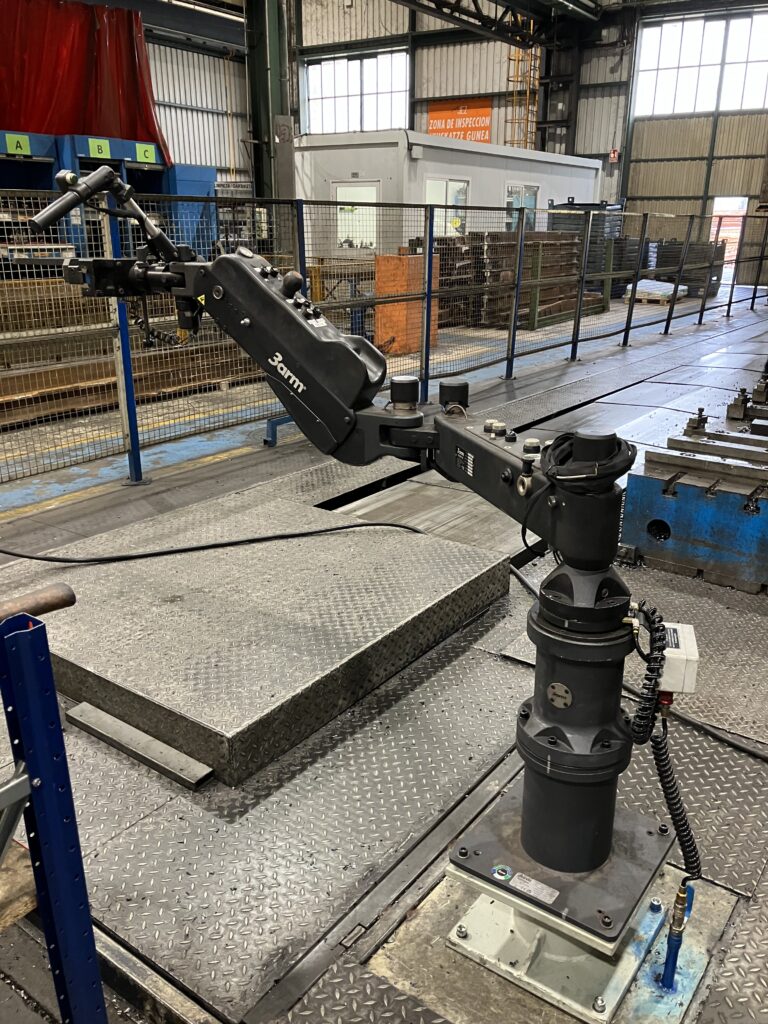
Industrial articulated arm: comparison between ergonomic systems to reduce fatigue and improve precision
Industrial automation has evolved considerably during recent decades, but many assembly, machining, and maintenance operations continue to depend on the direct intervention of the operator.
Even in the most advanced production lines, handling heavy tools, high-torque equipment, or large-volume components still poses a challenge from the perspective of productivity and ergonomics.
The industrial articulated arm has consolidated itself as one of the most effective solutions to optimize the interaction between the operator and the tool. Its function consists not only of supporting a load, but also of improving process precision, reducing physical effort, and increasing the repeatability of each operation.
However, not all ergonomic systems respond to the same needs. The choice between a torque reaction arm, a zero gravity tool balancer, or a Cartesian system must be based on a technical analysis of the production process, taking into account aspects such as load capacity, movement stability, the type of tool, and the ergonomic demands of the workstation.
Why does the selection of the ergonomic system directly influence productivity?
In numerous industrial facilities, the weight of the tool is still considered the sole criterion for selecting an assistance system. This approach is insufficient when factors such as reaction torque, frequency of use, process repeatability, or the precision required during assembly come into play.
The true function of an industrial articulated arm consists of integrating the operator and the tool within a balanced mechanical system that reduces the physical load without limiting freedom of movement. When the equipment is correctly dimensioned, the user can maintain a more natural posture, decrease muscular effort, and control the tool with greater precision throughout the entire operation.
From the perspective of manufacturing ergonomics, this balance translates into a reduction in accumulated fatigue, a lower incidence of musculoskeletal disorders, and an improvement in the quality of the production process.
Torque reaction arms: maximum precision in tightening operations
Articulated arms designed for tightening tools represent one of the most widely used solutions in assembly lines involving high-torque pneumatic or electric equipment.
Their main characteristic is the ability to absorb the reaction generated during tightening, preventing the effort from being transmitted to the operator’s hands, wrists, shoulders, and back. This function not only increases comfort during the working day, but also improves tool stability and favours perpendicular alignment relative to the work surface.
The result is a significant reduction in errors such as screw misalignment, premature tool wear, or loss of assembly quality.
The systems developed by 3ARM incorporate this operating principle through articulated arms designed specifically for industrial tools, offering configurations adapted to the weight, travel, and type of application of each client.
Torque absorption improves both safety and process quality
When a tool generates high reaction torques, the operator must make a continuous effort to stabilize it. This repetitive effort increases muscle fatigue and makes it difficult to maintain a constant position throughout the operation.
By integrating a torque absorption system within the industrial articulated arm, the mechanical load no longer falls on the user and is instead distributed through the structure of the arm. As a consequence, the movement becomes more precise, process variability decreases, and the repeatability of assembly operations is improved.
Zero gravity tool balancer: the best solution for heavy load handling
When the main objective consists of moving large components or especially heavy tools, pneumatic manipulators offer advantages that other systems cannot provide.
Their operation allows for compensating virtually all of the load’s weight, generating a feeling of weightlessness that facilitates manual displacement with minimal effort. This technology is particularly effective in load handling operations involving parts with offset centers of gravity or complex geometries.
Unlike a simple balancer, these systems maintain a high level of stability throughout the entire travel, avoiding pendulum movements that could compromise both operator safety and the integrity of the handled component.
In sectors such as automotive, foundry, machining, or heavy machinery manufacturing, this type of solution allows for reducing cycle times without increasing the physical load on workers.
Cartesian systems: repeatability in linear movements
There are applications where freedom of movement is not the priority. Processes such as drilling, tapping, or certain welding operations require maintaining a perfectly vertical or linear trajectory to guarantee repeatable results.
In these situations, Cartesian systems provide a mechanical guide that eliminates lateral deviations and ensures a constant depth during each work cycle.
Although they offer less flexibility than an industrial articulated arm, they represent a very effective alternative when the process demands perfectly controlled and repetitive movements.
The selection between both systems will always depend on the balance between precision, travel, accessibility, and the ergonomic needs of each workstation.
Load capacity, stability, and ergonomics: three inseparable criteria
One of the most frequent errors consists of comparing industrial arms exclusively by their maximum load capacity. In reality, this datum only represents one of the multiple parameters that must be evaluated during the design phase.
Movement stability determines the ease with which the operator can position the tool without making constant corrections. Similarly, the geometry of the arm, the type of joints, the useful reach, and the weight distribution directly condition the user experience and operational performance.
From the point of view of manufacturing ergonomics, a correctly configured system allows for decreasing physical effort without sacrificing precision or productivity. For this reason, the design must always start from the analysis of the specific application and not solely from the technical specifications of the equipment.
The engineering philosophy of 3ARM responds precisely to this approach. Its solutions are not limited to offering a standard catalogue, but are configured according to the production process, the tool used, the available space, and the real working conditions.
Choosing the right industrial articulated arm requires analysing the complete application
Each industrial environment presents different challenges. An electronic assembly line, an automotive assembly station, or a heavy machinery maintenance post require solutions with completely different characteristics.
Therefore, the selection of the ergonomic system must jointly consider the load capacity, the necessary travel, the torque reaction, the frequency of use, the required precision, and the environmental conditions of the facility.
This approach allows for obtaining a system truly adapted to the process, capable of simultaneously improving productivity, safety, and the quality of the work performed.
Design an ergonomic solution adapted to your process with 3ARM
The incorporation of an industrial articulated arm represents much more than an ergonomic improvement. It means optimizing the interaction between the operator and the tool, reducing accumulated fatigue, increasing the precision of each operation, and creating workstations prepared to face increasingly demanding production processes.
At 3ARM, we develop completely customized industrial assistance solutions for high-torque tools, load handling applications, and processes where manufacturing ergonomics constitutes a strategic factor for productivity. Our technical team analyses each application to design a system that responds to real manufacturing needs and contributes to improving the performance of the facility.
If you wish to implement an ergonomic solution adapted to your industrial process, contact the specialists at 3ARM and discover how a system designed specifically for your application can make the difference in safety, precision, and efficiency.
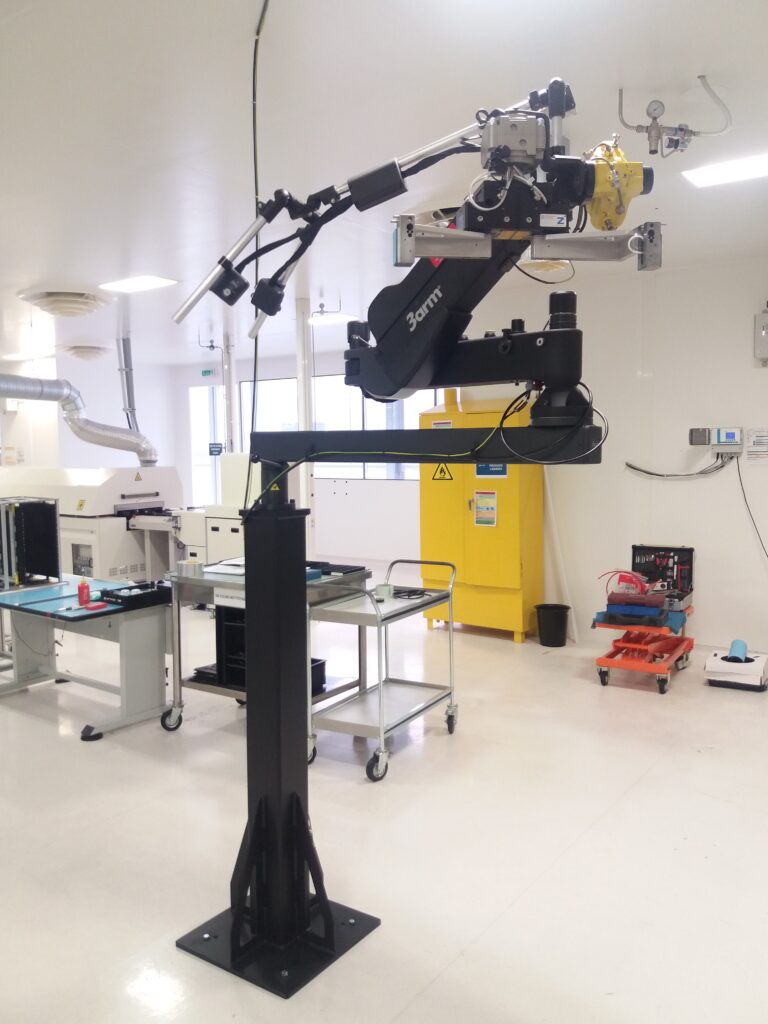
What is the best tool balancer arm for tyre changing in mining?
The tyre changing of mining machinery represents one of the most physically and technically demanding maintenance operations within the extractive sector. The heavy weight of the tools, high tightening torque, extreme environmental conditions, and the need to maintain high levels of equipment availability make it essential to incorporate ergonomic solutions that improve safety and productivity.
The articulating arm lift assist has become one of the most effective solutions to assist the operator during the handling of tightening tools, reducing physical effort, increasing precision, and minimizing the risk of musculoskeletal injuries.
However, choosing the right system goes far beyond load capacity. The useful travel, resistance against harsh environments, the IP protection degree, compatibility with high-torque tools, and compliance with industrial safety and risk prevention standards are determining factors to guarantee a reliable performance over the years.
The importance of working travel in an articulating arm lift assist
In tyre maintenance applications for mining machinery, each intervention presents different conditions. The OTR tyres of rigid trucks, loaders, or dumpers require accessing different heights and positions around the wheel, forcing the operator to perform continuous movements while manipulating heavy pneumatic or electric tools.
For this reason, one of the first aspects that must be analysed when selecting an articulating arm lift assist is the effective working travel. It is not enough to know the length of the arm; it is essential to evaluate the radius of action, the useful height, the freedom of movement, and the ability to keep the tool balanced throughout the entire operation.
A system with insufficient travel forces the operator to adopt awkward postures, constantly move the equipment, or even interrupt the process to reposition the tool. All of this has a direct impact on maintenance times and accumulated fatigue.
The solutions developed by 3ARM stand out precisely for offering different configurations adaptable to each workstation, allowing the reach to be optimized without compromising the stability or precision of the movement.
An articulating arm tool balancer must support much more than the weight of the tool
There is a tendency to select an articulating arm tool balancer solely based on the maximum load indicated in the technical data sheet. However, in mining, the dynamic behaviour of the equipment is much more important than the static capacity.
The tools used for mounting and dismounting wheels generate high reaction forces that can be transmitted directly to the operator if the assistance system is not correctly designed. In addition to the tool’s own weight, the arm must absorb vibrations, compensate for constant changes in position, and maintain a smooth movement even during intensive work cycles.
The 3ARM balancer arms are designed to work with heavy industrial tools while maintaining continuous balance that significantly reduces the physical load on the user. This assistance allows for improved positioning accuracy and decreased fatigue even during prolonged shifts, aspects that are particularly relevant in maintenance operations where downtime has a high economic cost.
Harsh environments: when equipment resistance makes the difference
Mining maintenance workshops present particularly aggressive conditions for any mechanical system. Abrasive dust, moisture, mud, sudden changes in temperature, and continuous use accelerate the wear of equipment that has not been specifically conceived for demanding industrial applications.
Therefore, a lifting arm machine intended for tyre changing must incorporate components prepared to withstand this type of environment without compromising the precision of movement or increasing maintenance needs.
Structural robustness, the quality of the bearings, the guiding systems, corrosion resistance, and the ease of preventive maintenance are variables that directly influence the useful life of the system.
3ARM develops industrial solutions conceived to work in high-demand applications, offering customized configurations that adapt both to the type of tool and to the actual conditions of the environment where it will be installed.
The IP protection degree also influences system reliability
Although the IP protection degree is usually mainly associated with electrical components, its correct evaluation forms part of the global analysis of any industrial installation.
When a workstation incorporates pneumatic or electrical tools, or auxiliary systems exposed to dust and moisture, the selection of components with the appropriate level of protection helps to increase the reliability of the entire installation and reduce incidents derived from environmental contamination.
In mining operations where working conditions change constantly, considering this aspect from the design phase allows for minimizing unplanned stops and extending the useful life of the equipment.
Industrial safety and risk prevention: the true selection criterion
The profitability of an assistance system should not be measured solely by the speed of work. Its main value lies in reducing the operator’s exposure to ergonomic risks and occupational accidents.
Repetitive tasks with heavy tools favour the appearance of musculoskeletal disorders, especially in the shoulders, back, and upper extremities. Added to this are the risks derived from handling equipment subjected to high torque reactions.
The integration of a correctly dimensioned articulating arm lift assist significantly reduces these factors by keeping the weight suspended, absorbing part of the mechanical stresses, and facilitating much more precise control throughout the operation.
This approach fully responds to the principles of industrial safety and risk prevention, contributing both to the well-being of the operator and to compliance with the ergonomics policies implemented by major European mining companies.
What solution offers the best results for tyre changing in mining?
There is no single balancer arm valid for all applications. Each operation requires analysing the weight of the tool, the type of tightening, the necessary travel, the available space, the frequency of use, and the environmental conditions.
Precisely for this reason, 3ARM develops configurable solutions capable of adapting to thousands of different combinations. Its range of articulating arms allows the integration of specific systems for high-torque tools, optimizing workstation ergonomics without limiting the operator’s freedom of movement.
This personalized approach allows for the design of much more efficient workstations, reducing fatigue, increasing maintenance precision, and extending the useful life of both the tools and the assistance system itself.
Optimize the ergonomics and productivity of your operations with 3ARM
Selecting the right articulating arm lift assist represents a direct investment in safety, efficiency, and operational availability. In a sector where every minute of downtime has a considerable economic impact, having a solution specifically designed for real working conditions makes a tangible difference.
At 3ARM, we design fully customized ergonomic assistance systems for demanding industrial applications, including mining machinery maintenance, high-torque tools, and workstations subjected to intensive use. Our technical team analyses each project to develop a solution adapted to the specific needs of each client.
If you wish to improve ergonomics, reduce injuries, and increase productivity in your tyre changing operations, contact 3ARM and discover how we can help you optimize your maintenance process.
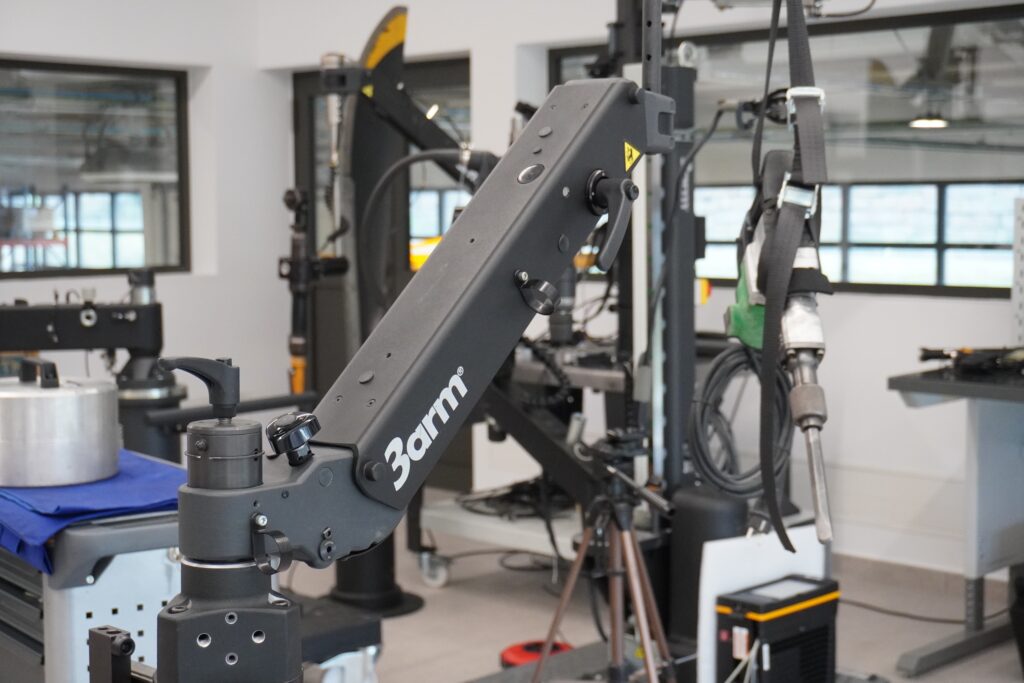
The hidden cost of damaged tools: how a tool balancer reduces breakdowns and replacements
In most industrial facilities, production managers pay close attention to controlling energy costs, preventive maintenance, productivity, and equipment availability. However, there is one area that is rarely analyzed with the necessary depth: the economic impact generated by damaged tools during daily operations.
Grinders, drills, riveters, screwdrivers, and other industrial tools are subjected to intensive use that, over time, can cause breakdowns, frequent repairs, and premature replacements. Many of these incidents are not related to manufacturing defects, but rather to accidental drops, impacts against structures, inadequate handling, or incorrect use resulting from the operator’s accumulated fatigue.
In this context, a tool balancer should not be considered solely as an element intended to improve ergonomics. It also constitutes a strategic solution to protect industrial assets, reduce hidden costs, and maximize the return on investment made in tools.
When the real cost appears after purchase
The acquisition of an industrial tool represents only a part of the total cost that the company will assume throughout its useful life.
Every impact against the ground can affect motors, bearings, electrical connections, or pneumatic components. Even when damage is not immediately visible, it can generate internal misalignments that progressively reduce the tool’s efficiency and increase maintenance requirements.
In industrial environments where the same tool is used over several shifts a day, accumulated wear can become a constant source of repair costs, replacements, and productivity losses.
How a tool balancer protects investment made in equipment
The main function of a tool balancer is to keep the equipment permanently suspended, balanced, and available within the workspace.
Thanks to this assistance, the tool remains under control at all times, significantly reducing the risk of accidental drops when the operator changes position, handles a part, or needs to temporarily release the equipment.
In addition to improving the user experience, this feature directly protects the investment made in high-value industrial tools.
Fewer impacts and greater durability
One of the main benefits of a tool balancer is the reduction of damage caused by accidental impacts.
By keeping the tool suspended through an ergonomic system, the risk of it falling to the ground or hitting nearby structures practically disappears. This helps preserve motors, housings, pneumatic systems, and precision components that normally suffer accelerated wear when tools are handled without assistance.
Less fatigue, fewer errors, and better tool utilization
Physical fatigue directly influences the way industrial tools are used.
When an operator must support the weight of a tool for hours, the probability of making abrupt movements, resting it incorrectly, or using it outside of optimal working conditions increases.
A tool balancer significantly reduces the physical load borne by the worker, promoting more precise movements, better tool handling, and more efficient equipment utilization.
Protection against breakdowns derived from incorrect use
Many breakdowns do not occur due to mechanical failures, but due to operational errors associated with fatigue and working conditions.
By improving control over the tool and reducing the effort required to handle it, a tool balancer helps minimize situations that can cause premature damage, especially in assembly, machining, grinding, welding, or surface finishing applications.
The economic return that many companies overlook
When evaluating an ergonomic solution, attention usually focuses on reducing injuries or improving productivity.
However, there is another economic benefit that deserves to be considered: the reduction of costs associated with corrective maintenance, tool replacement, and downtime.
Decreasing the number of damaged tools means reducing replacement purchases, minimizing technical interventions, and increasing the operational availability of equipment.
In numerous industrial applications, the savings generated by the reduction of breakdowns can quickly offset the investment made in ergonomic assistance systems.
Lower maintenance compared to more complex automated solutions
In recent years, many organizations have explored automated technologies to optimize tool handling and improve working conditions.
Although these solutions may be suitable for certain processes, they usually require high investments, specialized programming, continuous maintenance, and higher operating costs.
The systems developed by 3ARM offer a particularly efficient alternative for numerous industrial applications. Thanks to their robust, mechanical design, they provide immediate assistance with minimal or practically non-existent maintenance.
This operational simplicity allows for improved workplace ergonomics for manufacturing, increased productivity, and tool protection without assuming the complexity or recurring costs associated with more advanced technologies.
Tool balancer: an investment that protects people, equipment, and profitability
The most competitive industrial companies understand that the true value of a tool does not depend solely on its purchase price, but on its ability to generate performance for years at the lowest possible cost.
The implementation of a tool balancer arm brings benefits that go far beyond ergonomics. It protects equipment against impacts and drops, extends its useful life, reduces maintenance requirements, and minimizes breakdowns that directly affect the profitability of operations.
At the same time, it improves industrial safety and risk prevention, favors more efficient handling, and contributes to creating safer and more productive workstations.
At 3ARM we develop ergonomic assistance solutions designed to protect tools, optimize processes, and reduce hidden costs in demanding industrial environments. Contact our team and discover how a tool balancer can help you increase productivity and the return on investment of your operations.
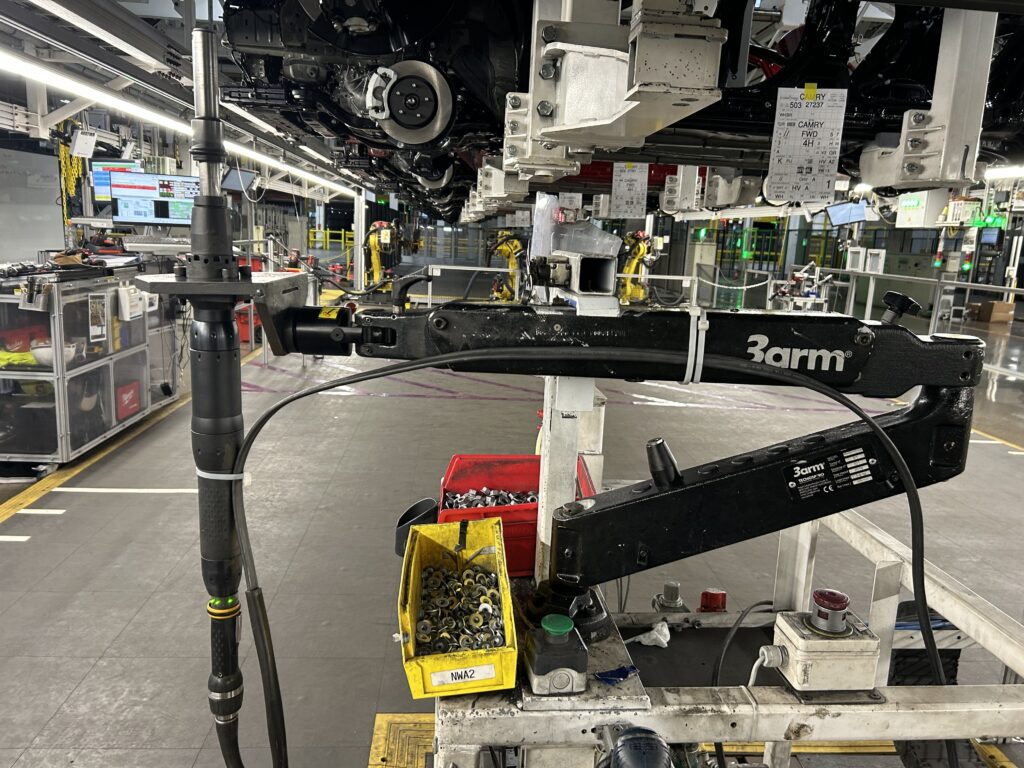
Best Practices for Grinder Tool Support Arm at Height
Working with grinders at height represents one of the greatest challenges in terms of safety, manufacturing ergonomics, and productivity within sectors such as metal construction, industrial manufacturing, infrastructure maintenance, energy, and the naval industry.
Unlike other hand tools, grinders generate high rotation speeds, continuous vibrations, and constant physical strain that multiply when the operator works above the shoulders or in difficult-to-access positions.
In this context, the use of an appropriate tool support arm has become a fundamental element to improve working conditions, reduce risks, and optimize operational efficiency.
The support systems developed by 3ARM allow the transformation of handling heavy tools into safer, more precise, and sustainable tasks from an ergonomic point of view.
The importance of the tool support arm in grinder work at height
Deburring, cutting, weld cleaning, or surface preparation operations usually require long periods of work with tools suspended or positioned above shoulder level. This situation generates a high muscular load on arms, neck, shoulders, and back.
When a tool remains suspended by an appropriate ergonomic system, the operator no longer directly supports its weight. This allows maintaining a more natural posture, improving the control of movements, and significantly reducing accumulated fatigue during the workday.
In addition, a correctly dimensioned grinder support contributes to maintaining a constant working position, especially in repetitive tasks where precision is critical for the final quality of the process.
Operational stability during prolonged work
One of the main benefits of a support system is the stability it provides during prolonged operations. Industrial grinders can weigh several kilograms, especially when they incorporate large-diameter discs or auxiliary protection systems.
The stability provided by a tool balancer arm allows the tool to remain permanently balanced, facilitating smooth movements and reducing constant corrections by the operator. This improves the quality of the finish and decreases the fatigue associated with manual control of the tool.
Vibration reduction and ergonomic improvement
Vibrations are one of the most important factors associated with the intensive use of grinders. Continued exposure can cause muscular discomfort, loss of precision, and, in the long term, problems related to musculoskeletal disorders.
An angle grinder support system helps absorb part of the dynamic loads generated during work. Although it does not completely eliminate the tool’s own vibrations, it does significantly reduce the effort required to stabilize it, allowing for more controlled and comfortable handling.
Tool protection against impacts and drops
One of the least valued aspects when analyzing the return on investment of a support system is the protection it offers to tools.
When a grinder remains suspended by an ergonomic arm, the risk of accidental drops to the floor is considerably reduced. This aspect is especially important in high-value electric or pneumatic tools, where a drop can cause damage to motors, bearings, housings, or safety systems.
The use of a support for small grinders or for larger equipment allows increasing the tool’s lifespan, reducing repair costs, and minimizing downtime associated with unexpected breakdowns.
Secure anchorages and efficient tool positioning
The effectiveness of any support system depends heavily on the quality of its anchorages and its integration within the workstation.
The systems developed by 3ARM are designed to adapt to different industrial configurations, allowing their installation on workbenches, columns, metallic structures, or production lines.
The correct location of the anchorage point allows optimizing the operator’s radius of action and ensuring that the tool remains accessible at all times without generating interference with other operations. In addition to improving productivity, a correct configuration reduces unnecessary movements and contributes to maintaining safer working conditions.
Lower maintenance compared to complex automated solutions
In recent years, various automated solutions for handling industrial tools have appeared. However, many of these alternatives involve high acquisition, programming, and maintenance costs.
One of the main advantages of the mechanical assistance systems developed by 3ARM is their operational simplicity. Being robust equipment designed for demanding industrial environments, they require minimal or virtually zero maintenance compared to robotized solutions or more complex automated systems.
This feature reduces long-term operating costs and avoids downtime associated with updates, programming, or specialized technical interventions.
For many industrial companies, the combination of ergonomics, reliability, and low maintenance cost makes ergonomic arms one of the investments with the best return within continuous improvement programs.
How to improve safety and productivity with a professional tool support arm
Safety in grinder work does not depend solely on operator training or the use of personal protective equipment. It also requires implementing solutions that reduce risks right from the workstation design.
The incorporation of an appropriate tool support arm improves stability, facilitates tool control, protects equipment against accidental damage, and significantly reduces the physical load borne by workers.
In sectors where productivity, safety, and quality are strategic factors, 3ARM’s ergonomic assistance systems represent an effective solution to optimize processes without increasing operational complexity or maintenance costs.
If you wish to improve the safety of your grinder operations, increase the lifespan of your tools, and reduce operator fatigue, contact the 3ARM team. Our specialists will help you identify the most appropriate solution for your application and integrate a support system adapted to the specific needs of your production environment.