In many machining operations, operators continue to perform manual tool changes, tooling adjustments, or repetitive handling tasks in confined spaces. These activities generate cumulative fatigue, impact risks, alignment issues, and constant exposure to musculoskeletal injuries.
For this reason, more and more European manufacturers are incorporating industrial manipulator solutions and assisted handling systems specifically designed for CNC environments.
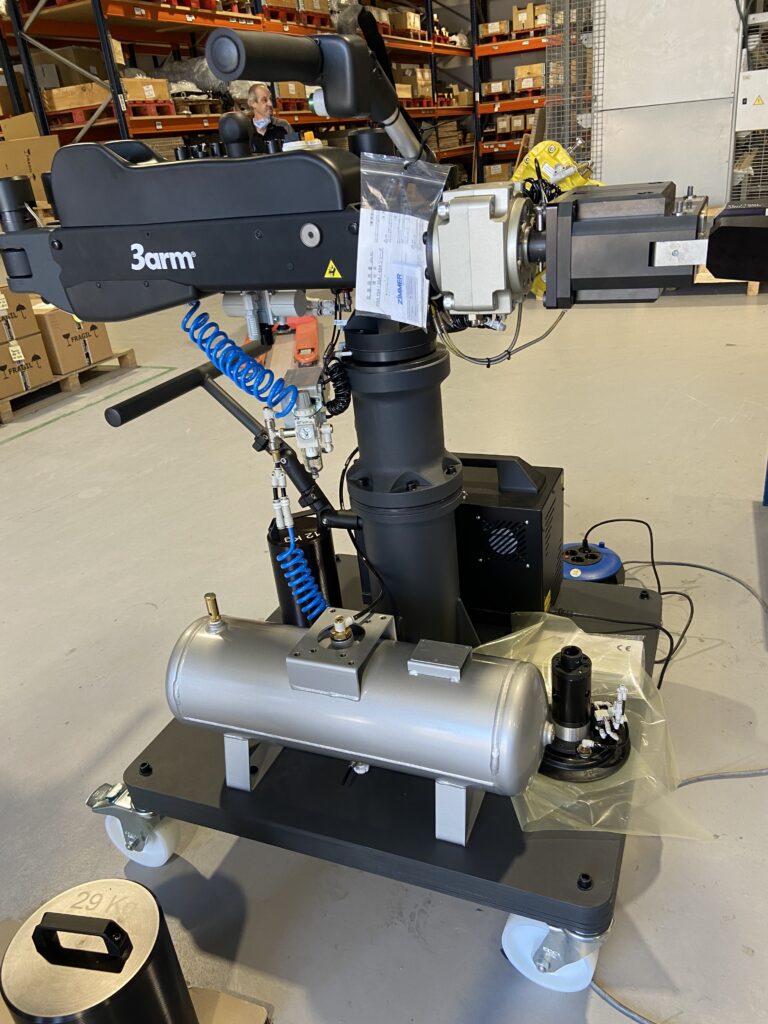
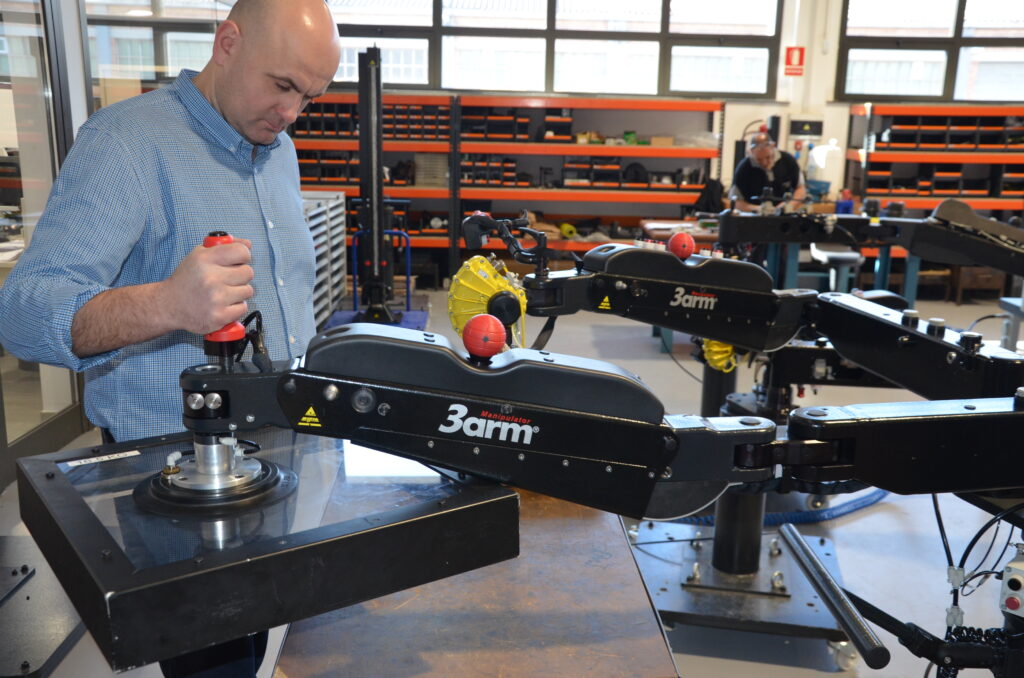
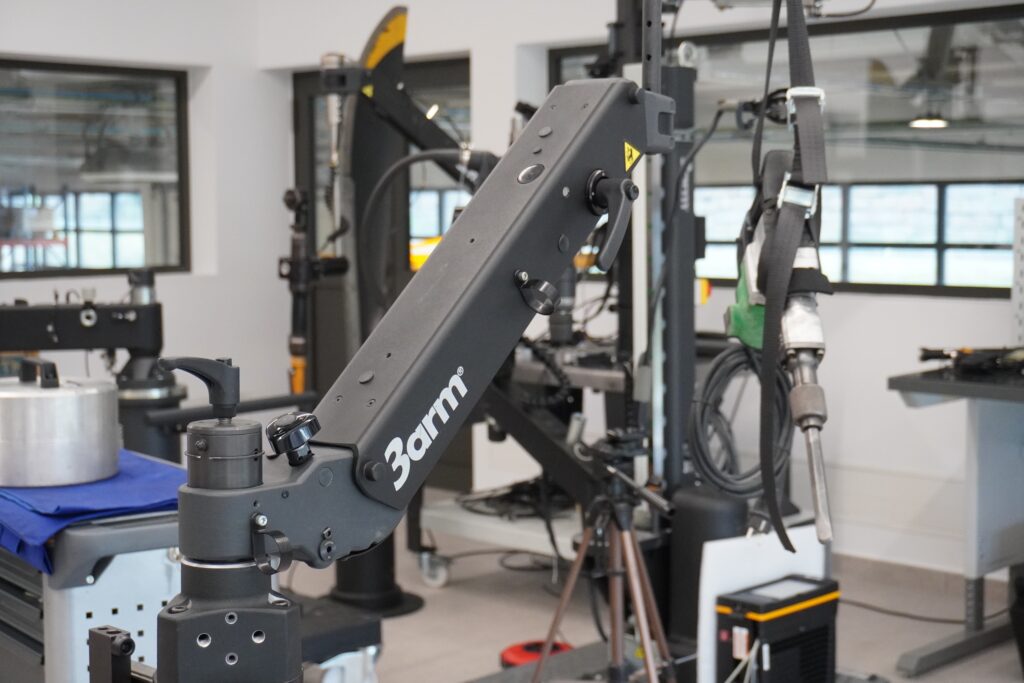
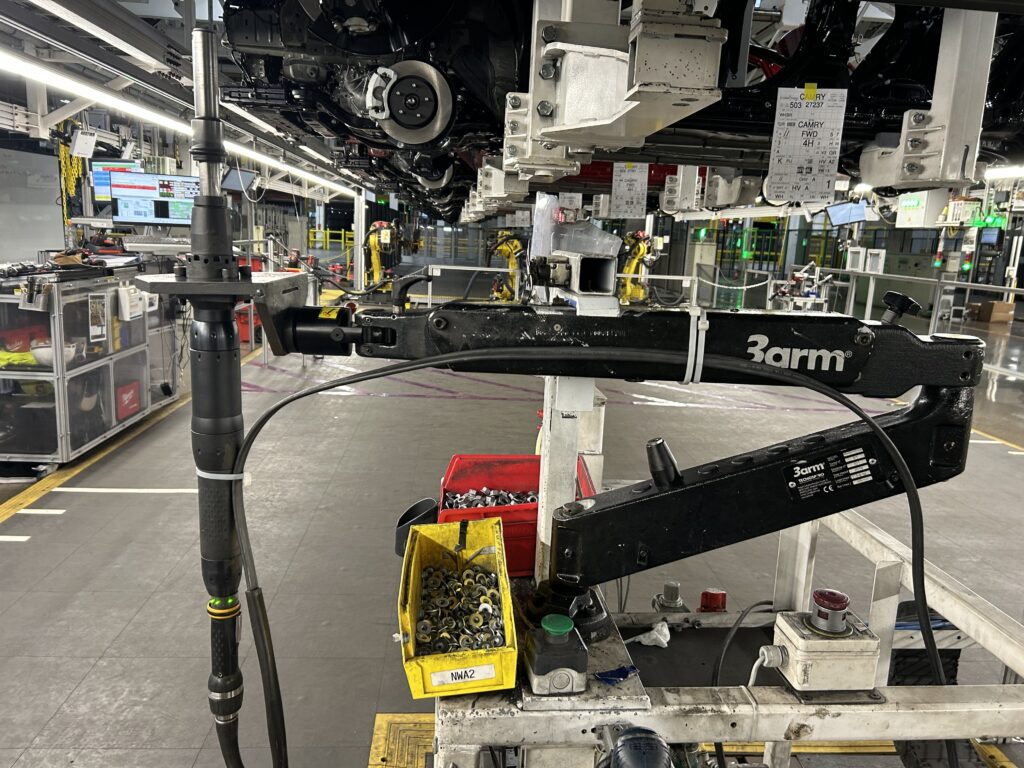
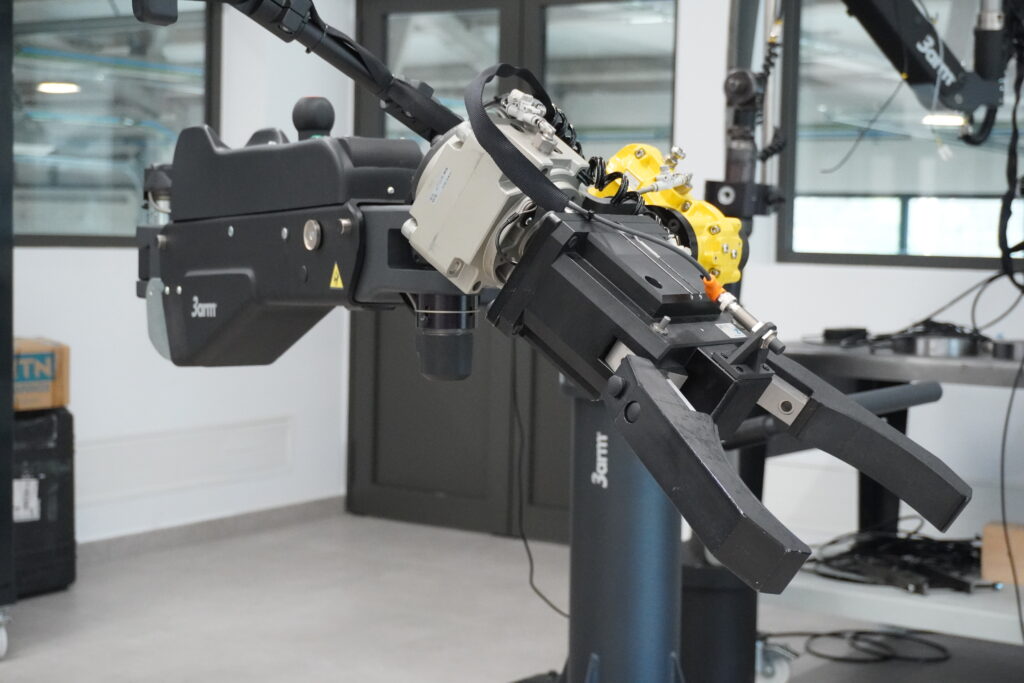
The systems developed by 3ARM reduce the physical load associated with tool handling, improve precision during tool changes, and increase operational safety in demanding machining areas. Unlike conventional systems, industrial zero gravity arms are designed to integrate ergonomically with the workstation and adapt to the operator’s actual movements.
Why CNC Machining Requires Assisted Handling Systems
The weight of modern tool holders has increased considerably in recent years due to the growth of heavy machining, multi-part automation, and high-rigidity applications. In many machining centers, operators handle large HSK, BT, or CAT tool holders daily, as well as angle heads, special tools, and modular cutting systems.
Although many operations appear relatively simple, the constant repetition of lifting, positioning, and alignment movements ultimately generates significant biomechanical stress. The problem becomes even more serious when tools must be installed in limited-access areas or when the operator works in awkward positions in front of the spindle.
A properly designed industrial manipulator arm eliminates much of this physical strain. The system allows the tool to be moved with a weightless sensation while maintaining stability throughout the insertion and extraction process. This reduces muscle fatigue and significantly improves movement control.
In high-precision applications, this ergonomic improvement also impacts machining quality. Incorrect tool holder positioning can cause deviations, taper damage, or alignment issues that ultimately affect spindle performance.
When to Install a Zero Gravity Arm in CNC Machining
Frequent Handling of Heavy Tools
One of the clearest indicators appears when operators repeatedly move heavy tool holders throughout the shift. In these cases, physical wear accumulates quickly and increases the risk of injury.
The zero gravity arms developed by 3ARM completely absorb the tool’s weight and improve maneuverability within the CNC workstation.
Tool Changes in Confined Spaces
Many CNC machines have limited-access areas that force operators to adopt uncomfortable working positions. A manipulator facilitates precise positioning even in complex areas.
The ability to control movement smoothly is especially important when there are risks of collision with the spindle or machined components.
Safety Issues During Assembly
When operators must manually support heavy tools while performing precision alignments, the risks of dropping or impacting components increase significantly.
Assisted handling systems allow the load to remain fully stabilized throughout the entire process.
High-Cycle Repetitive Operations
In production environments where numerous tool changes are performed daily, the use of an industrial manipulator becomes a strategic tool for improving operational sustainability and productivity.
Vertical Stroke Criteria in CNC Applications
One of the most common mistakes when selecting an industrial manipulator for machining applications is underestimating the importance of vertical stroke. In reality, this parameter defines much of the system’s ergonomics and functionality.
Vertical stroke should be analyzed considering spindle height, operator working position, and the complete range of motion required during handling operations.
In vertical machining centers, for example, the system must provide sufficient travel to allow both extraction and precise positioning of the tool holder without creating movement restrictions.
Furthermore, vertical stroke directly affects operational safety. An insufficient range forces operators to compensate with additional physical effort, eliminating many of the ergonomic benefits of the system.
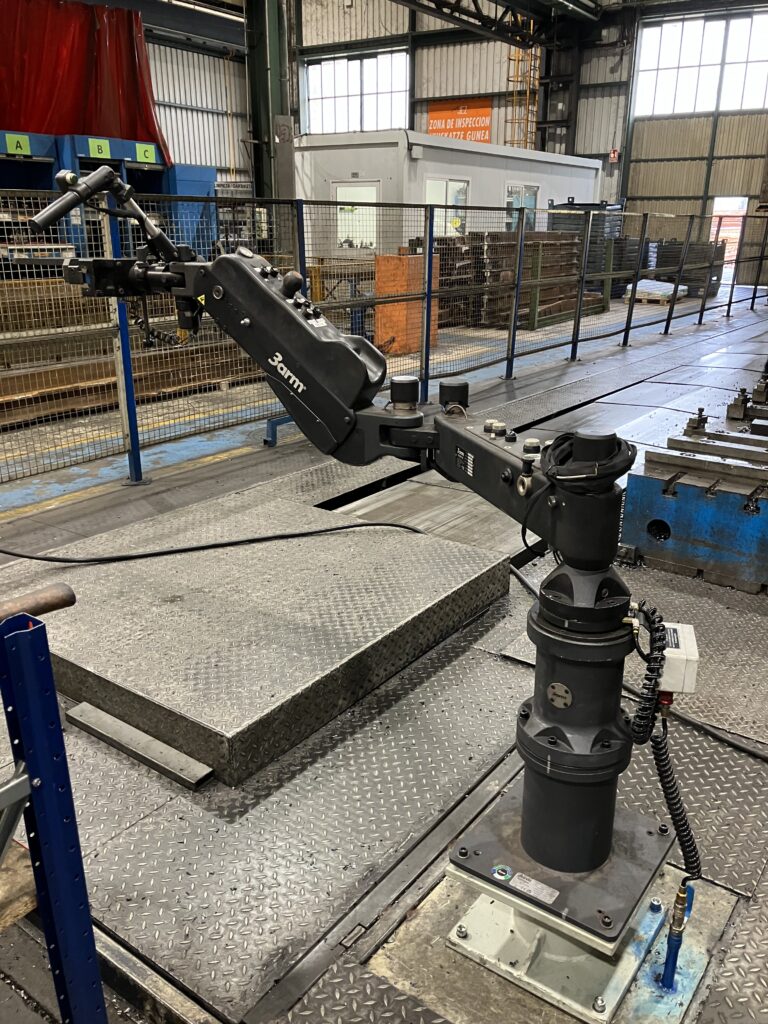
3ARM systems allow travel ranges to be configured according to each workstation, ensuring smooth and controlled movement even in complex heavy-machining applications.
Offset and Motion Geometry: Critical Factors in an Industrial Manipulator
Another fundamental technical aspect is arm offset. In CNC applications, the manipulator must not only support the tool’s weight but also maintain a motion geometry compatible with the machine and the available operating space.
Offset determines the system’s ability to correctly access the work area without structural interference. Incorrect geometry can create reach limitations, uncomfortable movements, or dead zones within the workstation.
For this reason, 3ARM develops solutions specifically configured according to machine type, workstation layout, and the actual characteristics of the machining process.
In precision applications, small geometric errors can directly affect operator comfort and movement stability.
Safety Zones in Machining and Collision Prevention
CNC environments present multiple operational risks related to rotating elements, automatic movements, and machined surfaces. Therefore, safety zones represent an essential criterion when integrating any industrial manipulator arm.
A poorly configured system can interfere with automatic doors, spindle travel paths, or robotic systems. It can also create additional risks if the arm enters uncontrolled work areas.
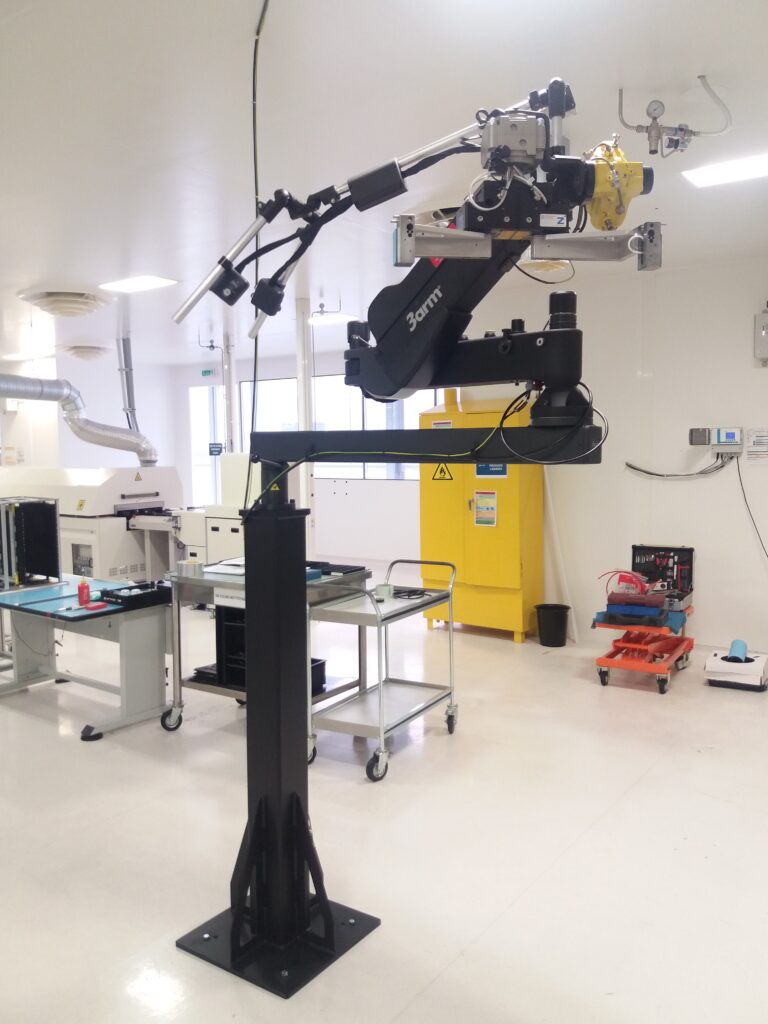
3ARM assisted handling systems incorporate solutions designed to maintain safe and controlled movements within the production environment. This includes travel limiters, specific arm configurations, and geometries adapted to each machining cell.
Proper safety zone definition not only protects operators but also prevents damage to tools, spindles, and high-value machined components.
How Assisted Handling Systems Improve CNC Productivity
There is a direct relationship between manufacturing ergonomics and operational performance in industrial machining. When operators work without excessive physical strain, movements become more precise and consistent.
Industrial manipulators reduce downtime associated with manual tool positioning and minimize errors during tooling changes.
In addition, the weightless sensation provided by these systems significantly improves the operator experience during high-frequency repetitive tasks. This is especially important in machine shops operating continuous production schedules or frequent product changeovers.
The most advanced European companies no longer view these systems solely as ergonomic solutions. They are now an integral part of productivity optimization and occupational risk prevention strategies within industrial environments.
Discover the Right Ergonomic Solution for Your CNC Area
Every machining center presents different challenges related to space, work geometry, tool weight, and operational safety. For this reason, selecting the right industrial manipulator requires technical expertise and a real understanding of the production environment.
3ARM develops assisted handling systems specifically adapted to complex industrial applications, helping European manufacturers improve ergonomics, precision, and productivity in CNC machining areas.
If your company is looking to reduce risks, optimize tool changes, and improve operational safety at CNC workstations, the 3ARM technical team can help you develop a customized solution for your manufacturing process.