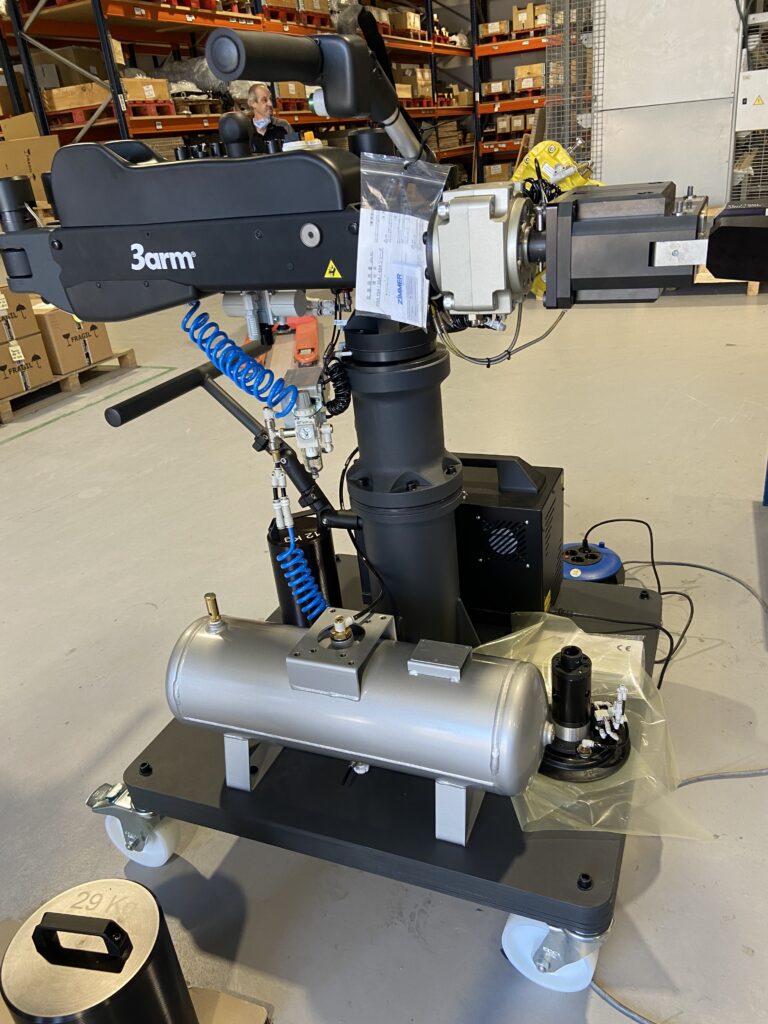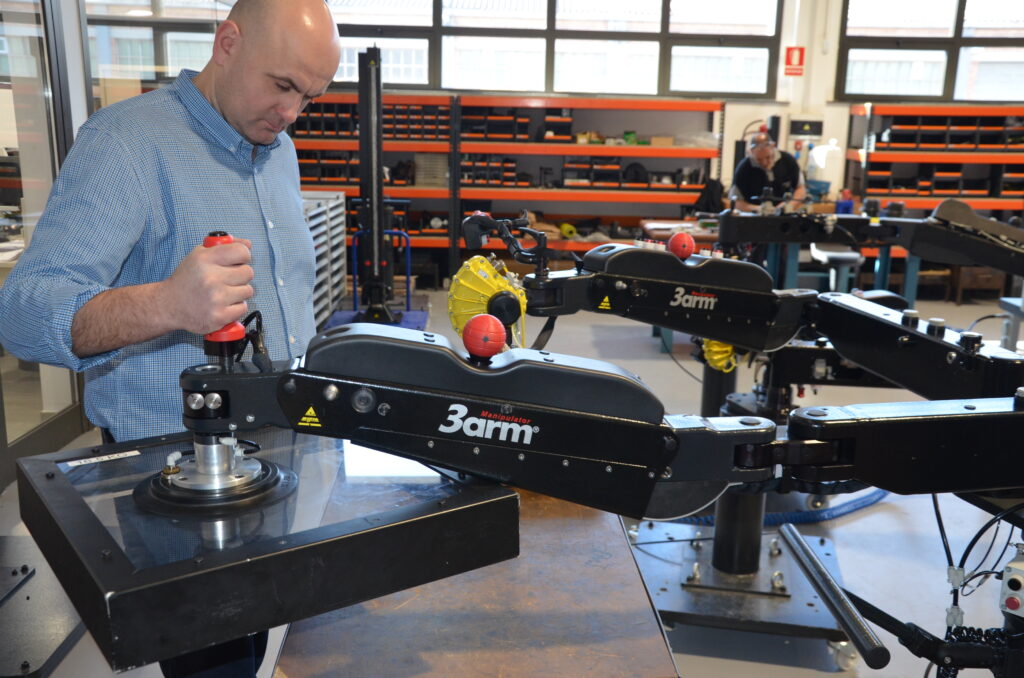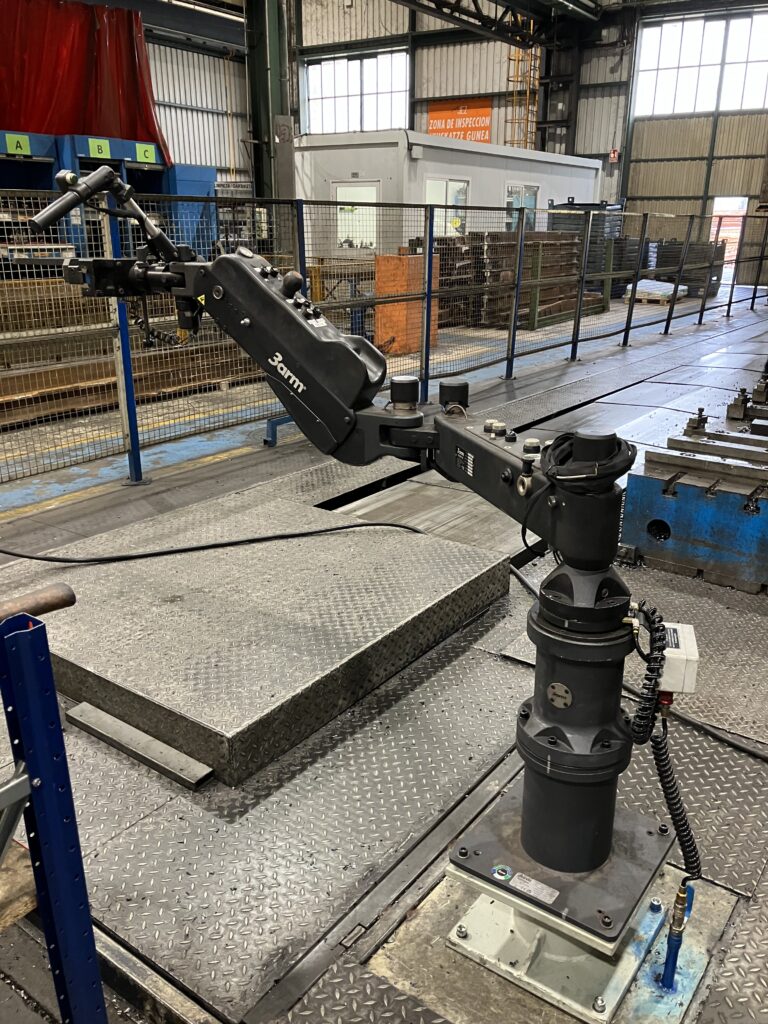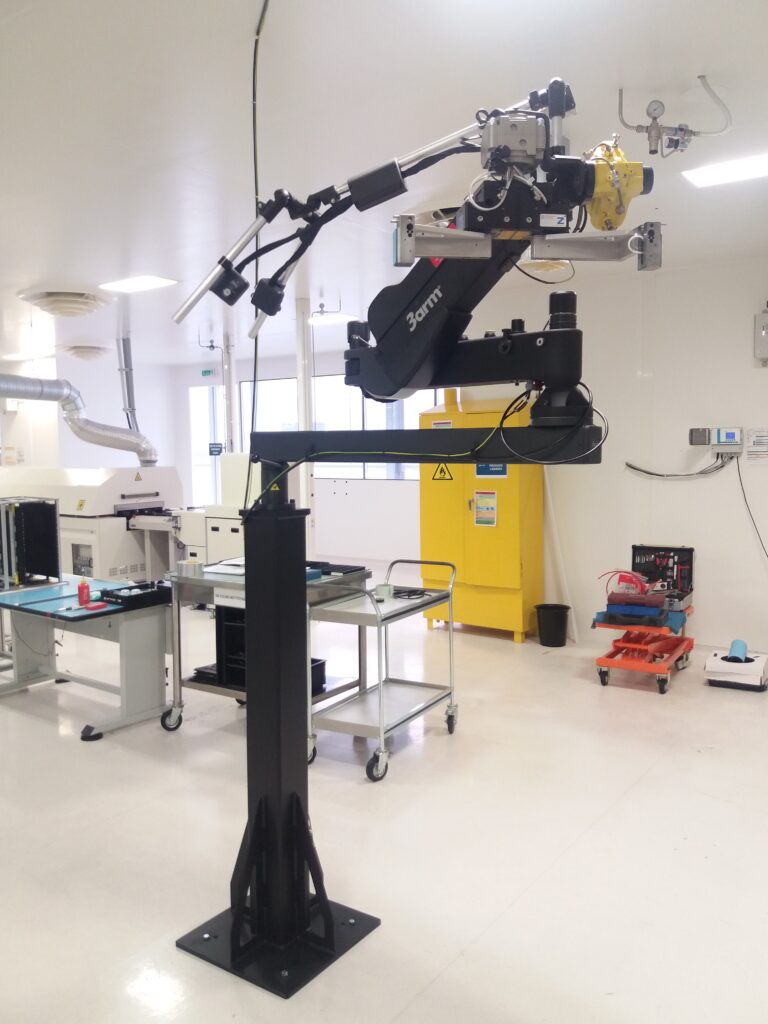
Especially in CNC operations, heavy part handling or intensive use of torque tools, the difference between an efficient line and a line limited by operational fatigue often lies in how human effort is managed.
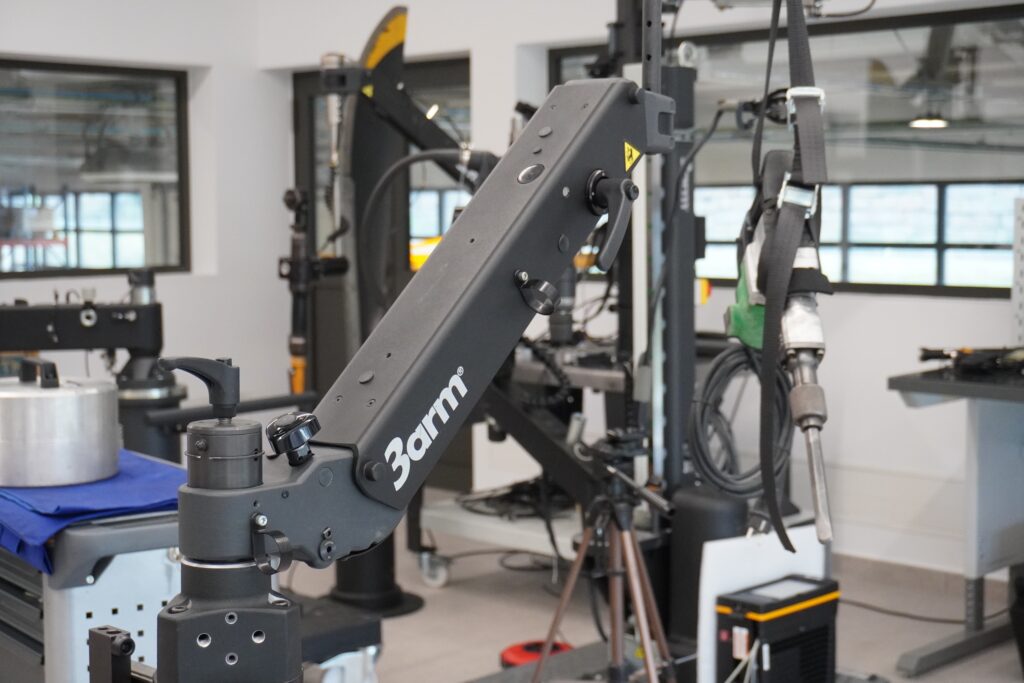
In this context, solutions such as those developed by 3ARM make it possible to transform shop floor handling into a controlled, precise and physically effortless process, directly impacting productivity and operational stability.
Effort reduction: the invisible foundation of machining efficiency with industrial manipulator arm
The incorporation of an industrial manipulator arm in machining environments introduces a structural change in the relationship between operator and load.
It is not simply about making lifting easier, but about completely eliminating the perception of weight through pneumatic or servo-assisted compensation systems.
This principle of operational weightlessness makes it possible to work with heavy parts or tools as if they were weightless, significantly reducing accumulated fatigue throughout the shift.
In terms of workplace ergonomics for manufacturing, this translates into a direct reduction in the risk of musculoskeletal disorders, one of the main hidden cost factors in European industry.
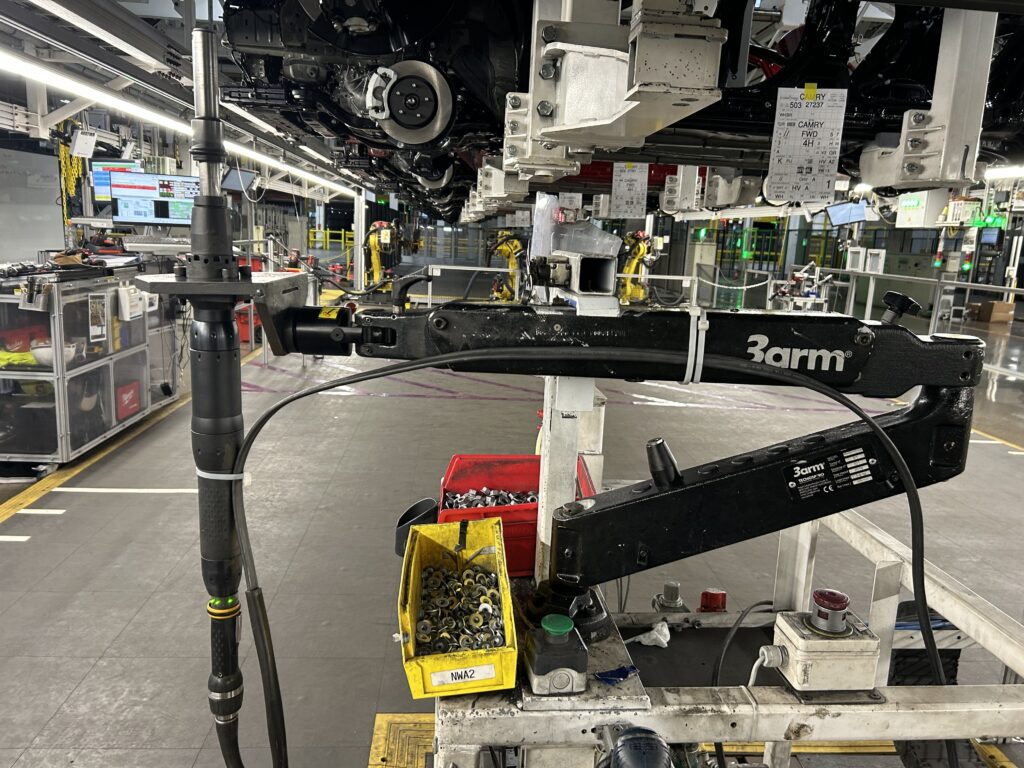
In addition, in processes where the operator must hold tools with high torque or constant vibration, the industrial manipulator acts as an absorption system that eliminates the transfer of effort to the human body, maintaining precision without compromising operator health.
Loading time reduction: direct impact on the production cycle
One of the most immediate, and measurable, benefits of using an industrial manipulator arm is the reduction of loading and unloading times in CNC machines.
Under traditional conditions, manual part handling involves:
• constant adjustments
• micro-corrections
• pauses caused by fatigue
• precision limitations under load
With a zero gravity system, the operator can position the part smoothly, quickly and with absolute movement control. This eliminates inertia, reduces downtime and allows a constant production rhythm to be maintained.
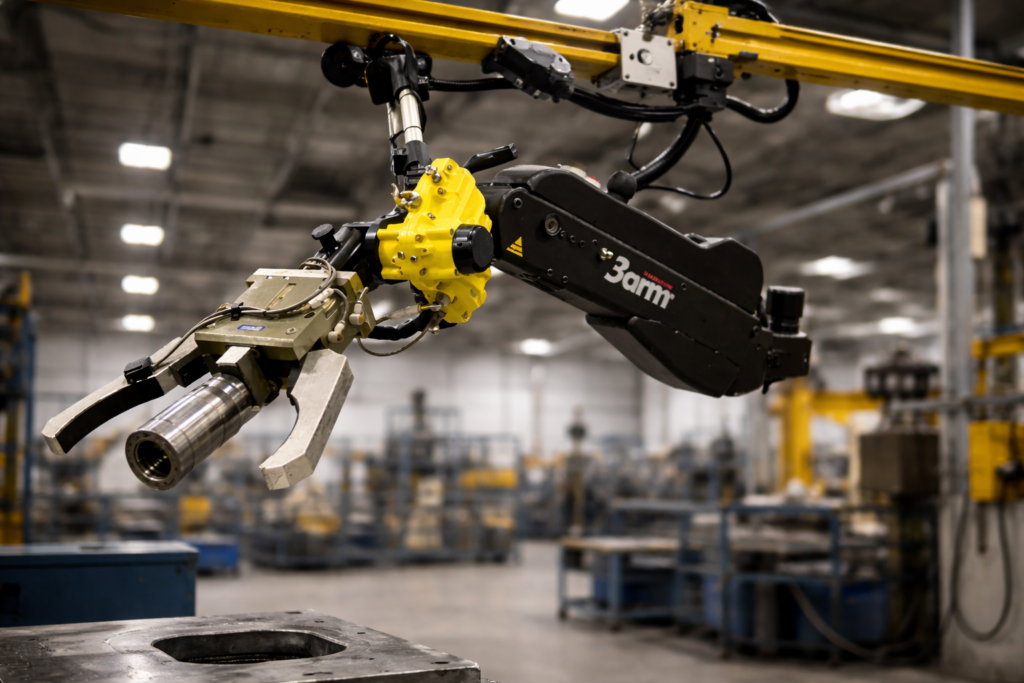
In addition, the possibility of integrating specific gripping systems, such as vacuum, magnetic or mechanical gripping, makes it possible to work with complex geometries without penalizing handling time.
Movement control under load
The true differential is not only moving faster, but moving better. The manipulator allows a controlled trajectory to be maintained even with heavy loads, avoiding impacts, misalignments or positioning errors.
Elimination of repetitive manual adjustments
By eliminating physical effort, the micro-interruptions associated with continuous load readjustment also disappear, which results in more stable cycles.
Adaptability to multiple stations
Thanks to column, overhead or mobile configurations, the same industrial manipulator can serve several stations, optimizing the investment.
Microstop reduction: real operational stability
One of the least visible, but most critical, aspects in machining is the accumulation of microstoppages.
These are not usually recorded as official stoppages, but they directly impact productivity:
• pauses caused by fatigue
• handling errors
• manual adjustments
• interruptions due to discomfort
The implementation of an industrial manipulator arm drastically reduces these micro-interruptions by eliminating the main cause: sustained physical effort.
In environments where process continuity is key, this improvement translates into:
• greater real machine availability
• greater consistency in production
• reduction of operational variability
Beyond handling: precision, safety and return on investment
The value of an industrial manipulator does not stop at ergonomics. Its impact covers three key dimensions:
Operational precision improves by eliminating the interference of physical effort in movement control. This is especially relevant in machining operations where the exact position of the part determines the final result.
Safety increases by keeping the operator away from risk situations associated with unstable loads or sudden movements.
In addition, it contributes to compliance with European regulations on ergonomics and occupational safety, such as those collected by the European Agency for Safety and Health at Work.
Finally, return on investment materializes in the reduction of indirect costs: fewer sick leaves, fewer errors, less operational wear.
The 3ARM approach: precision ergonomics applied to machining
Unlike other handling systems focused exclusively on the load, 3ARM solutions are designed to work in dynamic processes involving tools, torque and precision.
Their systems allow:
• neutralizing the weight of tools up to 70 kg
• absorbing torque and vibration
• maintaining absolute control in repetitive operations
This positions 3ARM not only as a manufacturer of manipulators, but as a specialist in ergonomics applied to industrial precision.
Optimizing without automating: the real “quick win” in machining
In a context where full automation is not always viable or necessary, the use of an industrial manipulator arm represents one of the most effective “quick wins” for improving productivity without completely redesigning the line.
Reducing effort, shortening loading times and eliminating microstoppages are not isolated improvements: they are structural changes that directly impact the overall efficiency of the process.
If you are looking to optimize your machining operations with a solution that combines precision, ergonomics and real performance, the next step is to evaluate how to integrate these systems into your production environment.
Discover how3ARM solutions can adapt to your process and start generating results from day one.