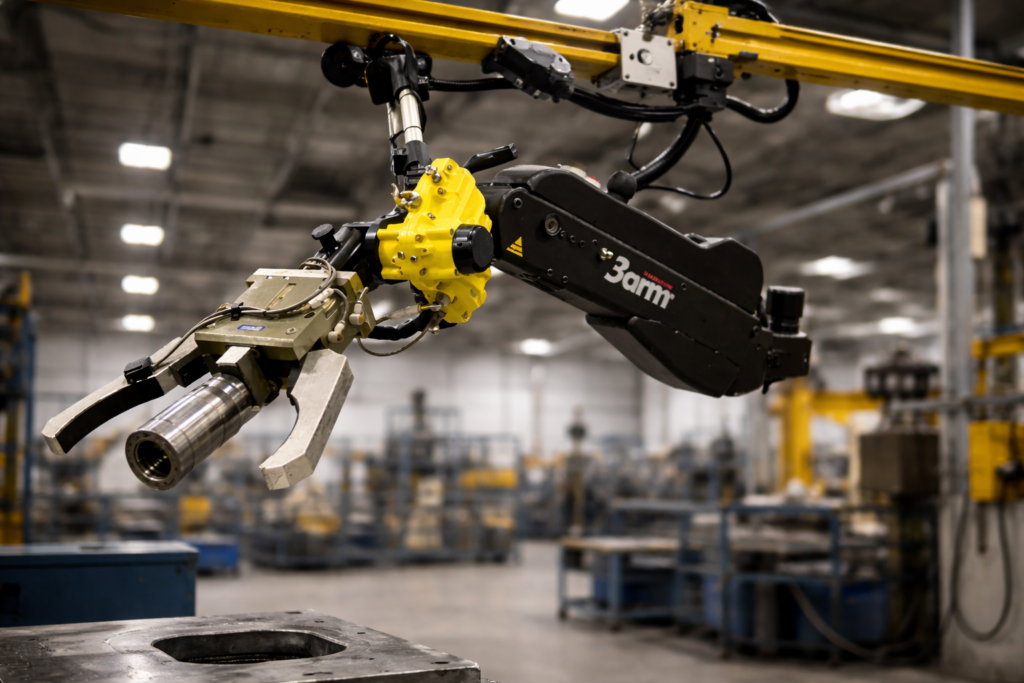

The European automotive industry is facing one of the most complex periods of the last few decades. Pressure on productivity, the need to improve manufacturing ergonomics, and increasing quality requirements have turned collaborative automation and operator assistance systems into strategic elements within assembly lines.
In this context, the use of an industrial manipulator is no longer limited to the need to move heavy loads.
Today, European manufacturers are looking for solutions capable of improving assembly precision, reducing musculoskeletal injuries, and optimizing cycle times without compromising production flexibility.
This is precisely where the systems developed by 3ARM have established themselves as an international benchmark in advanced ergonomic applications for the automotive industry.
Unlike other industrial sectors, automotive production lines operate with extremely demanding repetitive cycles. A small ergonomic error can result in cumulative fatigue, assembly defects, reduced operational performance, and increased absenteeism.
For this reason, assisted handling systems have become a key component of modern lean manufacturing and occupational risk prevention strategies in industrial companies.
How the Industrial Manipulator Has Transformed Ergonomics in Automotive Manufacturing
The growth of electrification, platform modularity, and vehicle customization has increased the complexity of assembly operations.
This has led European manufacturers to seek solutions capable of quickly adapting to different models, tools, and work configurations.
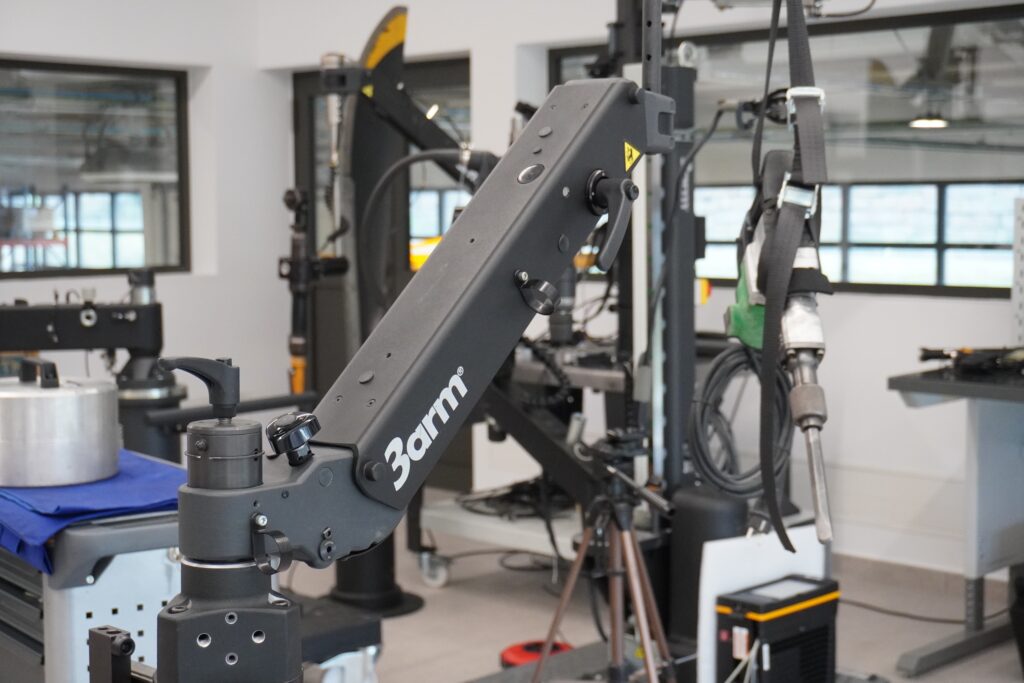
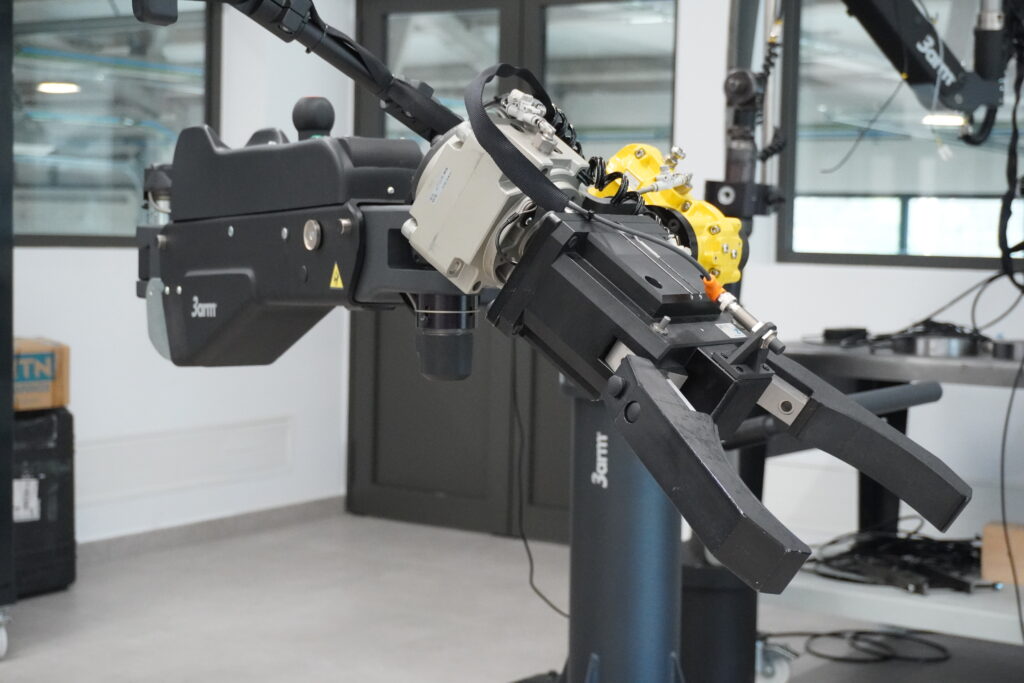
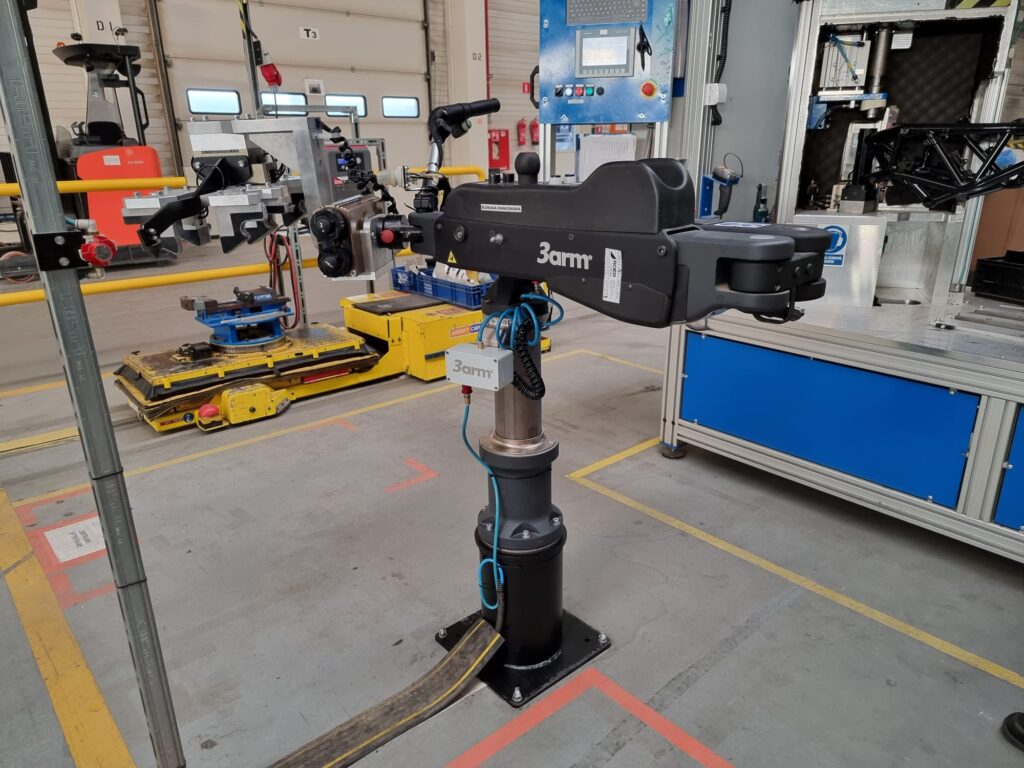
A modern industrial manipulator arm does more than simply absorb weight. It also controls torque reactions, stabilizes pneumatic or electric tools, improves component positioning, and reduces repetitive movements that cause shoulder, back, and wrist injuries.
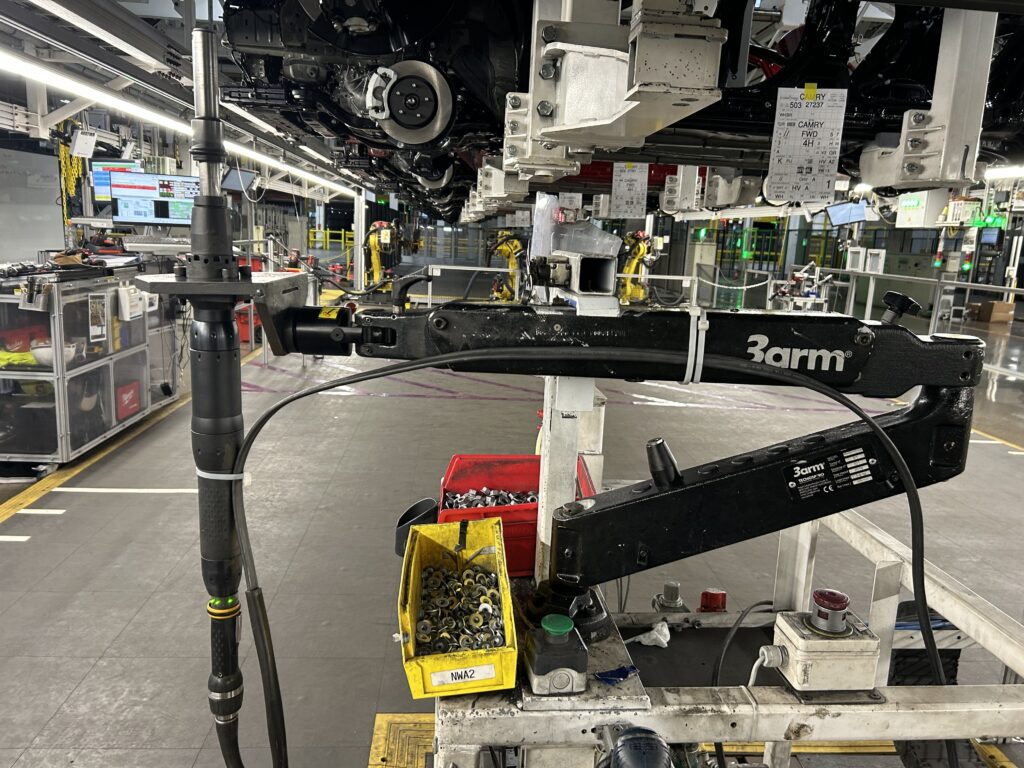
In industrial fastening applications, for example, 3ARM ergonomic arms allow operators to neutralize the forces generated by high-torque tools, improving both operator safety and tightening accuracy.
This type of solution is particularly relevant in chassis assembly stations, electric vehicle battery assembly lines, and body structure manufacturing operations.
Top 7 Industrial Manipulator Applications in Automotive Manufacturing
1. High-Torque Tool Assembly
One of the most widespread uses of the industrial manipulator in the European automotive sector is assistance during torque reaction operations. Tightening tools used in assembly lines generate constant forces that, without ergonomic assistance, produce cumulative fatigue and muscle injuries.
Assisted handling systems absorb torque reaction forces and maintain precise alignment during assembly. This improves tightening quality and reduces deviations in critical processes.
2. Electric Vehicle Battery Handling
The transition to electric mobility has significantly increased the need for advanced ergonomic solutions. Battery modules feature complex dimensions and considerable weight, making manual handling difficult.
A manipulator allows batteries to be positioned with millimetric precision, minimizing installation risks and reducing cycle times in EV assembly lines.
3. Windshield and Panoramic Roof Installation
Glass installation operations require stability, precision, and movement control. Assisted systems reduce alignment errors and minimize damage to delicate components.
In these applications, load manipulators help maintain high production rates without compromising operator safety.
4. Ergonomic Support for Underbody Assembly
Underbody stations represent one of the greatest ergonomic challenges in automotive manufacturing. Operators frequently work in forced positions while using heavy tools.
Industrial articulating arm solutions allow greater reach and reduce fatigue associated with repetitive movements and suspended loads.
5. Door and Interior Panel Handling
The installation of doors, dashboards, and interior panels requires precision and stability to avoid cosmetic damage and assembly defects.
An industrial manipulator facilitates controlled movements and significantly reduces the risks associated with manually handling bulky components.
6. Integration into Flexible Assembly Stations
European factories are evolving toward more flexible production lines capable of assembling multiple vehicle models on the same platform.
Assisted handling systems enable tools and configurations to be adapted quickly without completely modifying the workstation.
7. Reduction of Musculoskeletal Injuries
Perhaps the most significant impact of these solutions lies in occupational risk prevention within industrial environments. Repetitive motion injuries remain one of the leading causes of absenteeism in manufacturing.
The ergonomic systems developed by 3ARM help reduce biomechanical loads, improving operational sustainability and employee working conditions.
Repetitive Handling, Injury Reduction, and Cycle Time Optimization
Full automation is not always feasible in automotive manufacturing. Many operations still require human flexibility, especially in high-variability production lines. For this reason, European manufacturers are increasingly adopting hybrid solutions where the industrial manipulator acts as an ergonomic extension of the operator.
In repetitive applications, the combination of mechanical assistance and ergonomic control helps reduce physical strain while maintaining adaptability. This has a direct impact on cycle times, assembly quality, and the reduction of workplace incidents.
According to various European studies related to industrial ergonomics, reducing repetitive movements can significantly decrease absences caused by musculoskeletal disorders and improve overall line efficiency.
Pros and Cons of Using an Industrial Manipulator in Automotive Manufacturing
| Advantages | Disadvantages |
| Reduction of musculoskeletal injuries | Requires proper ergonomic integration |
| Improved assembly precision | Requires operator training |
| Reduced operator fatigue | Higher initial investment than manual solutions |
| Cycle time optimization | Some applications require customization |
| Higher assembly quality | Requires preventive maintenance |
| Improved working environment | Specific adaptation according to tool type |
| Lean manufacturing compatibility | Initial technical configuration |
Why Assisted Handling Systems Are Strategic for European Industry
European industry currently faces challenges related to an aging workforce, shortages of skilled labor, and increasingly strict ergonomic regulations.
For this reason, assisted handling systems are no longer viewed as accessories but as strategic investments. Automotive companies are seeking solutions capable of combining productivity, safety, and operational flexibility.
3ARM has developed solutions specifically designed for demanding industrial environments, offering adaptable configurations for torque tools, complex assembly stations, and highly repetitive applications.
The Future of the Industrial Manipulator in Automotive Manufacturing
The evolution toward smart factories will continue increasing demand for advanced ergonomic solutions. Manufacturers need systems capable of integrating with flexible production lines, intelligent tools, and increasingly complex processes.
In this scenario, the industrial manipulator will not only continue to serve as a physical assistance tool. It will also become a key component in improving industrial competitiveness, reducing risks, and optimizing interaction between operators and technology.
Companies that invest in intelligent ergonomic solutions will be better prepared to face the production challenges of the next decade.
Improve the Ergonomics and Productivity of Your Production Line with 3ARM
In industrial environments where every second counts, advanced ergonomic solutions make the difference between an efficient production line and an operation limited by fatigue, errors, and occupational risks.
The systems developed by 3ARM optimize complex assembly operations, reduce physical effort, and improve precision in demanding automotive applications.
If your company is looking to improve ergonomics, reduce injuries, and increase operational efficiency, the 3ARM team can help design a solution tailored to the real needs of your production line.
Discover how 3ARM assisted handling systems can transform your industrial processes.