Working with grinders at height represents one of the greatest challenges in terms of safety, manufacturing ergonomics, and productivity within sectors such as metal construction, industrial manufacturing, infrastructure maintenance, energy, and the naval industry.
Unlike other hand tools, grinders generate high rotation speeds, continuous vibrations, and constant physical strain that multiply when the operator works above the shoulders or in difficult-to-access positions.
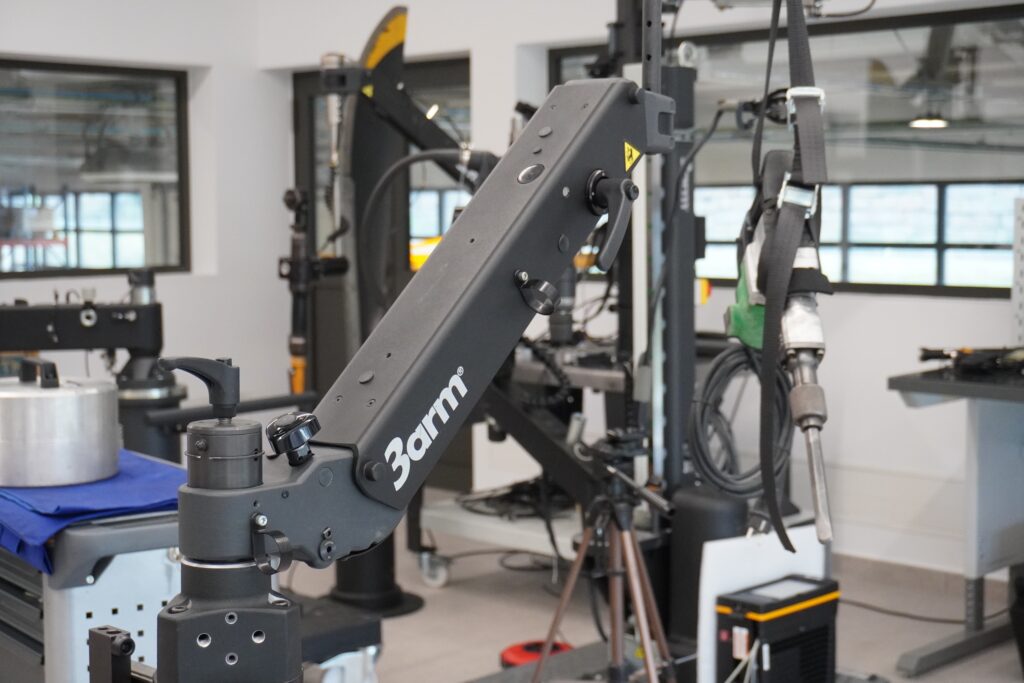
In this context, the use of an appropriate tool support arm has become a fundamental element to improve working conditions, reduce risks, and optimize operational efficiency.
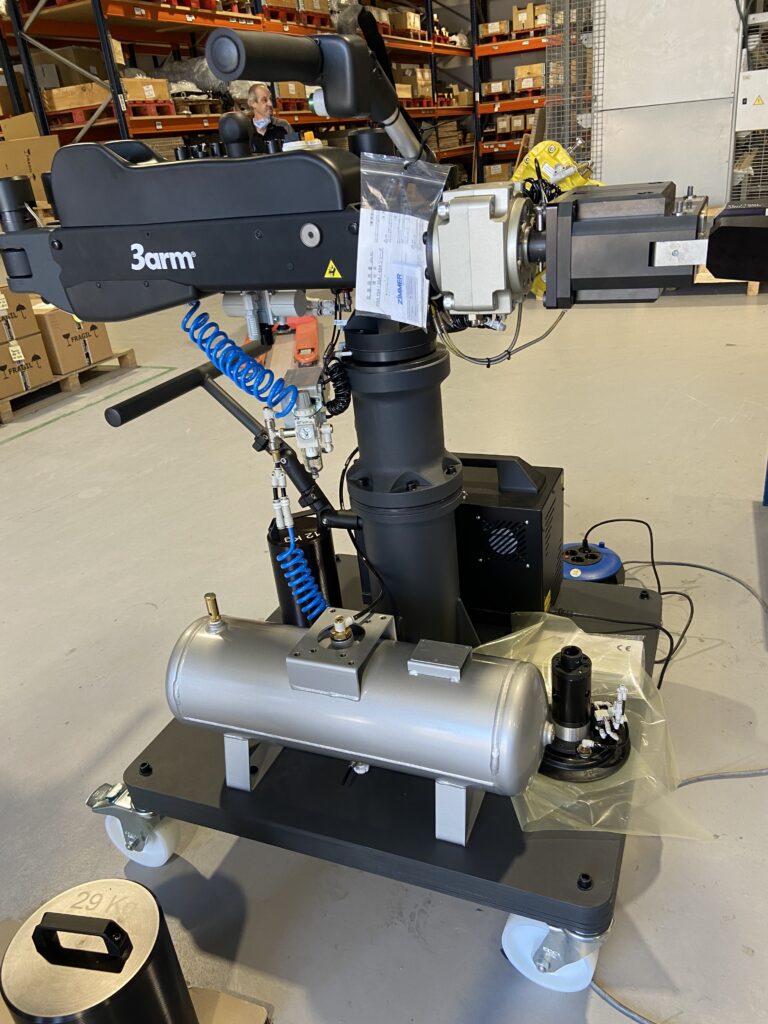
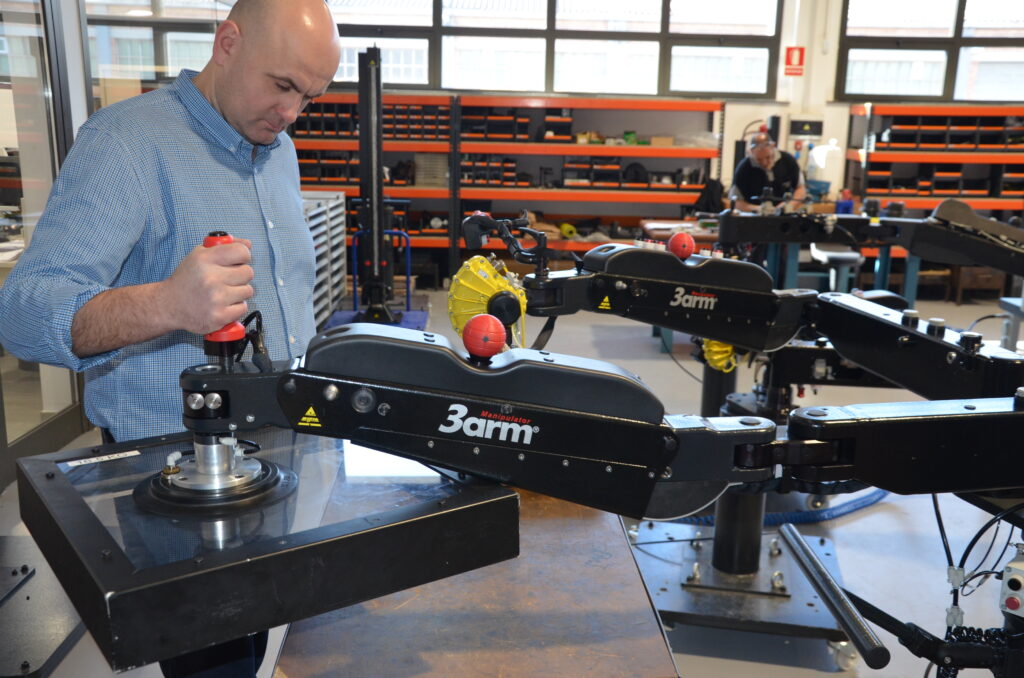
The support systems developed by 3ARM allow the transformation of handling heavy tools into safer, more precise, and sustainable tasks from an ergonomic point of view.
The importance of the tool support arm in grinder work at height
Deburring, cutting, weld cleaning, or surface preparation operations usually require long periods of work with tools suspended or positioned above shoulder level. This situation generates a high muscular load on arms, neck, shoulders, and back.
When a tool remains suspended by an appropriate ergonomic system, the operator no longer directly supports its weight. This allows maintaining a more natural posture, improving the control of movements, and significantly reducing accumulated fatigue during the workday.
In addition, a correctly dimensioned grinder support contributes to maintaining a constant working position, especially in repetitive tasks where precision is critical for the final quality of the process.
Operational stability during prolonged work
One of the main benefits of a support system is the stability it provides during prolonged operations. Industrial grinders can weigh several kilograms, especially when they incorporate large-diameter discs or auxiliary protection systems.
The stability provided by a tool balancer arm allows the tool to remain permanently balanced, facilitating smooth movements and reducing constant corrections by the operator. This improves the quality of the finish and decreases the fatigue associated with manual control of the tool.
Vibration reduction and ergonomic improvement
Vibrations are one of the most important factors associated with the intensive use of grinders. Continued exposure can cause muscular discomfort, loss of precision, and, in the long term, problems related to musculoskeletal disorders.
An angle grinder support system helps absorb part of the dynamic loads generated during work. Although it does not completely eliminate the tool’s own vibrations, it does significantly reduce the effort required to stabilize it, allowing for more controlled and comfortable handling.
Tool protection against impacts and drops
One of the least valued aspects when analyzing the return on investment of a support system is the protection it offers to tools.
When a grinder remains suspended by an ergonomic arm, the risk of accidental drops to the floor is considerably reduced. This aspect is especially important in high-value electric or pneumatic tools, where a drop can cause damage to motors, bearings, housings, or safety systems.
The use of a support for small grinders or for larger equipment allows increasing the tool’s lifespan, reducing repair costs, and minimizing downtime associated with unexpected breakdowns.
Secure anchorages and efficient tool positioning
The effectiveness of any support system depends heavily on the quality of its anchorages and its integration within the workstation.
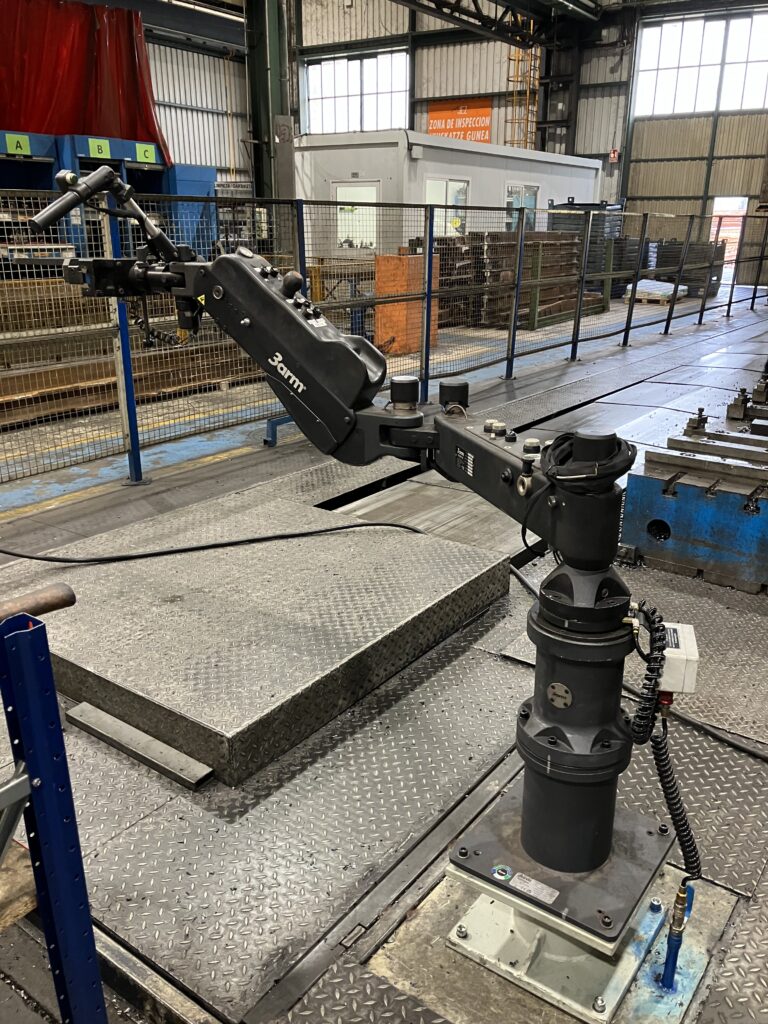
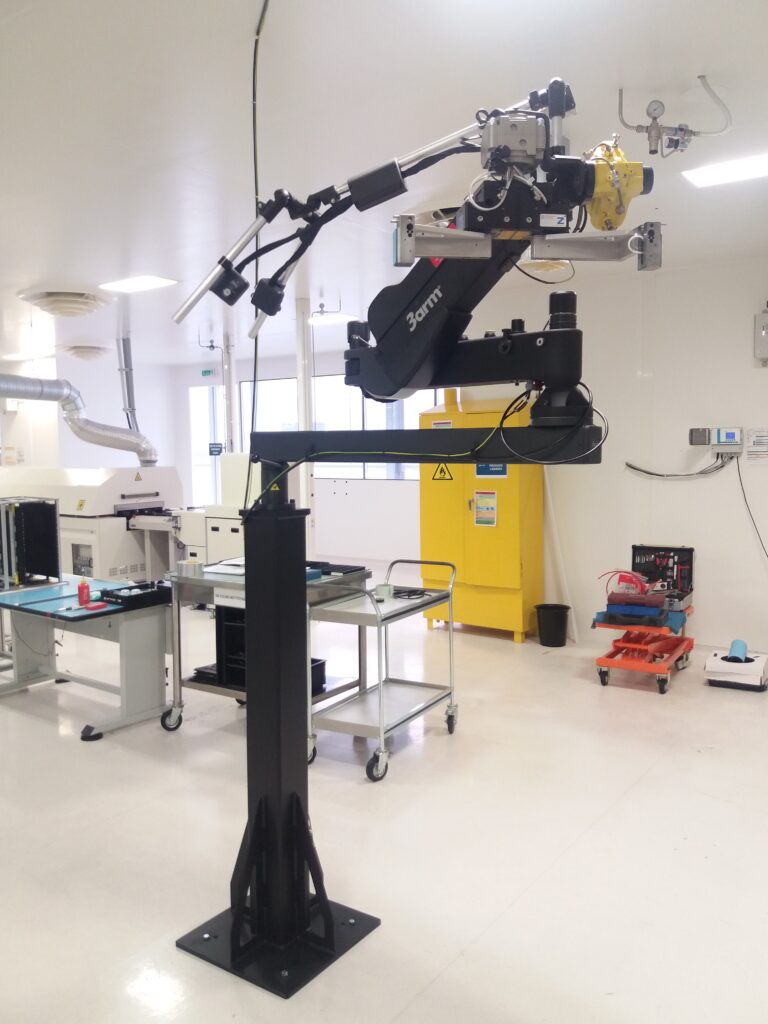
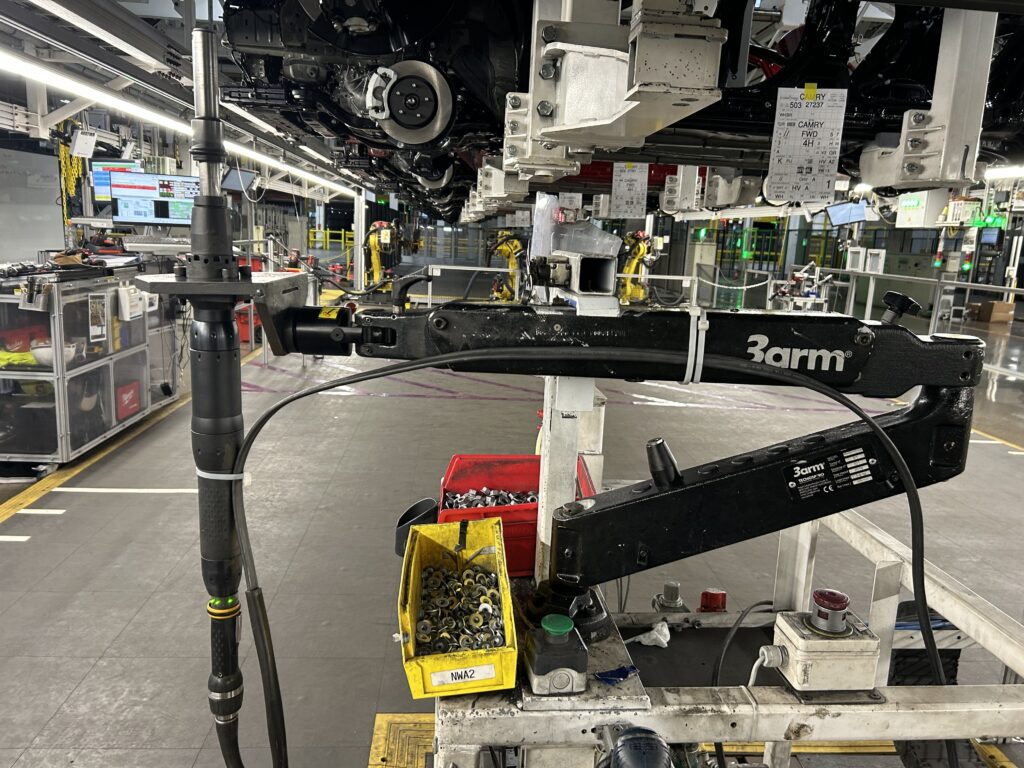
The systems developed by 3ARM are designed to adapt to different industrial configurations, allowing their installation on workbenches, columns, metallic structures, or production lines.
The correct location of the anchorage point allows optimizing the operator’s radius of action and ensuring that the tool remains accessible at all times without generating interference with other operations. In addition to improving productivity, a correct configuration reduces unnecessary movements and contributes to maintaining safer working conditions.
Lower maintenance compared to complex automated solutions
In recent years, various automated solutions for handling industrial tools have appeared. However, many of these alternatives involve high acquisition, programming, and maintenance costs.
One of the main advantages of the mechanical assistance systems developed by 3ARM is their operational simplicity. Being robust equipment designed for demanding industrial environments, they require minimal or virtually zero maintenance compared to robotized solutions or more complex automated systems.
This feature reduces long-term operating costs and avoids downtime associated with updates, programming, or specialized technical interventions.
For many industrial companies, the combination of ergonomics, reliability, and low maintenance cost makes ergonomic arms one of the investments with the best return within continuous improvement programs.
How to improve safety and productivity with a professional tool support arm
Safety in grinder work does not depend solely on operator training or the use of personal protective equipment. It also requires implementing solutions that reduce risks right from the workstation design.
The incorporation of an appropriate tool support arm improves stability, facilitates tool control, protects equipment against accidental damage, and significantly reduces the physical load borne by workers.
In sectors where productivity, safety, and quality are strategic factors, 3ARM’s ergonomic assistance systems represent an effective solution to optimize processes without increasing operational complexity or maintenance costs.
If you wish to improve the safety of your grinder operations, increase the lifespan of your tools, and reduce operator fatigue, contact the 3ARM team. Our specialists will help you identify the most appropriate solution for your application and integrate a support system adapted to the specific needs of your production environment.