The competitiveness of a production plant does not depend solely on the speed of the machines or the degree of automation of the line. In machining, assembly, or maintenance operations, performance is also conditioned by the interaction between the operator and the tools used during each work cycle. When these tools are heavy, generate high reaction torques, or are used continuously, accumulated fatigue ends up affecting precision, process quality, and workstation safety.
The heavy duty tool balancer has become an essential element to optimize the ergonomics of workstations. Its function goes far beyond holding a suspended tool: it must guarantee smooth movement, reduce the physical load supported by the operator, and maintain the stability necessary to perform repetitive operations with the maximum level of precision.
However, one of the most common errors consists of selecting the system solely by the load capacity indicated by the manufacturer. To obtain a truly efficient result, it is necessary to analyze the total suspended weight, the frequency of use, the required travel, the type of tool, and the conditions of the industrial environment. Only then is it possible to implement a solution that simultaneously improves productivity, manufacturing ergonomics, and the useful life of the equipment.
The weight of the tool is only a part of the calculation
The first decision when choosing an industrial tool balancer consists of determining the actual load that the system must support. Although it may seem an obvious aspect, in numerous projects only the nominal weight of the tool is considered, leaving out other elements that directly influence the operation of the balancer.
In an industrial application, the suspended load also includes tool holders, sockets, work fixtures, clamping accessories, pneumatic hoses, electric cables, and any other component that remains attached to the tool during its use. The sum of all these elements constitutes the effective load that the balancer must compensate for constantly.
Correctly dimensioning the equipment avoids working at the limits of its capacity and guarantees stable behavior throughout the entire working travel. From the perspective of ergonomic engineering, this aspect is decisive for maintaining smooth, precise, and safe movement throughout the entire day.
The frequency of use determines the most suitable type of balancer
Not all workstations present the same level of demand. A station where the tool is used occasionally requires very different characteristics than a production line that operates during several daily shifts.
In low or medium-intensity applications, spring balancers are usually used, whose spring mechanism allows the tool to be automatically retracted when it is no longer in use. It is an effective solution for processes where the priority is to keep the work area tidy and facilitate access to the tool.
However, when operations are continuous and precision is a fundamental requirement, constant tension systems offer clearly superior advantages. By maintaining a virtually uniform force throughout the travel, they allow the tool to remain suspended with a feeling of weightlessness, reducing the effort required to position it and improving control during machining or assembly.
The choice between both systems should not be based solely on economic criteria, but on the actual behavior expected from the equipment over thousands of work cycles.
Movement stability directly influences machining quality
In processes where the tool must be kept perfectly aligned, any variation in the tension of the system impacts the precision of the operation.
A correctly dimensioned balancer allows the tool to be moved without sudden movements or oscillations, facilitating much more precise control during drilling, tapping, grinding, or assembly operations.
When this stability does not exist, the operator makes constant corrections to compensate for the system’s behavior. These small corrections increase muscle fatigue and reduce process repeatability, affecting both finishing quality and production times.
Useful travel is as important as load capacity
Another aspect frequently underestimated during the selection of a balancer is the effective length of the travel.
Each workstation presents specific needs depending on the height of the part, the available space, and the trajectory that the tool must follow. Choosing an insufficient travel limits freedom of movement and forces the operator to adopt poorly ergonomic postures.
On the contrary, an excessive travel can cause unnecessary stress on the mechanism and accelerate the wear of the system. The objective consists of adapting the travel to the actual production process to achieve a balance between accessibility, stability, and durability.
In this sense, the solutions developed by 3ARM are designed specifically for each application, allowing the system to be configured based on the tool, the working position, and the manufacturing environment.
Load handling: when a conventional balancer is no longer enough
As the weight of the tool increases or additional stresses such as reaction torque appear, a conventional balancer may stop offering the necessary level of assistance.
In load handling applications involving heavy tools or highly repetitive processes, it is essential to value solutions that, in addition to compensating for the weight, provide structural stability and absorb the stresses generated during work.
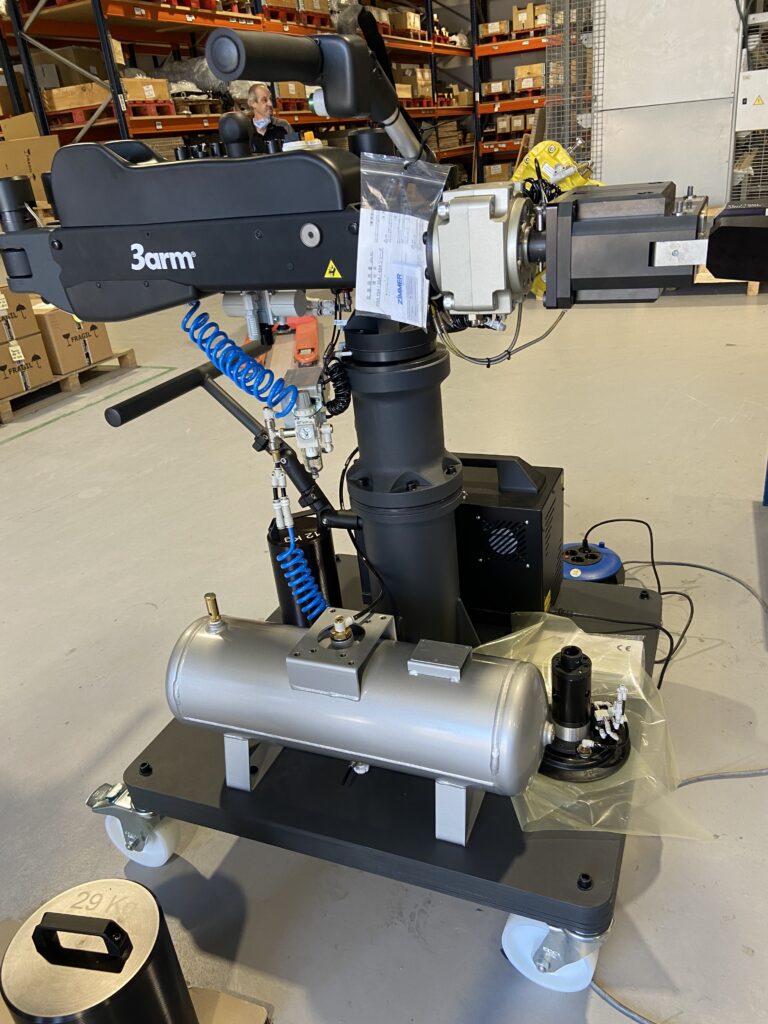
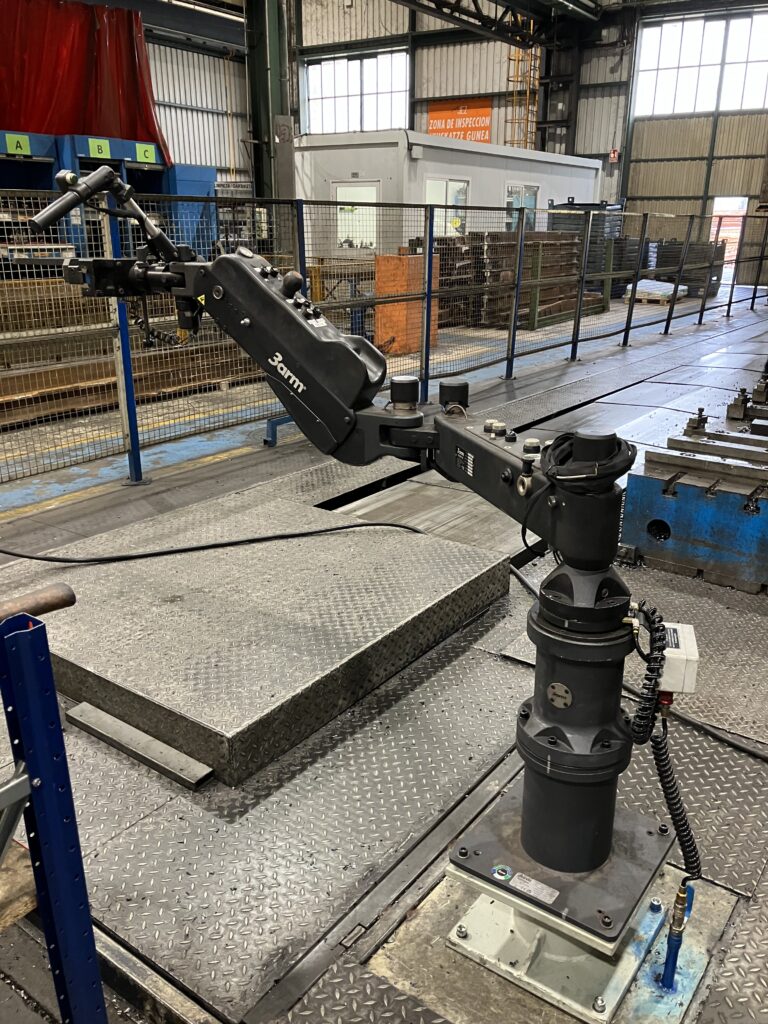
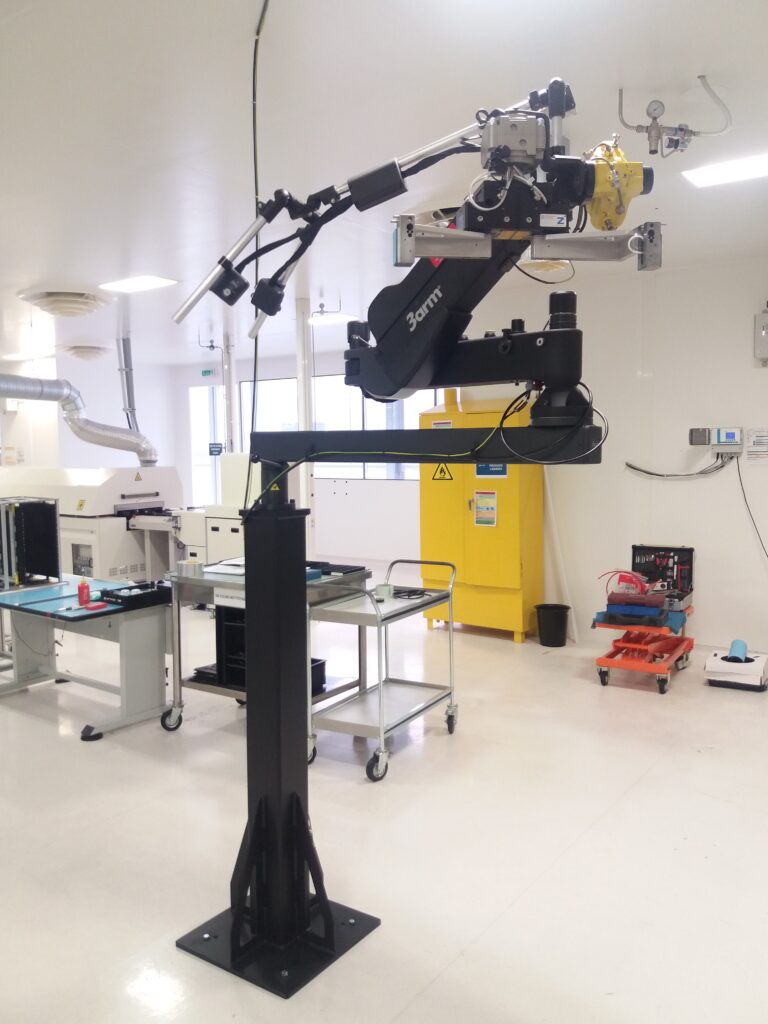
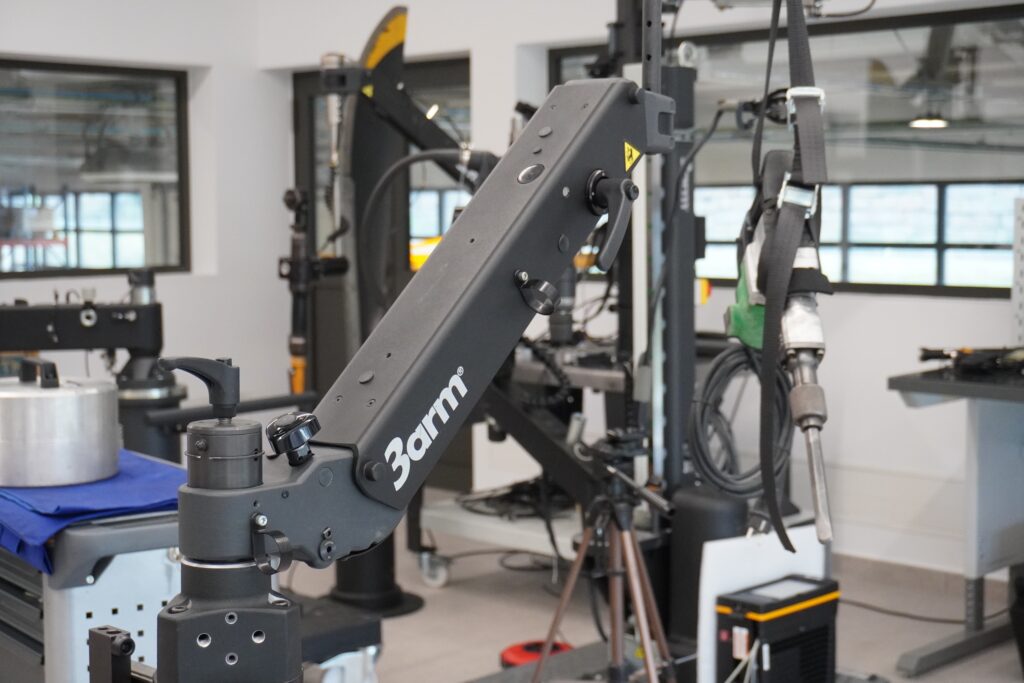
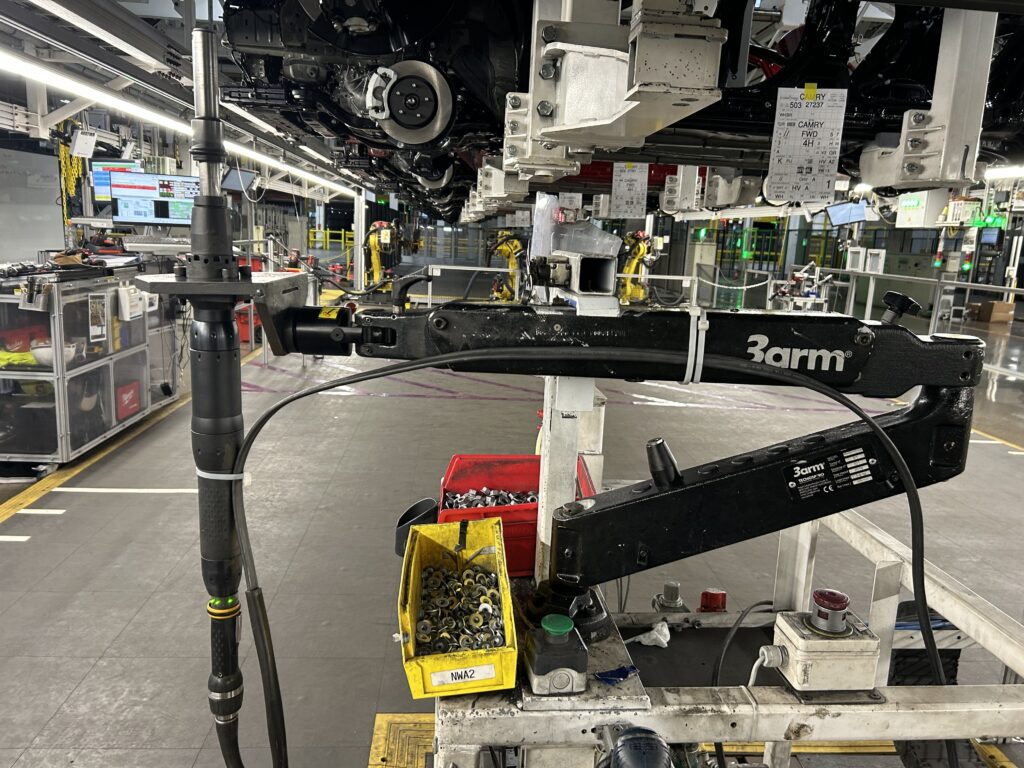
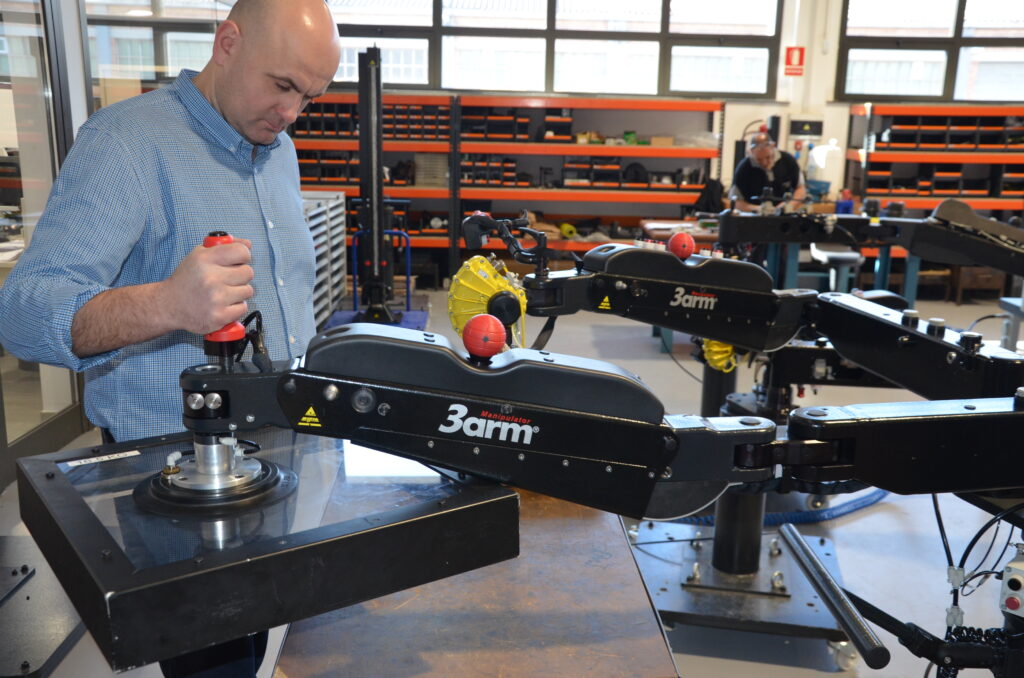
The industrial articulated arm systems developed by 3ARM respond precisely to these types of needs, allowing the integration of ergonomic systems capable of reducing operator fatigue without limiting freedom of movement or process precision.
This evolution from a conventional balancer toward a complete assistance solution represents a growing trend in sectors such as automotive, machinery manufacturing, the railway industry, aeronautics, and precision machining.
Ergonomics and safety: an investment in productivity
The reduction of musculoskeletal injuries currently constitutes one of the main objectives of engineering and occupational risk prevention departments.
Repetitive tasks with suspended tools generate continuous loads on shoulders, neck, and back that, over time, can translate into sick leave, decreased performance, and loss of production quality.
The implementation of a correctly dimensioned heavy duty tool balancer contributes to minimizing these risks by reducing the physical effort required to manipulate the tool throughout the entire operational cycle.
From the perspective of workplace ergonomics for manufacturing, this improvement not only benefits the worker, but also increases process stability, promotes repeatability, and reduces the probability of errors derived from fatigue.
For this reason, the selection of the system must be understood as a strategic decision that directly influences the overall efficiency of the facility.
A customized solution offers better results than a standard catalogue
Each workstation presents specific characteristics that condition the behavior of the assistance system. The weight of the tool, the geometry of the part, the frequency of use, the necessary travel, the available space, and the type of operation mean that two apparently similar applications require completely different solutions.
The engineering philosophy of 3ARM starts precisely from this technical analysis. Instead of offering a generic solution, it develops configurations adapted to each industrial process to guarantee the right balance between ergonomics, precision, safety, and productivity.
This approach allows for the implementation of systems prepared to evolve together with manufacturing needs, optimizing both the operator experience and the performance of the production line.
Optimize your workstation with the experience of 3ARM
Choosing the right heavy duty tool balancer means much more than selecting a load capacity. It implies understanding the behavior of the tool, analyzing the actual conditions of the process, and designing a solution capable of reducing operational fatigue without compromising precision or efficiency.
At 3ARM, we develop personalized ergonomic solutions for industrial applications where stability, safety, and productivity are critical factors. Our engineering team studies each project to integrate the most appropriate system according to the weight of the tool, the frequency of use, and the specific characteristics of the workstation.
If you wish to optimize your machining, assembly, or maintenance operations through a custom-designed solution, contact the specialists at 3ARM and discover how to improve the ergonomics, precision, and performance of your production process.