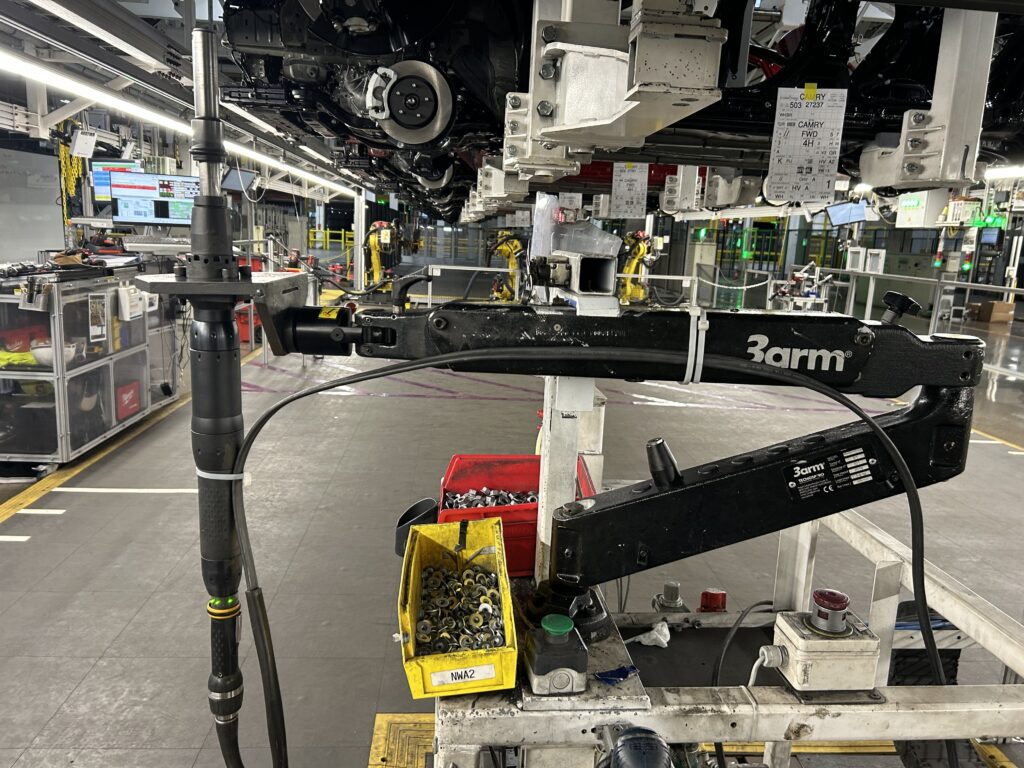
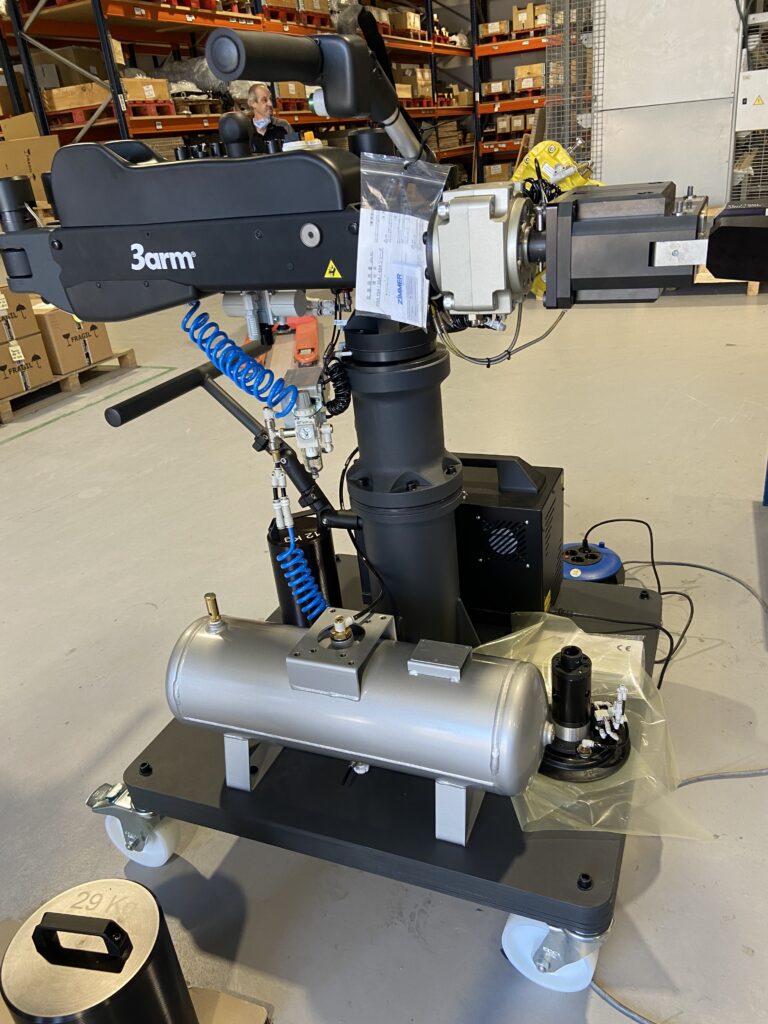
In sectors such as automotive, machinery manufacturing, the railway industry, or aeronautics, the ability to maintain a constant production pace without compromising quality or operator safety has become a decisive factor. Many of these operations continue to be manual or semi-automated, meaning that workstation performance is closely related to ergonomics and the operator’s ability to repeat the same movement thousands of times with precision.
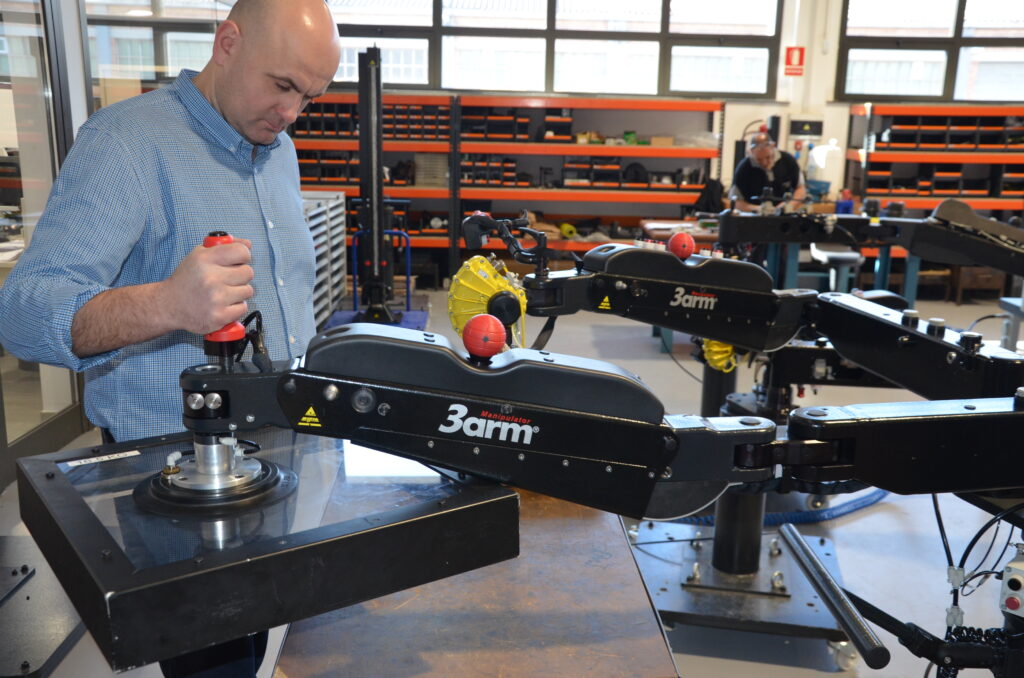
The industrial articulated arm plays a much more relevant role than that of a simple tool support. It is a system designed to optimize the interaction between the operator and the tool, compensating for efforts, improving movement control, and reducing accumulated fatigue during intensive work cycles.
However, not all articulated arms offer the same behavior when they must work continuously. Their mechanical design, movement stability, and adaptation to each production process determine whether they will truly contribute to improving industrial production or become a limitation for line efficiency.
Movement stability is the foundation of an efficient repetitive process
In high-repetition applications, small deviations can translate into significant losses of productivity by the end of a shift. An imprecise movement forces the operator to make constant corrections to position the tool, increasing cycle time and favoring the appearance of assembly or machining errors.
For this reason, one of the most important criteria when selecting an industrial articulated arm is its ability to maintain a stable movement throughout the entire working travel. Structural rigidity, the quality of the joints, and the balance of the assembly allow the tool to respond predictably, even when the operator works at a high pace.
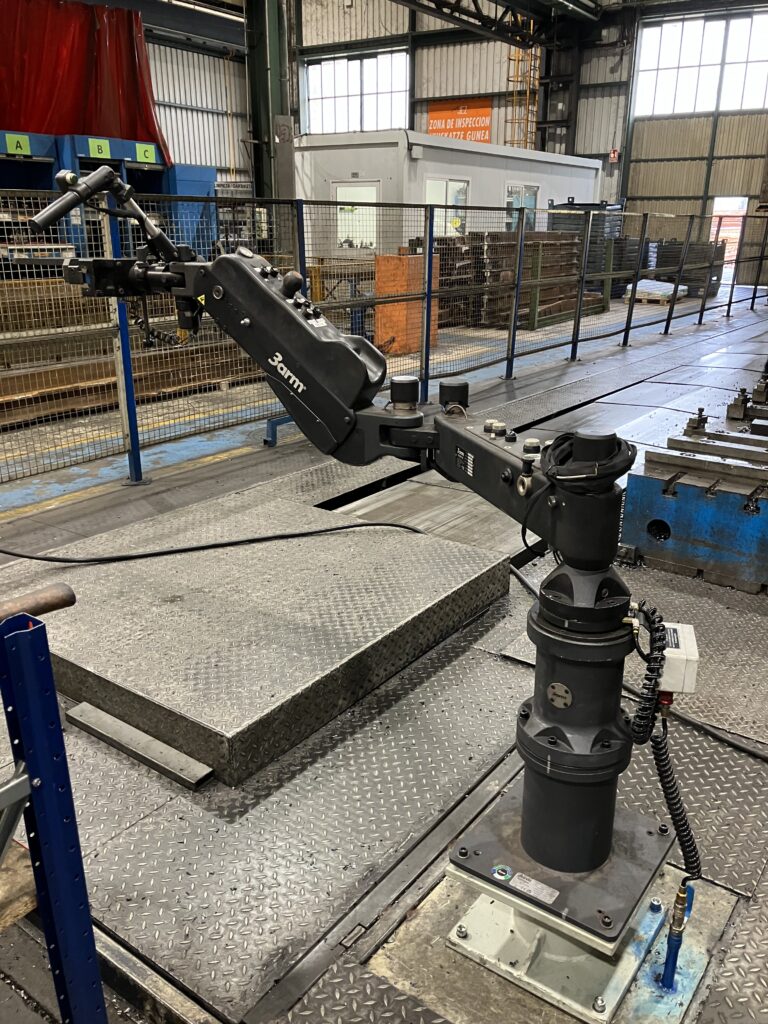
In the solutions developed by 3ARM, the design of the arm adapts to the specific application to guarantee smooth and uniform displacement, reducing the need for continuous adjustments and improving the repeatability of each operation.
Tool balance directly influences productivity
When a tool remains suspended throughout the day, the effort required to position it acquires critical importance. If the system does not maintain a constant balance, the operator must continually compensate for small load variations, which increases muscle fatigue and decreases precision as the shift progresses.
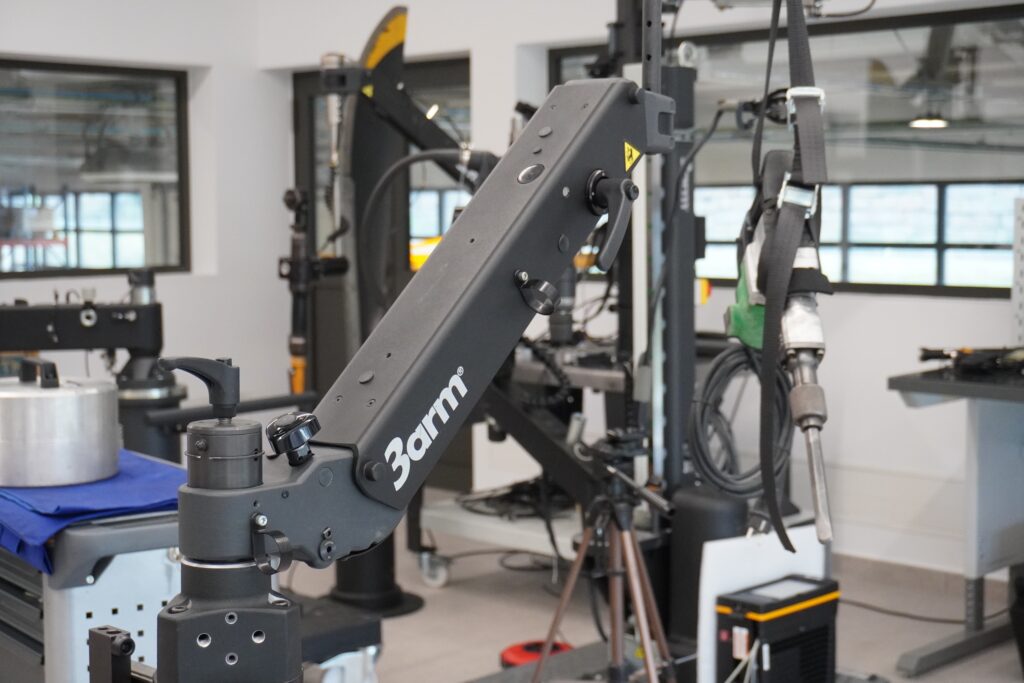
The objective of an industrial articulated arm consists not only of supporting the weight of the tool, but also of ensuring that it can move naturally and remain stable at any point along the travel.
Constant balance improves work quality
In tightening, machining, grinding, or assembly operations, keeping the tool perfectly controlled facilitates a more precise and uniform execution. The operator can focus on the quality of the process without dedicating additional effort to stabilizing the equipment.
This reduction in physical effort also decreases variability between cycles, favoring greater homogeneity in production and reducing the risk of defects derived from tiredness.
Load capacity must be analyzed along with real working conditions
One of the most frequent errors consists of selecting an arm solely based on the maximum load indicated by the manufacturer. However, in industrial applications, the nominal weight represents only a part of the analysis.
The tool usually incorporates accessories, extensions, pneumatic hoses, or cables that modify the dynamic behavior of the assembly. Furthermore, accelerations, changes in direction, and the frequency of use generate additional stresses that must be taken into account during the design phase.
For this reason, industrial assistance solutions are usually dimensioned with a sufficient operating margin to guarantee stable operation even during intensive work cycles. This criterion improves both the durability of the system and the user experience for the operator.
Workplace ergonomics for manufacturing must be integrated from the workstation design
The improvement of industrial ergonomics does not depend exclusively on incorporating an articulated arm. Its effectiveness is conditioned by the way it integrates within the workstation.
The installation height, useful reach, tool position, required travel, and space distribution directly influence the operator’s posture and the efficiency of the process. A correctly configured system allows for maintaining natural working positions, reducing unnecessary movements, and minimizing the load on shoulders, neck, and back.
This approach is especially important on lines where the same movement is repeated thousands of times each week. Small ergonomic improvements can translate into significant reductions in accumulated fatigue and a sustained increase in productivity.
The engineering philosophy of 3ARM starts precisely from this principle: adapting each solution to the customer’s specific process to achieve the maximum balance between comfort, precision, and operational performance.
Flexibility to adapt to different industrial production processes
Manufacturing lines constantly evolve to respond to new products, changes in demand, or modifications in assembly processes. Therefore, an industrial articulated arm must offer sufficient versatility to integrate into different workstations without compromising its behavior.
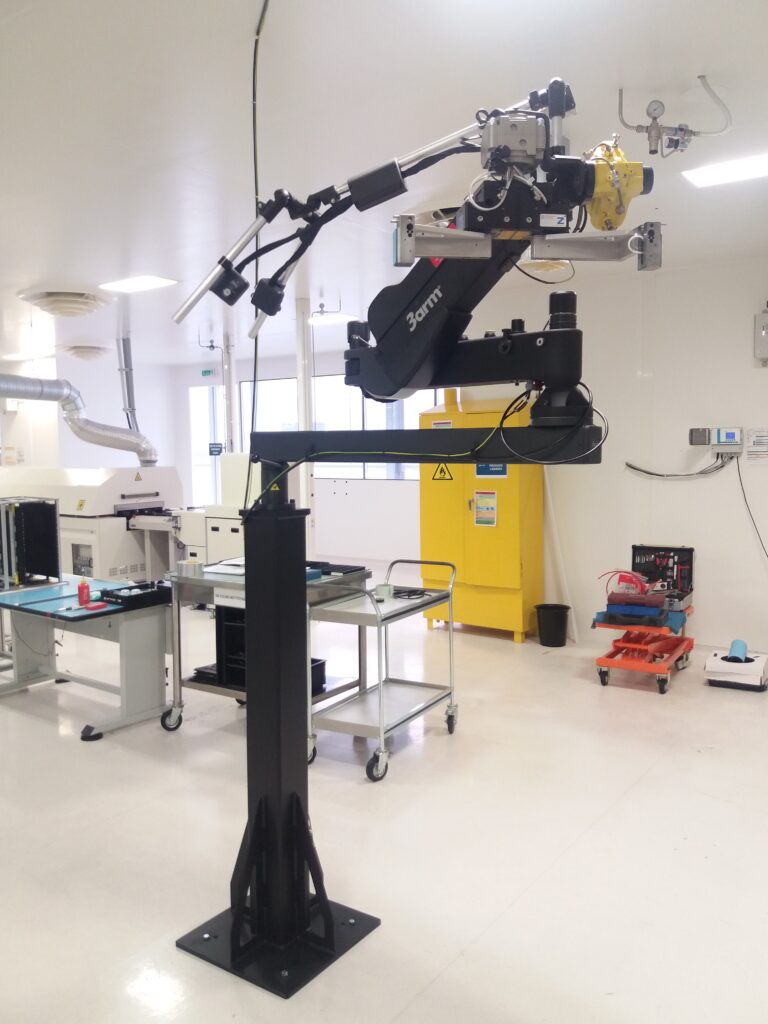
Configurable solutions allow the reach, load capacity, support system, and accessories to be adapted to the type of tool used. This flexibility facilitates future modifications of the line without the need to completely replace the assistance system.
In an environment where industrial production demands an ever-greater capacity for adaptation, having equipment prepared to evolve along with the process represents a competitive advantage from both a technical and economic standpoint.
A well-designed industrial articulated arm improves productivity sustainably
Productivity improvement should not be understood solely as a reduction in cycle time. It also implies decreasing operator fatigue, maintaining a constant level of quality, and reducing incidents derived from repetitive strains.
When the system provides stability, balance, and freedom of movement, the operator can carry out their work with greater precision for a longer time, reducing errors and improving process repeatability.
Therefore, the selection of an industrial articulated arm must be based on a complete analysis of the application and not solely on general catalogue specifications. Evaluating stability, load capacity, ergonomics, and the real needs of the process together allows for implementing a solution prepared to deliver sustainable long-term results.
Optimize your high-repetition processes with 3ARM solutions
Each industrial process presents specific requirements that cannot be solved using standard solutions. In applications where repetition, precision, and ergonomics are determining factors, having an assistance system designed for real working conditions makes a tangible difference in productivity and safety.
At 3ARM, we develop customized industrial articulated arm systems for assembly, machining, maintenance, and tool handling applications. Our engineering team analyzes each workstation to design a solution adapted to the load, travel, type of tool, and frequency of use, guaranteeing an optimum balance between performance, reliability, and operator comfort.
If you wish to improve the efficiency of your repetitive processes and optimize the ergonomics of your workstations, contact the specialists at 3ARM. We will help you develop a solution adapted to the specific needs of your industrial production.