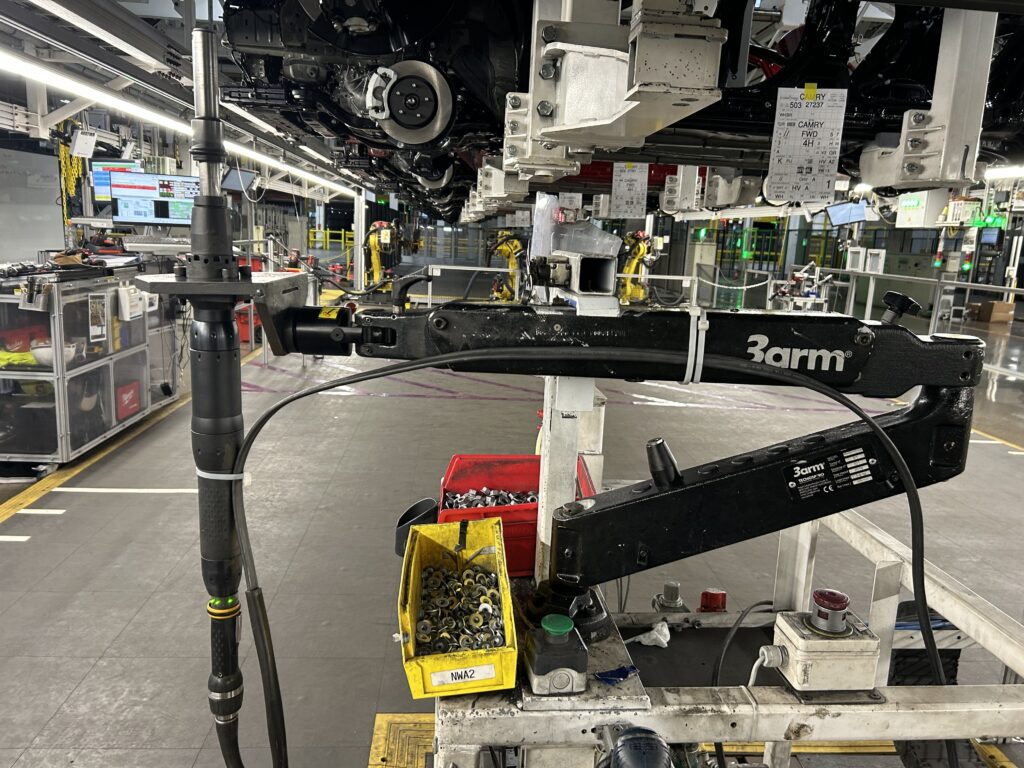
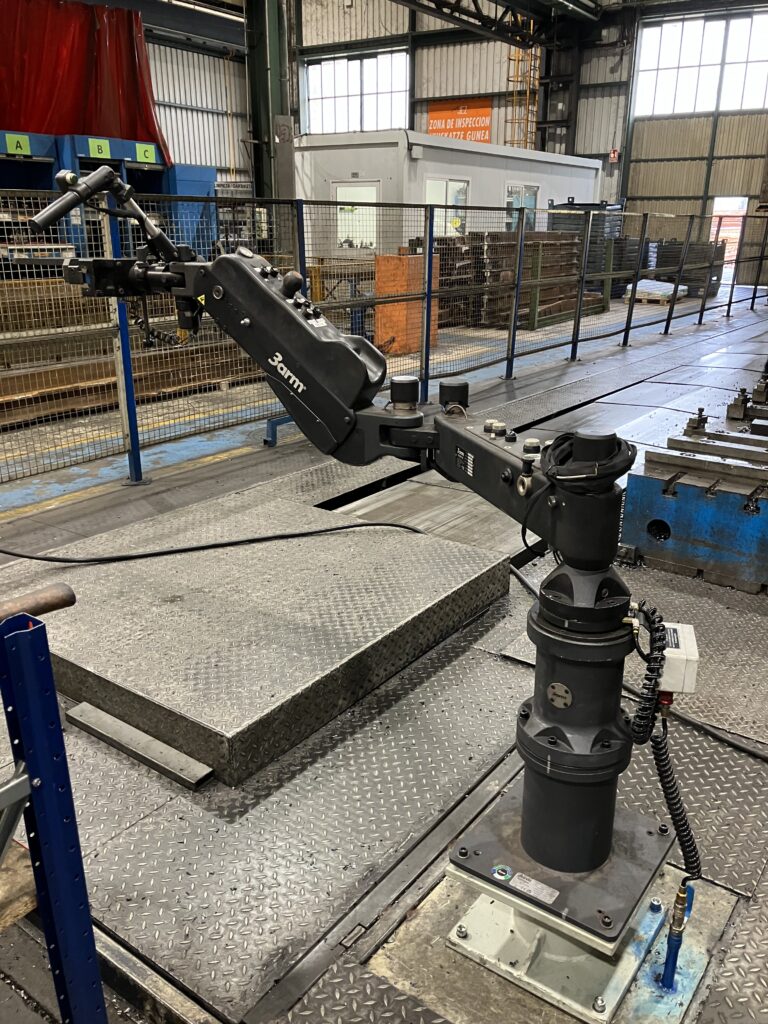
Industrial automation has evolved considerably during recent decades, but many assembly, machining, and maintenance operations continue to depend on the direct intervention of the operator.
Even in the most advanced production lines, handling heavy tools, high-torque equipment, or large-volume components still poses a challenge from the perspective of productivity and ergonomics.
The industrial articulated arm has consolidated itself as one of the most effective solutions to optimize the interaction between the operator and the tool. Its function consists not only of supporting a load, but also of improving process precision, reducing physical effort, and increasing the repeatability of each operation.
However, not all ergonomic systems respond to the same needs. The choice between a torque reaction arm, a zero gravity tool balancer, or a Cartesian system must be based on a technical analysis of the production process, taking into account aspects such as load capacity, movement stability, the type of tool, and the ergonomic demands of the workstation.
Why does the selection of the ergonomic system directly influence productivity?
In numerous industrial facilities, the weight of the tool is still considered the sole criterion for selecting an assistance system. This approach is insufficient when factors such as reaction torque, frequency of use, process repeatability, or the precision required during assembly come into play.
The true function of an industrial articulated arm consists of integrating the operator and the tool within a balanced mechanical system that reduces the physical load without limiting freedom of movement. When the equipment is correctly dimensioned, the user can maintain a more natural posture, decrease muscular effort, and control the tool with greater precision throughout the entire operation.
From the perspective of manufacturing ergonomics, this balance translates into a reduction in accumulated fatigue, a lower incidence of musculoskeletal disorders, and an improvement in the quality of the production process.
Torque reaction arms: maximum precision in tightening operations
Articulated arms designed for tightening tools represent one of the most widely used solutions in assembly lines involving high-torque pneumatic or electric equipment.
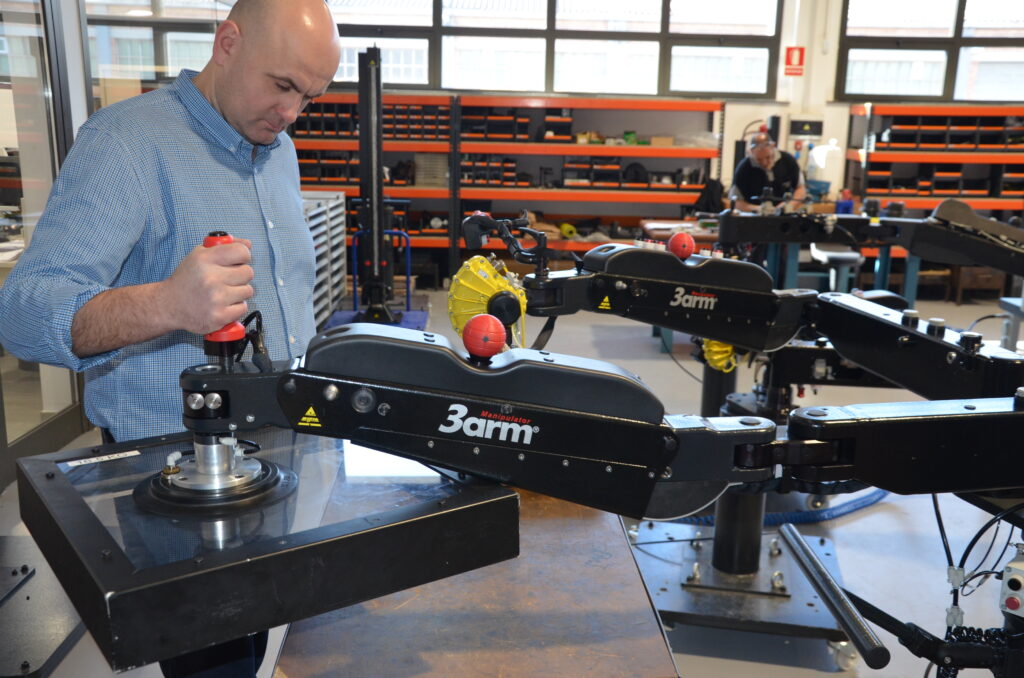
Their main characteristic is the ability to absorb the reaction generated during tightening, preventing the effort from being transmitted to the operator’s hands, wrists, shoulders, and back. This function not only increases comfort during the working day, but also improves tool stability and favours perpendicular alignment relative to the work surface.
The result is a significant reduction in errors such as screw misalignment, premature tool wear, or loss of assembly quality.
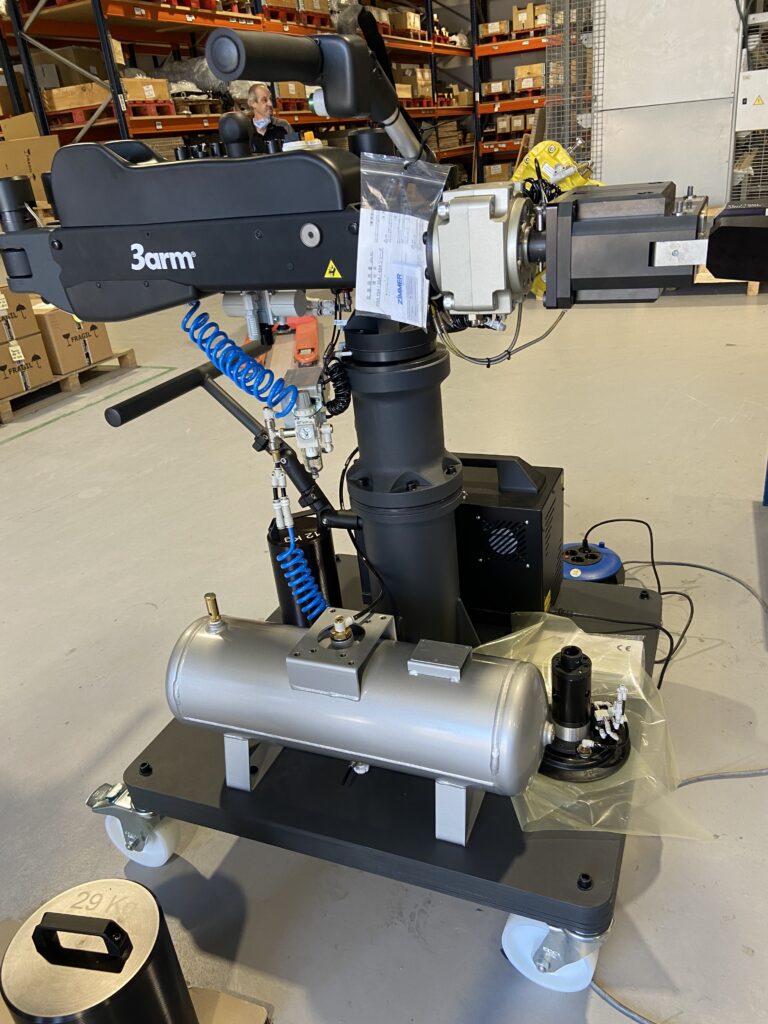
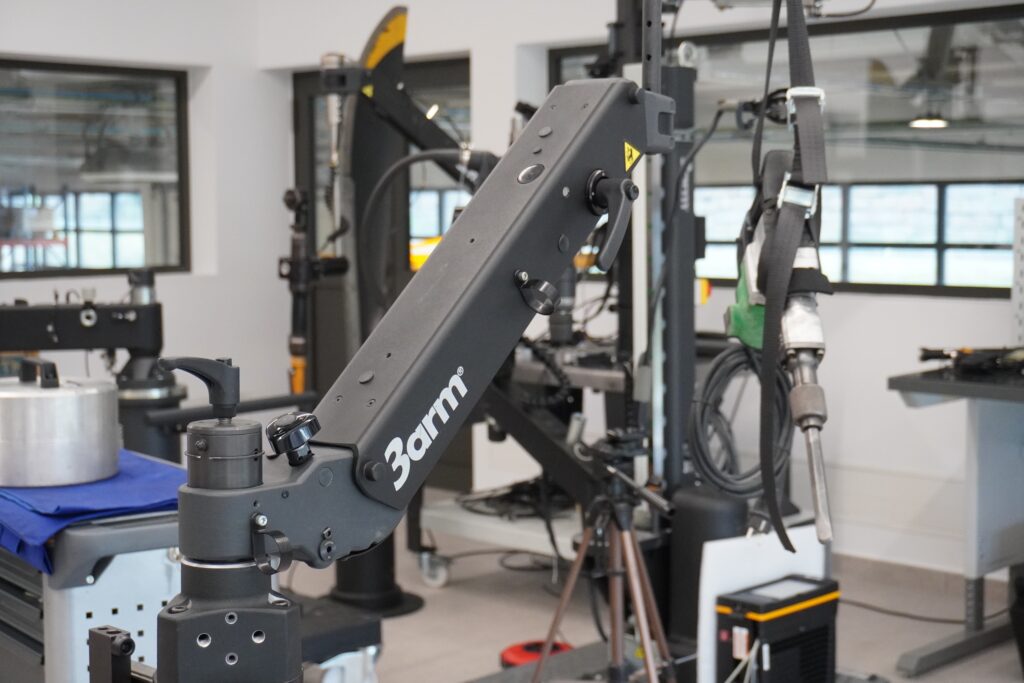
The systems developed by 3ARM incorporate this operating principle through articulated arms designed specifically for industrial tools, offering configurations adapted to the weight, travel, and type of application of each client.
Torque absorption improves both safety and process quality
When a tool generates high reaction torques, the operator must make a continuous effort to stabilize it. This repetitive effort increases muscle fatigue and makes it difficult to maintain a constant position throughout the operation.
By integrating a torque absorption system within the industrial articulated arm, the mechanical load no longer falls on the user and is instead distributed through the structure of the arm. As a consequence, the movement becomes more precise, process variability decreases, and the repeatability of assembly operations is improved.
Zero gravity tool balancer: the best solution for heavy load handling
When the main objective consists of moving large components or especially heavy tools, pneumatic manipulators offer advantages that other systems cannot provide.
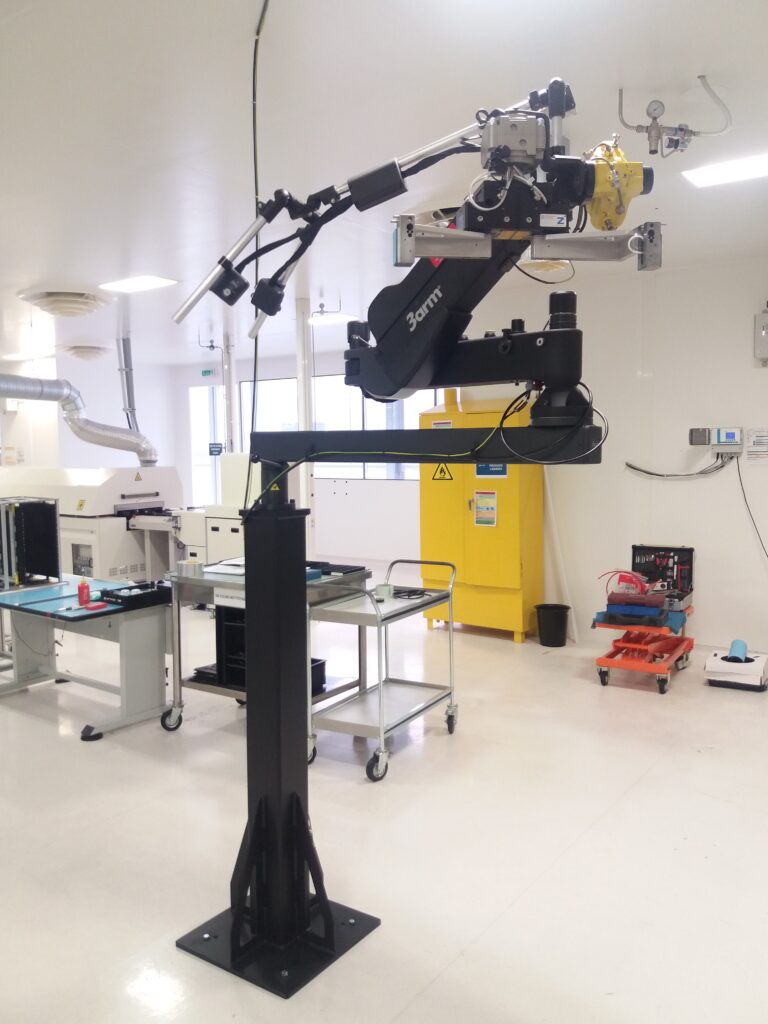
Their operation allows for compensating virtually all of the load’s weight, generating a feeling of weightlessness that facilitates manual displacement with minimal effort. This technology is particularly effective in load handling operations involving parts with offset centers of gravity or complex geometries.
Unlike a simple balancer, these systems maintain a high level of stability throughout the entire travel, avoiding pendulum movements that could compromise both operator safety and the integrity of the handled component.
In sectors such as automotive, foundry, machining, or heavy machinery manufacturing, this type of solution allows for reducing cycle times without increasing the physical load on workers.
Cartesian systems: repeatability in linear movements
There are applications where freedom of movement is not the priority. Processes such as drilling, tapping, or certain welding operations require maintaining a perfectly vertical or linear trajectory to guarantee repeatable results.
In these situations, Cartesian systems provide a mechanical guide that eliminates lateral deviations and ensures a constant depth during each work cycle.
Although they offer less flexibility than an industrial articulated arm, they represent a very effective alternative when the process demands perfectly controlled and repetitive movements.
The selection between both systems will always depend on the balance between precision, travel, accessibility, and the ergonomic needs of each workstation.
Load capacity, stability, and ergonomics: three inseparable criteria
One of the most frequent errors consists of comparing industrial arms exclusively by their maximum load capacity. In reality, this datum only represents one of the multiple parameters that must be evaluated during the design phase.
Movement stability determines the ease with which the operator can position the tool without making constant corrections. Similarly, the geometry of the arm, the type of joints, the useful reach, and the weight distribution directly condition the user experience and operational performance.
From the point of view of manufacturing ergonomics, a correctly configured system allows for decreasing physical effort without sacrificing precision or productivity. For this reason, the design must always start from the analysis of the specific application and not solely from the technical specifications of the equipment.
The engineering philosophy of 3ARM responds precisely to this approach. Its solutions are not limited to offering a standard catalogue, but are configured according to the production process, the tool used, the available space, and the real working conditions.
Choosing the right industrial articulated arm requires analysing the complete application
Each industrial environment presents different challenges. An electronic assembly line, an automotive assembly station, or a heavy machinery maintenance post require solutions with completely different characteristics.
Therefore, the selection of the ergonomic system must jointly consider the load capacity, the necessary travel, the torque reaction, the frequency of use, the required precision, and the environmental conditions of the facility.
This approach allows for obtaining a system truly adapted to the process, capable of simultaneously improving productivity, safety, and the quality of the work performed.
Design an ergonomic solution adapted to your process with 3ARM
The incorporation of an industrial articulated arm represents much more than an ergonomic improvement. It means optimizing the interaction between the operator and the tool, reducing accumulated fatigue, increasing the precision of each operation, and creating workstations prepared to face increasingly demanding production processes.
At 3ARM, we develop completely customized industrial assistance solutions for high-torque tools, load handling applications, and processes where manufacturing ergonomics constitutes a strategic factor for productivity. Our technical team analyses each application to design a system that responds to real manufacturing needs and contributes to improving the performance of the facility.
If you wish to implement an ergonomic solution adapted to your industrial process, contact the specialists at 3ARM and discover how a system designed specifically for your application can make the difference in safety, precision, and efficiency.